




Vintage Three Drawer Nightstands
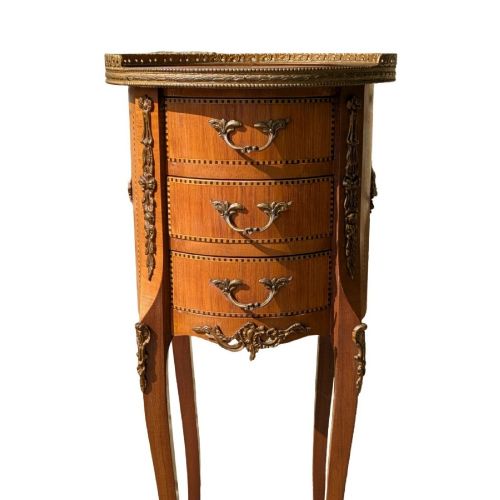
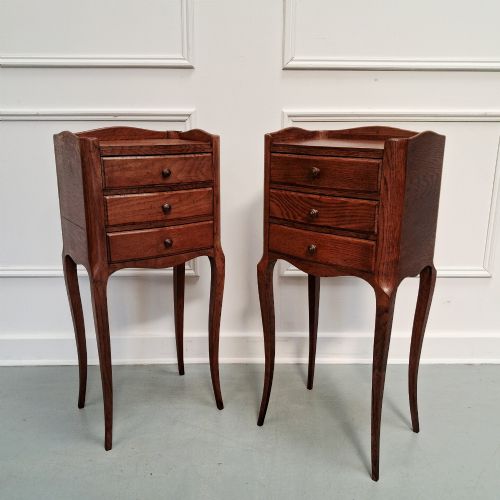
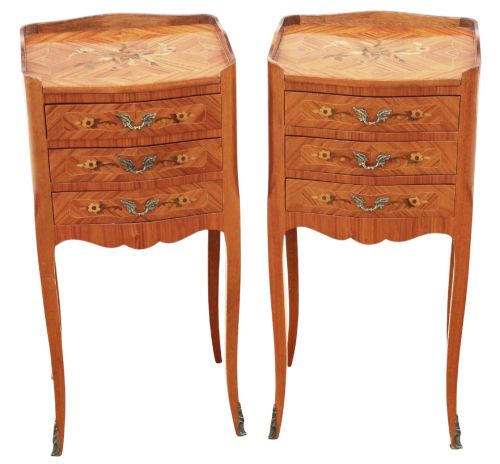
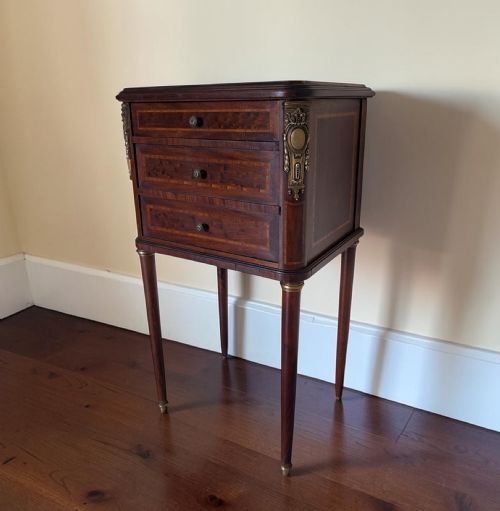
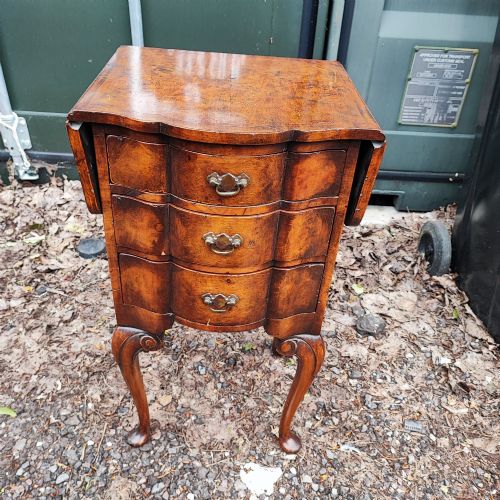
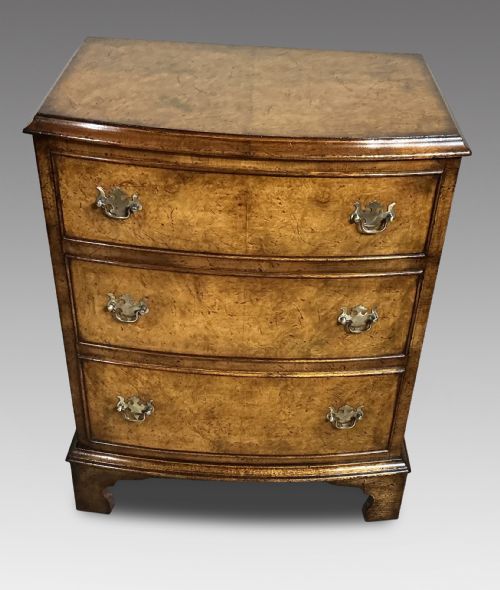
These vintage three drawer nightstands are compact bedside chests and small cabinets offering practical storage beside a bed.
Vintage Three Drawer Nightstands
When you search for vintage three drawer nightstands, you encounter a variety of compact bedside chests and small cabinets originating from the nineteenth and twentieth centuries. These pieces serve as functional storage beside a bed, taking the form of bedside tables, small chests of drawers, and bedside cabinets.
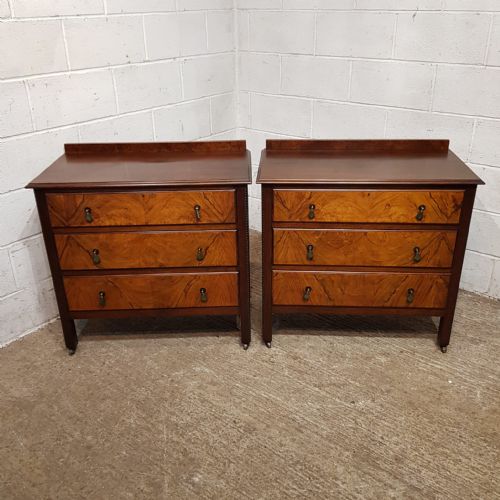
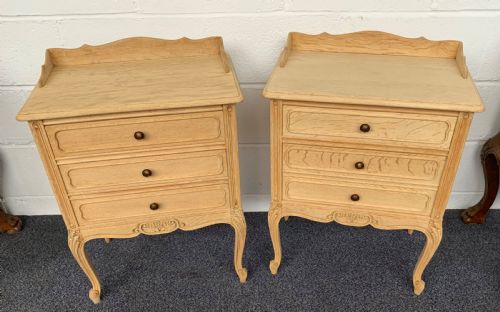
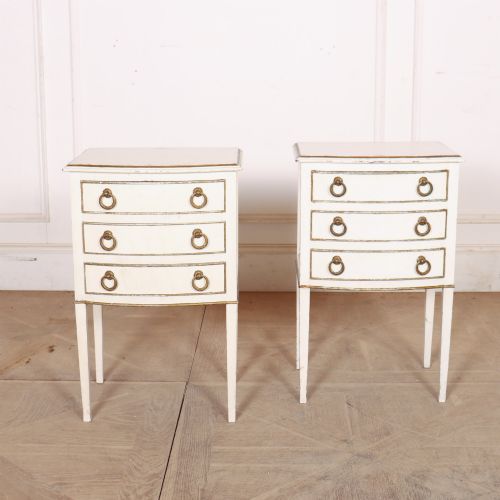
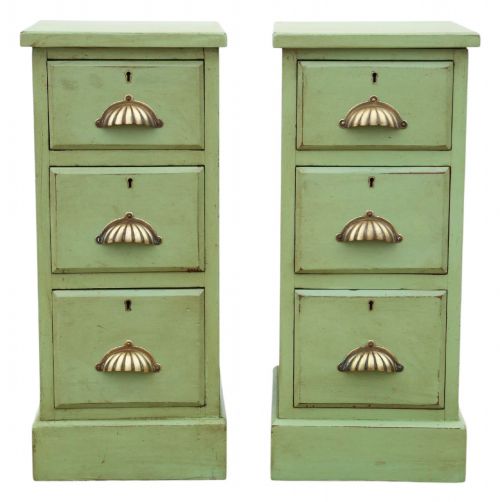
The selection ranges from early twentieth-century French provincial designs to Art Deco walnut models and English painted pieces. Many examples appear in matched pairs, offering symmetry for flanking a bed.
Cabinetmakers constructed these pieces in forms drawing on Georgian, Edwardian, and regional traditions, utilising timber carcases fitted with multiple small drawers.
How they were made
Maker workshops relied on solid hardwoods and decorative veneers, notably walnut, mahogany, oak, and satinwood, often applied over secondary timber carcases. Marquetry inlay, brass hardware, and painted finishes appear frequently across the pieces.
Cabinetmakers joined drawer frames using traditional joinery methods, fitting timber panels to accommodate seasonal wood movement while maintaining structural integrity in domestic settings.
Vintage Three Drawer Nightstands Retail Price Guide 2026
Typical asking prices for vintage three drawer nightstands among the pieces listed under this phrase on Sellingantiques today, from the lower quarter to the upper quarter. They describe what is for sale here now, not the wider market.
Some nineteenth-century bedside cabinets conceal pull-out slides designed to hold a chamber candlestick before the invention of electric lighting.
What varies in quality
The standard of a piece rests upon the selection of timber veneers, such as burr walnut or figured mahogany, and the precision of marquetry or inlay work. Subtle details like hand-cut dovetails on drawer linings and original brass pulls elevate an example.
Proportion and execution distinguish finer items from simpler utilitarian versions. Pieces displaying balanced scaling, refined mouldings, and careful French polishing or painted decoration represent the higher tier of production.
The Vintage Three Drawer Nightstands Glossary
- Marquetry
- Decorative veneer work forming pictorial or geometric patterns on furniture surfaces. Craftsmen cut thin slices of different coloured woods and fitted them together within the carcase.
- Commode
- A low cabinet or chest of drawers, often of French origin. The term frequently applies to decorative bedside chests with multiple drawers.
- Bowfront
- A convex, curved front on a chest of drawers or cabinet. This shaping softens the corners and requires skilled carpentry.
- Art Deco
- A design style prominent in the 1930s characterised by sleek geometric forms and streamlined silhouettes. Pieces from this era often utilise satinwood and walnut veneers.
- Campaign furniture
- Portable pieces designed for travel, typically featuring recessed brass handles and reinforced corners. These items combine utility with sturdy construction.
Vintage Three Drawer Nightstands: Frequently Asked Questions
How do I style a three drawer nightstand?
Place a bedside lamp and a small tray for personal items on the top surface, leaving the drawers free for books and nighttime essentials. Keep the arrangement balanced to complement the proportions of the chest.
Allow the wood grain or painted finish to remain visible rather than crowding the surface with excessive decorative objects.
Are these nightstands sturdy enough for daily use?
Solid hardwood construction and traditional joinery ensure these chests withstand regular handling. The small drawers operate smoothly when properly fitted within their runners.
Routine domestic use places minimal strain on these compact carcases, provided they avoid excessive moisture and direct heat sources.
How can I identify the period of a bedside chest?
Examine the timber species, handle styles, and construction methods used inside the drawers. Edwardian and Art Deco pieces exhibit distinct veneer choices and hardware compared to earlier Georgian or nineteenth-century examples.
Secondary woods and dovetail construction offer additional clues to the manufacturing decade.
Do nightstands usually come in pairs?
Many listings feature matched pairs of bedside chests designed to flank a bed symmetrically. Single cabinets also appear frequently depending on original production and survival rates.
Pairs often command greater interest for master bedrooms requiring balanced furniture arrangements.