


Vintage Three Door Wardrobe
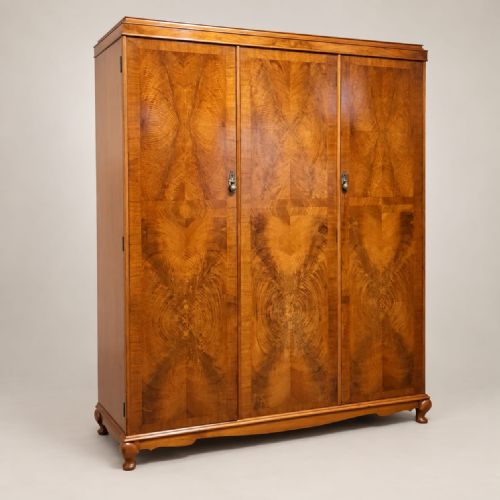
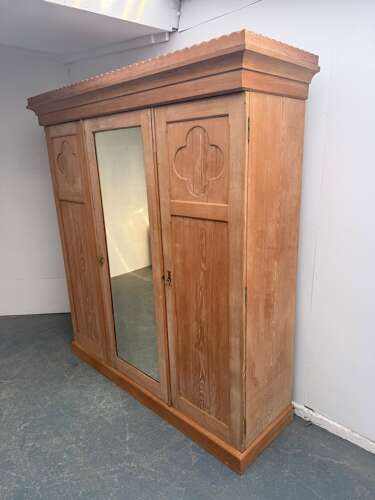
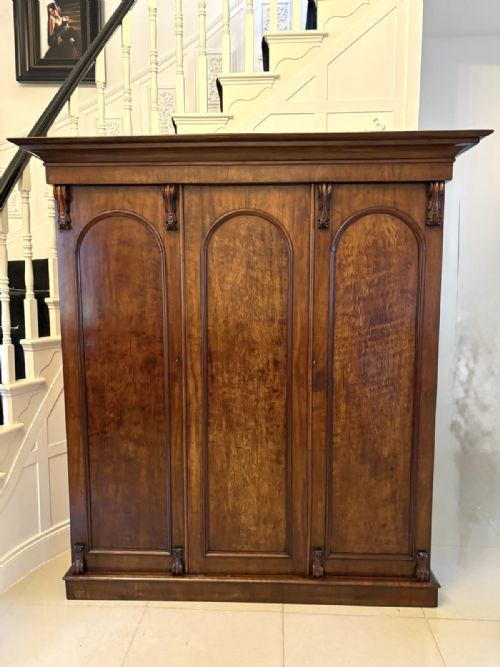
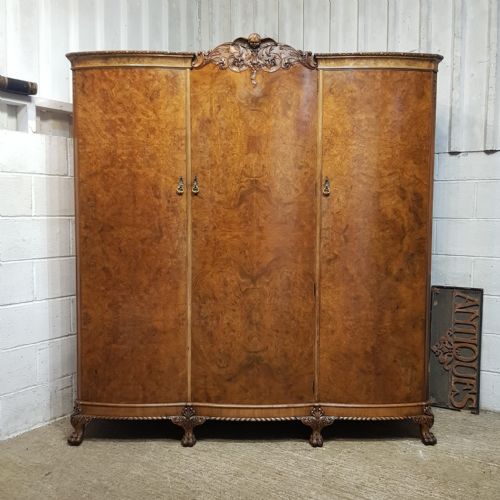
A vintage three door wardrobe gives you serious hanging space and presence, built in oak, mahogany, and burr walnut during the late nineteenth and early twentieth centuries.
Vintage Three Door Wardrobe
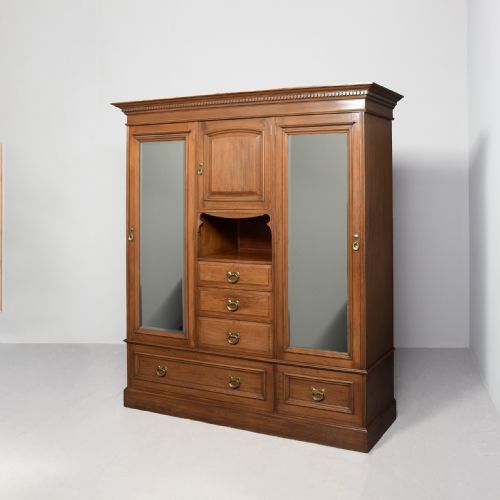
When you search for a vintage three door wardrobe, you look at large storage pieces designed for bedrooms, most commonly appearing from the Edwardian period, the Victorian era, and the 1920s. These pieces typically feature a central section flanked by two full-length wings, offering substantial clothes hanging capacity alongside internal drawers or linen shelves.
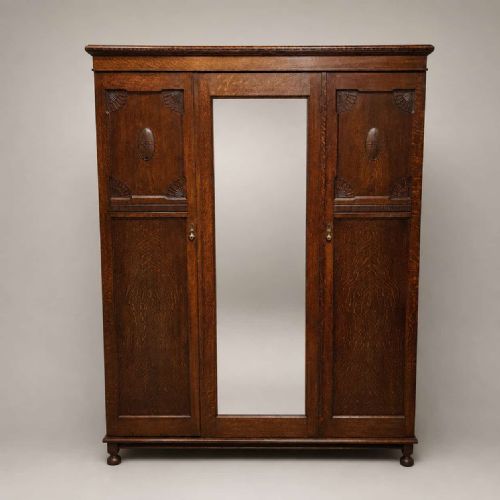
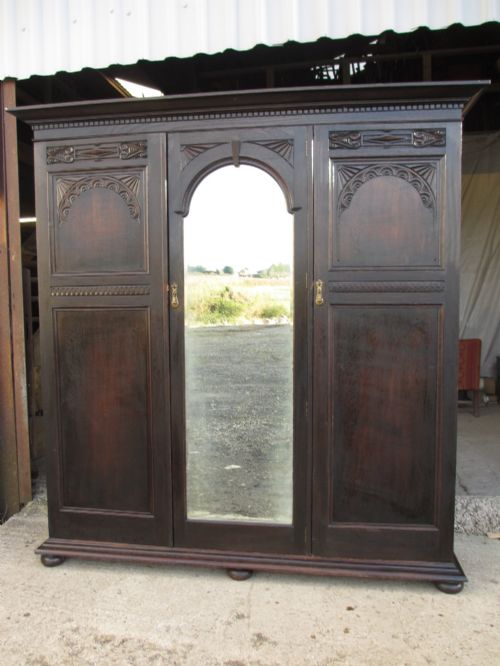
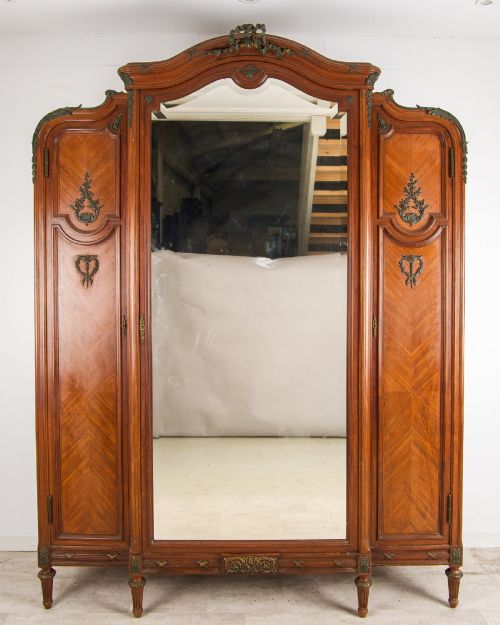
The versions you meet on this page span several distinct styles, including simple oak utility pieces, inlaid mahogany Edwardian designs, and dramatic burr walnut or Art Deco statements. French armoires and compactum formats also appear, bringing mirrored doors, carved details, and breakfront shapes into the mix.
How they were made
Cabinet makers built these wardrobes using solid timber carcases faced with figured veneers like mahogany, burr walnut, and satinwood, often supported by oak or pine internal framing. Decorative impact relied on timber selection, natural grain patterns, and controlled staining rather than excessive applied ornament.
Makers integrated brass hardware, cast bronze ormolu mounts, and bevelled mirror glass into the doors, while carving, string inlay, and architectural cornices finished the exteriors.
One school cupboard managed to sneak into the wardrobe lineup, proving that strict children's discipline requires very tall storage.
What varies in quality
Quality rests in timber selection and the integrity of the carcase construction, where figured veneers and matching grain patterns separate standard utility cupboards from finer commissions. Solid timber drawer linings, tight door seating, and original brass fittings indicate higher workshop standards.
The presence of integrated mirror glass, refined carving, and sophisticated internal configurations such as compactum trays or hanging compartments elevates a piece above simpler vernacular examples.
JEAN FAURE·Harry and Lou Epstein·Jenners of Edinburgh
The Vintage Three Door Wardrobe Glossary
- Compactum
- A fitted wardrobe that includes internal drawers, shelves, and hanging space within a single multi-door unit. This layout maximises bedroom storage efficiency.
- Armoire
- A traditional European large cupboard or wardrobe with hinged doors. These pieces often exhibit French styling and substantial proportions.
- Breakfront
- A piece of furniture where the central section projects forward from the flanking wings. This architectural arrangement creates depth and shadow across the facade.
- Ormolu
- Gilded bronze mounts applied as decorative ornaments to furniture. They appear frequently on French-influenced pieces from the nineteenth century.
Vintage Three Door Wardrobe: Frequently Asked Questions
How do I fit a large wardrobe?
Most vintage three door wardrobes are constructed in modular sections consisting of a central carcase, two side hanging robes, and a detachable cornice and plinth. This dismantling method allows the pieces to be transported and assembled within standard bedroom spaces.
Ensure you measure your ceiling height and wall clearance carefully before delivery, as breakfront cornices and mirrored doors require adequate clearance during room positioning.
Are the mirrors original?
Many wardrobes retain their original bevelled mirror glass, which often displays light foxing or age spots characteristic of period mercury or silver backing techniques. These subtle signs confirm the glass belongs to the original construction era of the wardrobe.
Replacement mirrors do occur during restorations, though original plates remain preferred by collectors for authenticity.
How do I tell Edwardian from Victorian?
Victorian wardrobes generally utilise denser, darker timbers like solid mahogany with heavier carved cornices and deep panelled doors. They lean towards formal architectural proportions and rich, dark polish.
Edwardian examples often feature lighter satinwood or inlaid mahogany, brighter finishes, and more delicate Arts and Nouveau influences, reflecting a shift towards airier bedroom aesthetics.