


Traditional Timber Armoire
These traditional timber armoire pieces offer substantial storage through historic craftsmanship.
Traditional Timber Armoire
When you search for a traditional timber armoire, you find large storage furniture built to house clothes, linen, and household provisions. These pieces span Georgian, Victorian, and Edwardian periods alongside regional vernacular and Chinese designs.
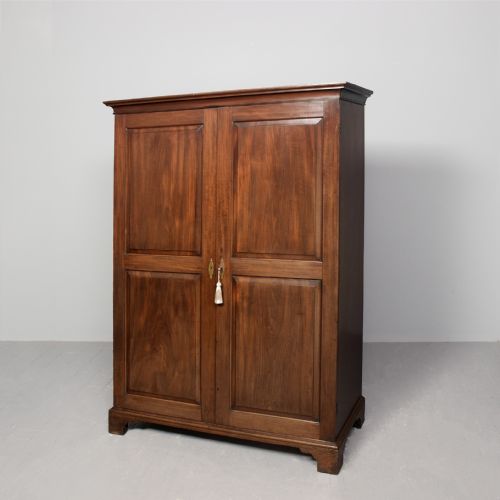
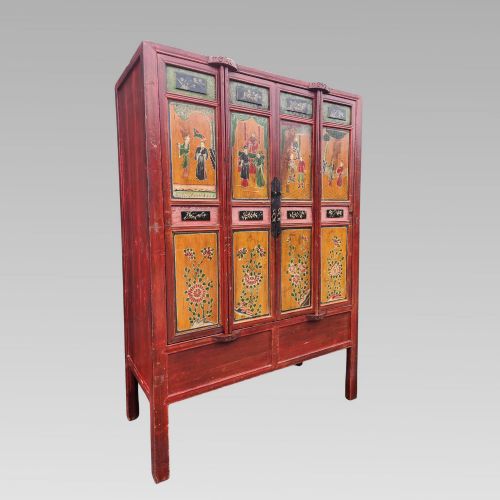
You are most likely to meet mahogany wardrobes and painted pine cupboards from the nineteenth century on this page. Examples range from early Georgian press designs to Welsh vernacular hanging cupboards and Chinese lacquer storage cabinets.
Regional pieces display distinct local character, whether through scumble painted finishes on housekeepers cupboards or elaborate dragon carvings on zitan compound cabinets. Each form serves the practical need for enclosed storage with varying levels of decorative detail.
How they were made
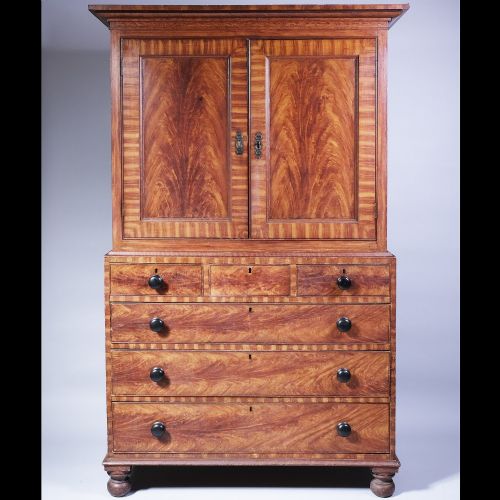
Cabinet makers utilised solid woods and selected veneers such as mahogany, walnut, and pine for carcass construction. Flame mahogany veneer provides figured surfaces on Georgian presses, while hardwood and softwoods form the structure of regional and Chinese pieces.
Surface treatments include traditional paint finishes like scumble, applied lacquer, and intricate hand carving. Brass hardware functions as hinges and escutcheons, securing doors and drawers across diverse stylistic traditions.
Current listings feature pieces spanning the 18th, 19th, and early 20th centuries, utilising mahogany, pine, walnut, and lacquer.
What varies in quality
Quality rests in the selection of timber and the execution of structural joinery. Finer pieces employ well-figured veneers and stable solid hardwoods that maintain integrity over centuries of use.
Decorative work separates standard utility storage from exceptional examples. Carving depth, applied lacquer preservation, and the retention of original painted finishes determine the distinction between ordinary workshop production and master craftsmanship.
The Traditional Timber Armoire Glossary
- Armoire
- A tall cupboard or wardrobe, traditionally used for storing clothes. These items often feature double doors enclosing hanging space or shelving.
- Veneer
- A thin slice of superior wood applied to a base timber surface. Flame mahogany veneer creates dramatic grain patterns on formal eighteenth and nineteenth century furniture.
- Scumble paint
- A decorative paint technique involving translucent glazes dragged or textured over a base colour. This finish mimics more expensive graining or adds rustic character to country pieces.
- Press
- A piece of furniture designed for storing linen or garments, often combining upper cupboard sections with lower drawer units. Georgian examples demonstrate formal architectural proportions.
Traditional Timber Armoire: Frequently Asked Questions
What is a traditional timber armoire?
A traditional timber armoire is a large freestanding cabinet designed for storage, encompassing wardrobes, linen presses, and larder cupboards. They provide enclosed space for household goods using historic wood construction.
These pieces reflect the domestic habits and decorative tastes of their respective periods, ranging from formal British mahogany to regional painted pine and Chinese lacquer.
How do I date a timber armoire?
Dating relies on identifying timber species, construction methods, and stylistic details associated with periods like the Georgian era or the nineteenth century. Secondary woods and hardware fixings offer further clues.
Changes in proportion and decorative motifs, such as George III lines or Edwardian detailing, help narrow down the decade of manufacture.
Where were these armoires used?
These cabinets served domestic roles in bedrooms, hallways, and large kitchens across different cultures. Housekeepers cupboards stored provisions, while wardrobes held garments.
Their substantial size meant they formed major focal points within period domestic interiors, combining utility with visual presence.
How do I care for antique timber?
Protect antique timber by maintaining stable room humidity and avoiding direct sunlight. Gentle dusting with a dry cloth preserves polished and painted surfaces.
Avoid chemical polishes that can degrade historic lacquer, wax, or scumble paint finishes over time.