



Three Door Clothes Cupboard
A three door clothes cupboard is a substantial storage piece that anchors a bedroom with presence.
Three Door Clothes Cupboard
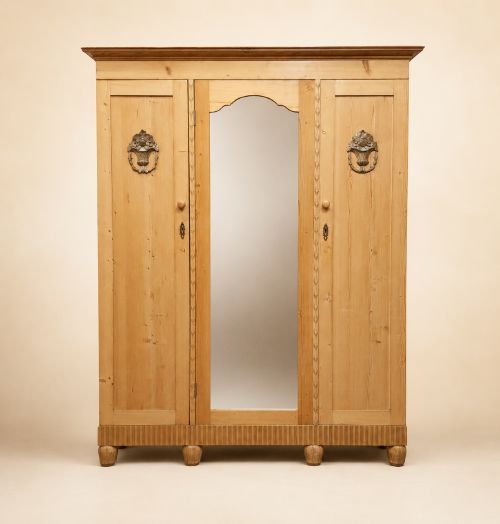
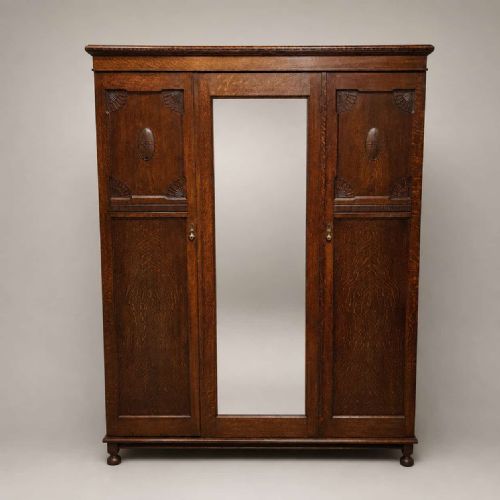
When you search for three door clothes cupboard, you encounter substantial storage furniture designed to hold garments across multiple internal sections. These pieces span the nineteenth century, the Edwardian era, and into the 1920s and 1930s.
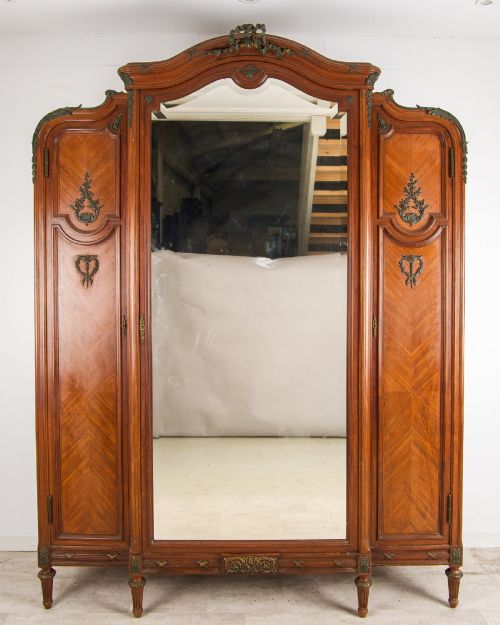
You are most likely to meet mahogany or oak triple wardrobes and compactum formats on this page. Examples range from Victorian breakfront designs to Edwardian inlaid satinwood and French armoires.
The assortment includes regional pieces like English country house Gothic styles alongside continental variants featuring mirror glass and ormolu mounts. Each format offers a combination of hanging space and internal drawers or shelving.
How they were made
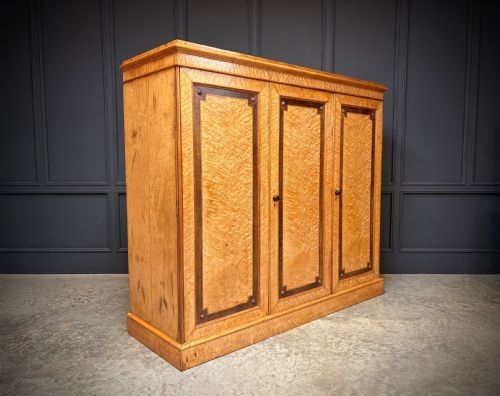
Cabinet makers utilised dense hardwoods such as mahogany, oak, and satinwood alongside softer timbers like pine and pitch pine for carcases and panels. These woods were often selected for specific grain patterns, including birds eye maple and pollard oak veneers.
Construction methods involved panelled doors, breakfront configurations, and internal compactum arrangements designed to maximise utility. Decoration frequently incorporated carved details, mahogany inlay, and cast brass hardware.
Mirrored door panels appeared regularly in later nineteenth century and Edwardian pieces, requiring robust framing to support the heavy glass. Ormolu mounts and gilt bronze details were applied to select continental French armoires.
Listings feature woods spanning mahogany, oak, satinwood, pine, and pitch pine, alongside mirror glass and brass hardware.
What varies in quality
The distinction between standard utility furniture and superior pieces rests on timber selection and architectural ambition. Breakfront forms and decorative veneer choices such as birds eye maple or pollard oak indicate more ambitious workshop production.
Carved ornament and inlaid stringing demonstrate the hand of skilled cabinet makers. The integration of mirrored doors and cast ormolu mounts further separates simpler pine and oak cupboards from finer revival and art deco examples.
The Three Door Clothes Cupboard Glossary
- Compactum
- A fitted wardrobe that includes internal drawers, sliding trays, and hanging space within a single multi-door unit.
- Breakfront
- A piece of furniture where the central section projects forward from the flanking outer sections.
- Ormolu
- Gilded bronze mounts applied as decorative ornaments to furniture, particularly seen on continental pieces.
- Pitch Pine
- A durable resinous pine timber utilised for sturdy nineteenth century wardrobe construction.
- Pollard Oak
- Timber taken from trees that have been pollarded, producing a distinctive knotted grain pattern used for decorative veneers.
Three Door Clothes Cupboard: Frequently Asked Questions
How do I fit a triple wardrobe?
Measure your ceiling height and wall space carefully before bringing a large triple wardrobe into a room. Many of these pieces are tall and deep, requiring adequate clearance for doors to swing open.
Consider assembly requirements as well, because nineteenth century and Edwardian wardrobes often dismantle into sections for transport and installation.
What is a compactum wardrobe?
A compactum wardrobe combines hanging space with internal drawers, shelves, and sometimes small compartments in one unified piece of furniture. This multi-functional interior layout distinguishes it from a standard hanging wardrobe.
Such configurations became particularly popular during the Victorian and Edwardian periods for efficient bedroom storage.
How do I date a wooden wardrobe?
Examine the timber species, construction techniques, and stylistic details to determine the period of a wardrobe. Victorian pieces often feature heavy mahogany or pollard oak, while Edwardian examples frequently showcase satinwood inlay or lighter mahogany.
Revival styles from the early twentieth century often borrow decorative motifs from earlier eras like the Regency or Jacobean periods.
Are mirrored doors original to these pieces?
Mirrored door panels became widespread during the Victorian era and remained popular through the Edwardian period. Bevelled glass and heavy framing are typical of these original installations.
They served the dual purpose of checking attire and reflecting light within the bedroom.