


Vintage Terrestrial Globe
A vintage terrestrial globe maps the shifting political boundaries of past decades onto a neat sphere for the desk or floor.
Vintage Terrestrial Globe
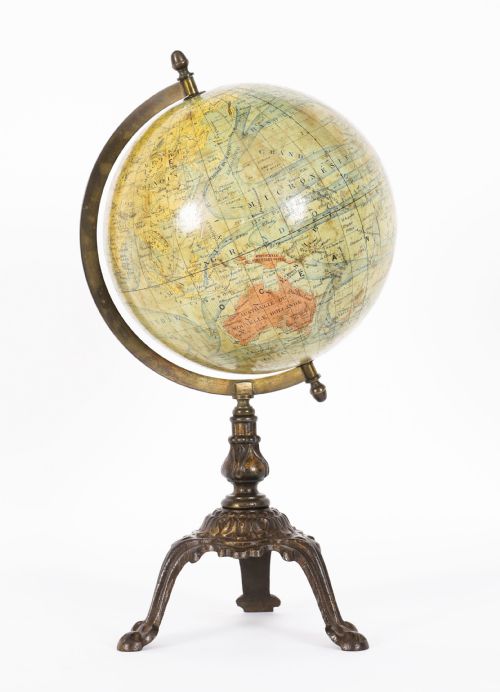
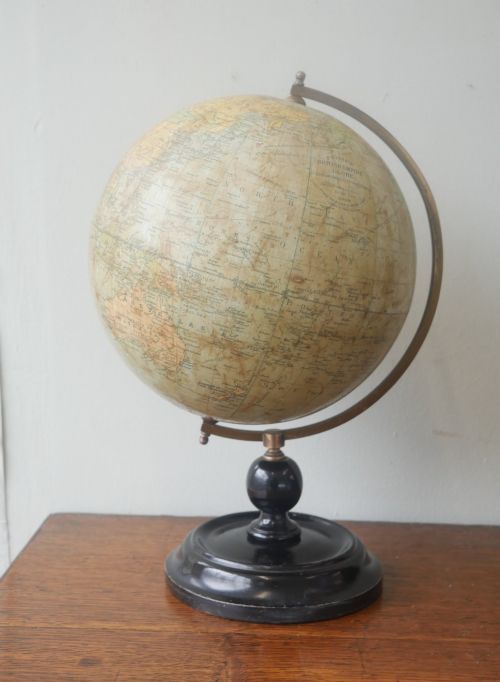
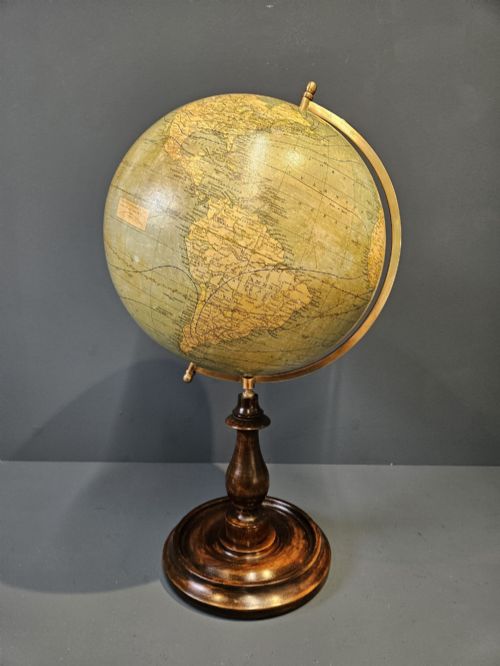
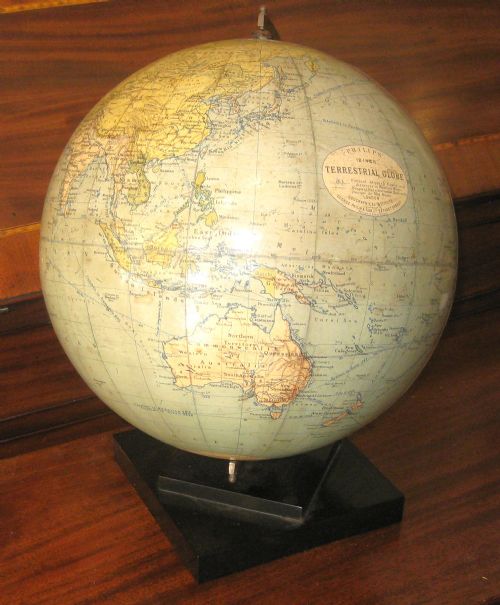
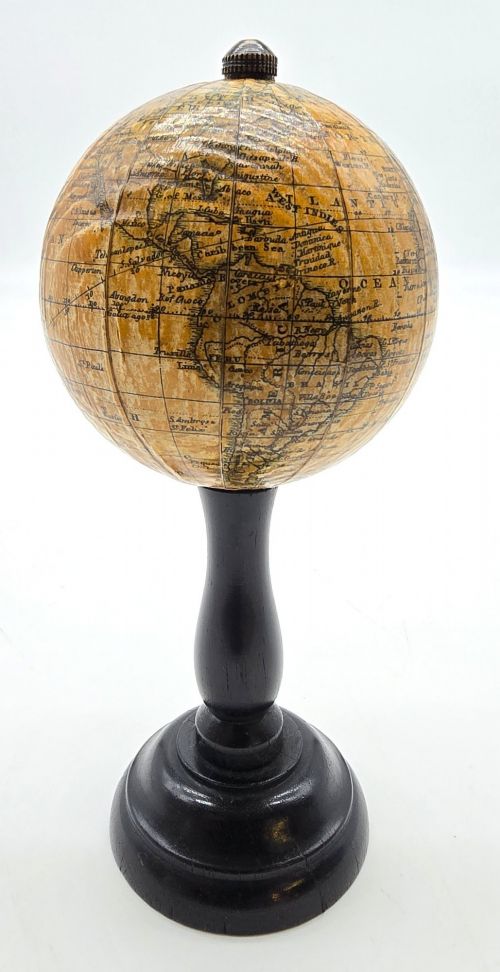
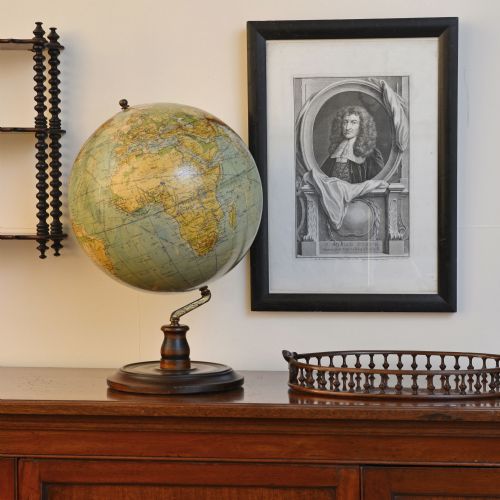
A vintage terrestrial globe takes several physical forms, ranging from tiny four-inch desktop models to large floor-standing editions supported by wooden or cast iron stands. The selection here leans heavily towards twentieth-century productions from the 1920s and 1930s, alongside nineteenth-century examples and Victorian pieces.
Makers such as George Philip and Son, Bacon, and Geographia dominate the English examples, while French cartography is represented by publishers like Lebegue, J. Forest, and M. Vivien. Buyers encounter miniatures designed for small desks as well as substantial pairs of terrestrial and celestial globes intended for libraries and studies.
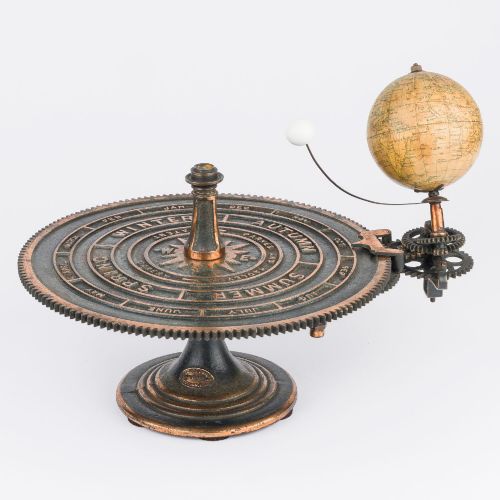
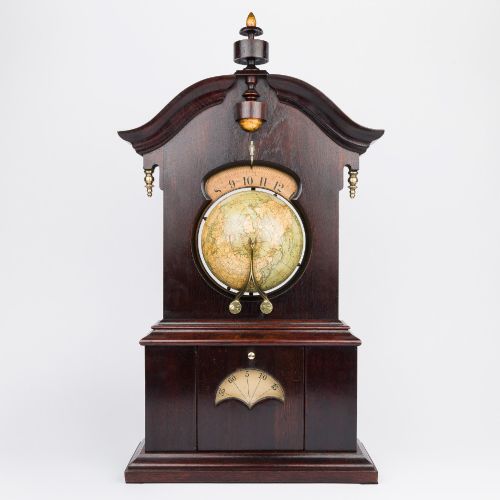
Most items serve primarily as desktop or table globes, though floor-standing variants appear with walnut or ebonised wood feet. Alongside standard cartographic spheres, the selection includes related scientific instruments, orreries, and specialised items such as oil lamps featuring terrestrial globe glass shades.
Materials and Construction
The foundation of these spheres typically involves a plaster or papier-mâché core built up over a mould, onto which printed gores of paper are hand-applied in gore strips. Artisans align these segmented paper maps carefully across the spherical surface to ensure geographic continuity.
Vintage Terrestrial Globe Retail Price Guide 2026
Typical asking prices for vintage terrestrial globe among the pieces listed under this phrase on Sellingantiques today, from the lower quarter to the upper quarter. They describe what is for sale here now, not the wider market.
Some nineteenth-century globes still label disputed territories with optimistic enthusiasm.
Craft and Condition
Quality rests primarily in the precision of the cartographic engraving and the clarity of the printed gores, where finer examples display sharp place names and delicate hand-colouring. The legibility of historical boundaries and geographical details distinguishes standard educational globes from finer library editions.
Physical execution also dictates value, seen in the solidity of the turning on wooden stands, the thickness of the brass half-meridians, and the stability of the plaster core. Well-preserved paper surfaces retain their original varnishes and tones without extensive flaking, loss, or heavy yellowing.
Lebegue and Cie·Geographia·George Philips and Son·J. Forest·Malby·Carey·Crunchley
The Vintage Terrestrial Globe Glossary
- Gore
- A wedge-shaped paper strip printed with map details that is applied to the sphere. Multiple gores are pasted together to cover the round surface of the globe.
- Meridian
- The brass or metal ring that encircles the globe and holds it at an axis. This calibrated ring allows the sphere to tilt and rotate.
- Orrery
- A mechanical model of the solar system that illustrates the relative positions and motions of the planets and moons. These scientific instruments often accompany collections of globes.
- Celestial globe
- A companion sphere to the terrestrial globe that maps the constellations and stars visible in the night sky. They are frequently found as pairs alongside earth globes.
Vintage Terrestrial Globe: Frequently Asked Questions
How do I date a vintage globe?
Cartographic details offer the most reliable clues for dating. Examine the national borders, capital cities, and colonial territories depicted on the paper gores, as these change with historical events.
Publishers often printed revision dates near the cartouche, or the decorative label on the sphere. Comparing the printed place names against known historical shifts narrows down the decade of production.
Where should I place a floor globe?
Floor-standing models require a stable corner or study away from direct sunlight and moisture. Natural light causes the paper gores and varnishes to fade over time.
Keep them clear of active heat sources like radiators to prevent the wood stands from drying out and the plaster cores from cracking.
What is the difference between terrestrial and celestial globes?
A terrestrial globe maps the Earth, showing continents, oceans, countries, and shipping routes. These were used for navigation, geography, and education.
A celestial globe maps the heavens, displaying stars, constellations, and astronomical coordinates from a geocentric perspective. They were historically used to track stellar movements.