



Vintage Tapestry Settee
A vintage tapestry settee brings heavy texture and historical presence into a room, offering deep seating wrapped in patterned fabric.
Vintage Tapestry Settee
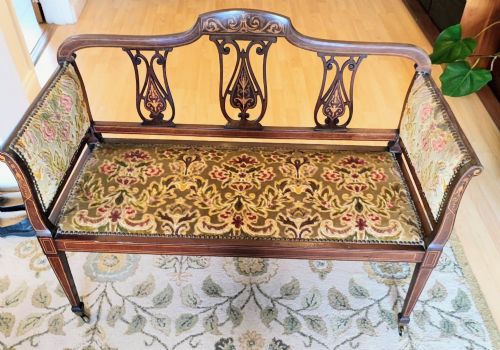
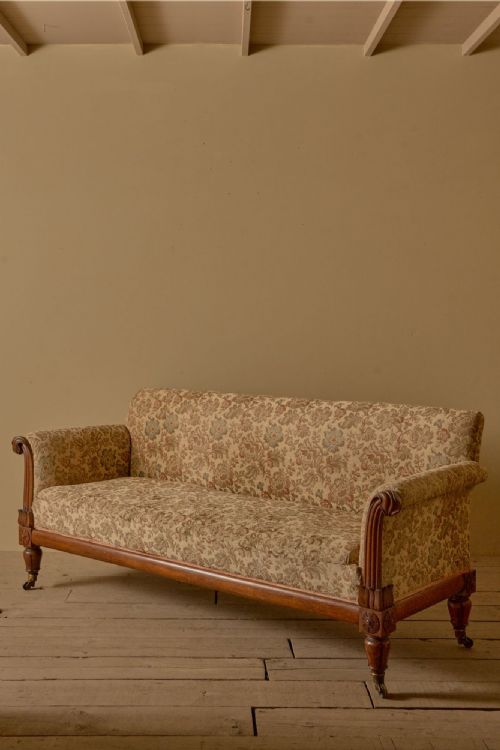
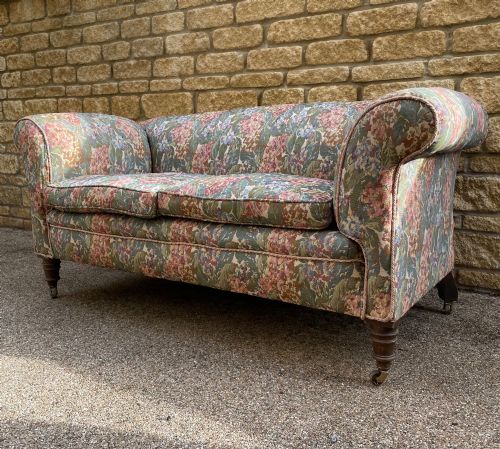
When you search for a vintage tapestry settee, you look at seating that spans from the eighteenth century through to the Edwardian period and the early twentieth century. These pieces appear in forms such as compact window seats, drop arm sofas, and grand salon settees.
The aesthetic reaches across various traditional idioms, including Victorian, Arts and Crafts, Louis XV Revival, Rococo Revival, and Edwardian Sheraton Revival styles. French influences also emerge through pieces labelled as canapes and antique French salon seating.
Most examples you meet on this page rely on substantial timber frames upholstered in heavy woven fabrics. Some items incorporate specific retail connections or literary associations, linking them to known periods of design history.
How they were made
Makers built the foundational frames of a vintage tapestry settee using hardwoods such as mahogany, rosewood, and oak, alongside painted timbers and gilt carved wood. Brass details frequently appeared on castors or decorative mounts.
Upholstery formed the central decorative element, utilising tapestry fabric, standard upholstery fabric, and velvet. Skilled hands stitched or tacked these heavy textiles over padded frames, sometimes pairing the main settee with matching chairs in a salon suite.
Vintage Tapestry Settee Retail Price Guide 2026
Typical asking prices for vintage tapestry settee among the pieces listed under this phrase on Sellingantiques today, from the lower quarter to the upper quarter. They describe what is for sale here now, not the wider market.
Listings for this phrase include pieces from the nineteenth century, Edwardian era, and the nineteen-twenties, utilising mahogany, rosewood, oak, and brass.
What varies in quality
The distinction between ordinary and superior pieces rests in the carving work on the wooden frame and the integrity of the joinery. Gilt carved surfaces and intricate inlays demand high levels of cabinet-making skill that elevate a piece beyond standard production.
The condition and tightness of the woven textile define the upper tier of these settees. Heavy tapestry fabric that retains its structural density and clear imagery indicates a higher grade of manufacture than basic replacement cloth.
The Vintage Tapestry Settee Glossary
- Drop arm
- A sofa mechanism allowing one or both armrests to lower into a horizontal position. This feature turns a standard settee into a daybed for resting.
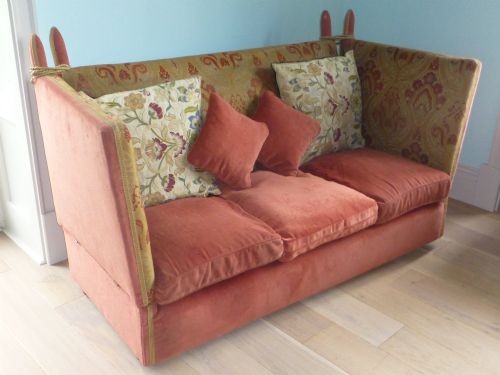
- Knowle sofa
- A traditional British seating form featuring hinged or adjustable high sides connected to the back by cords or tassels. It originates from Knole House in Kent.
- Canape
- A French term for an upholstered decorative sofa or settee with an exposed wooden frame. These pieces often feature carved details and cabriole legs.
- Salon suite
- A matching set of seating furniture designed for a formal drawing room. It typically includes a central settee accompanied by matching armchairs.
- Sheraton revival
- A late nineteenth and early twentieth century design movement that reinterpreted the light, neoclassical furniture of George Sheraton. It often incorporates delicate inlay and tapered legs.
Vintage Tapestry Settee: Frequently Asked Questions
How do I clean a vintage tapestry settee?
Vacuum the fabric gently using a soft brush attachment to lift surface dust without snagging the weave. Professional textile cleaning is safer for older woven surfaces than standard domestic spot treatments.
Avoid soaking the upholstery or applying harsh chemical detergents that can weaken aged threads and underlying padding.
Can I use a vintage tapestry settee every day?
Most of these settees are sturdy enough for daily use if the timber frame remains solid and the joints are secure. Placing them away from direct sunlight protects the woven tapestry from fading.
Sitting gently and avoiding heavy impacts helps preserve the historic upholstery materials and internal webbing.
How do I identify a Victorian settee?
Victorian pieces often display heavier proportions, dark timber frames, and deep buttoning or patterned upholstery fabrics. Styles range from elaborate floral carved woodwork to simpler drop arm mechanisms.
Checking the construction methods underneath or inside the frame helps confirm the nineteenth-century origins of the piece.
What is an Arts and Crafts settee?
An Arts and Crafts settee emphasises honest construction, visible wood grain, and simpler structural lines rather than ornate revival ornamentation. Oak is the primary timber used in these pieces.
They often form part of a larger salon suite designed to highlight traditional craftsmanship over industrial manufacturing.