
Vintage Tambour Front
Vintage tambour front furniture brings sliding slatted wooden closures together with ingenious workspace design.
Vintage Tambour Front
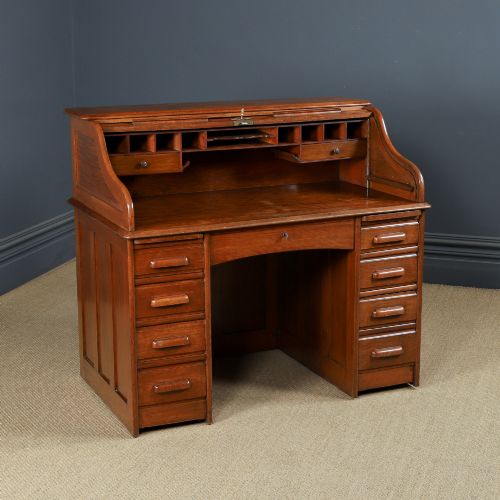
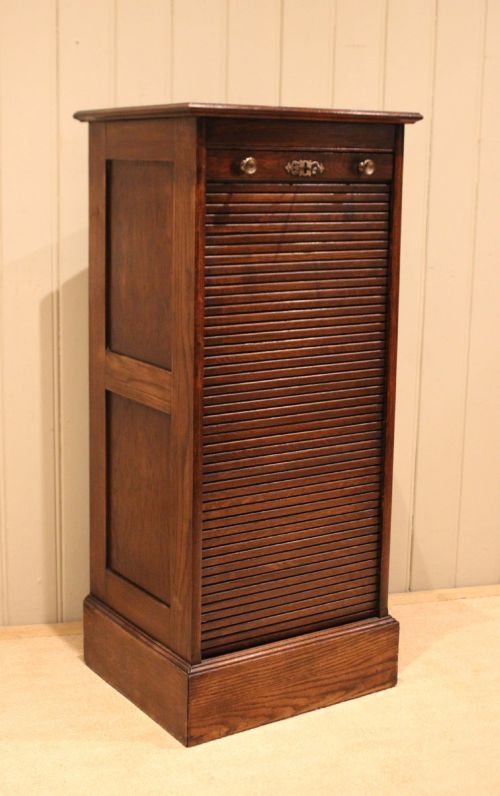
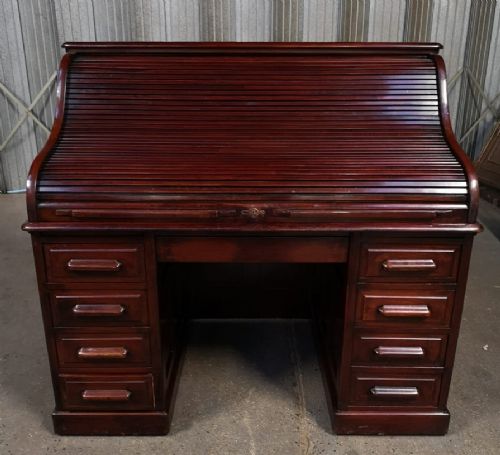
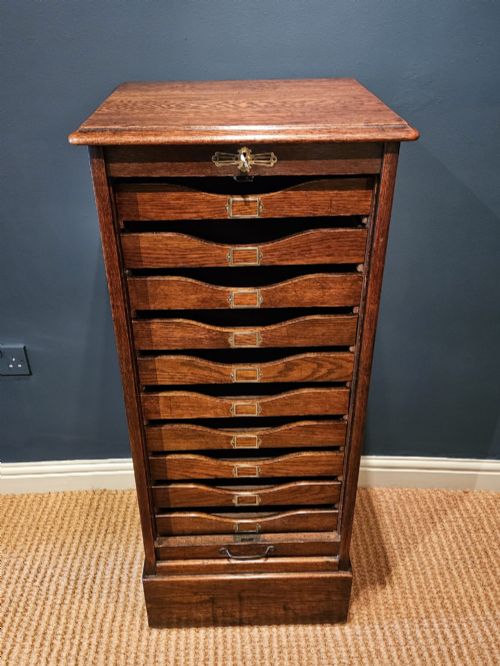
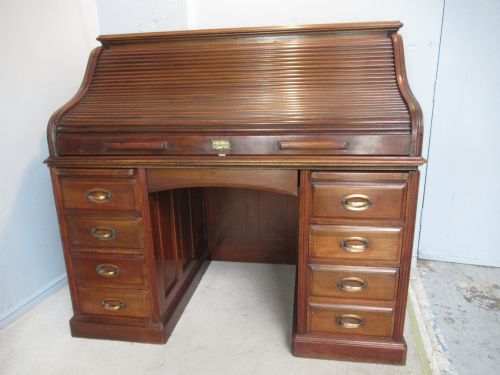
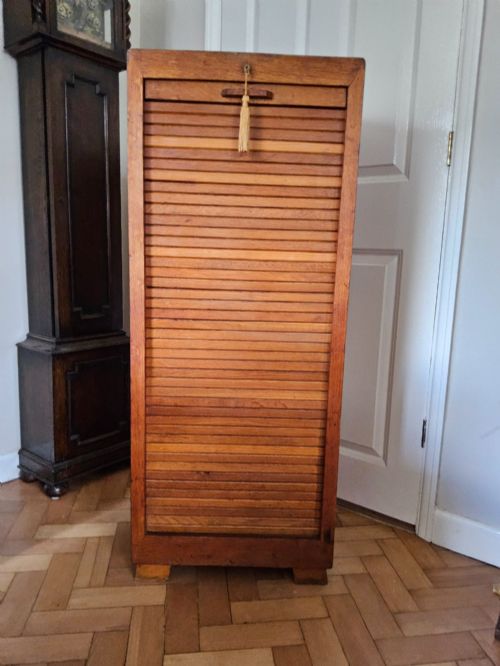
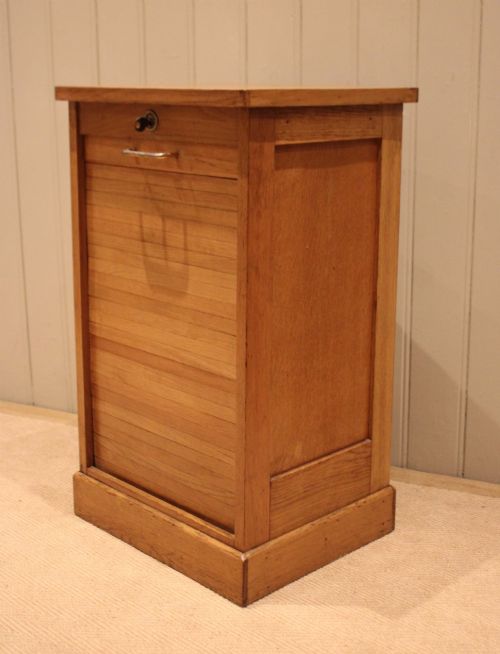
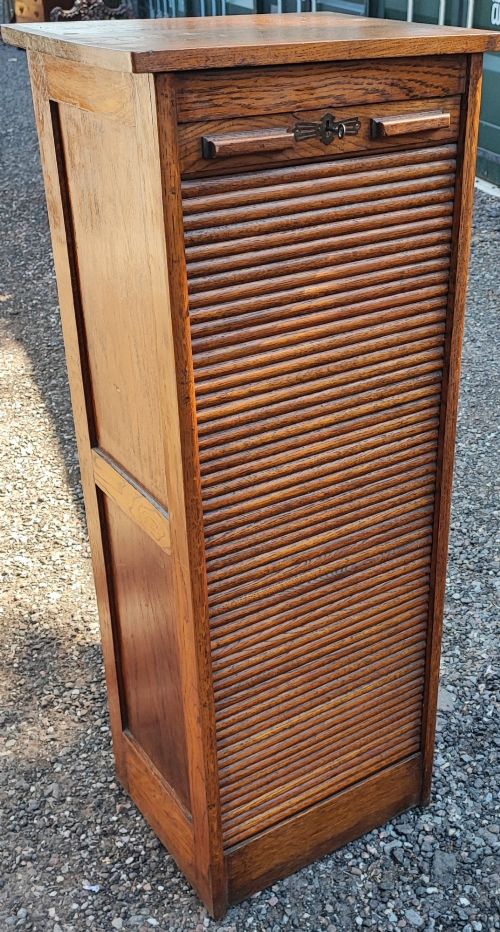
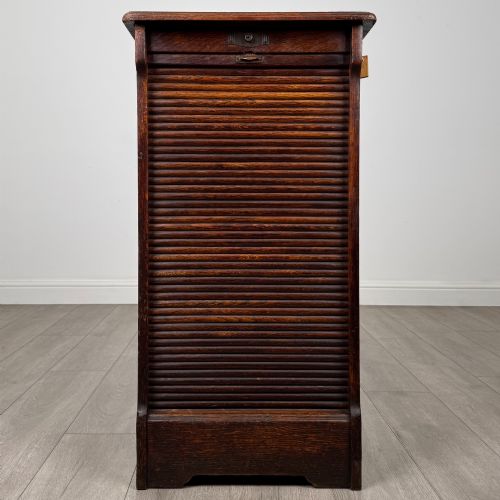
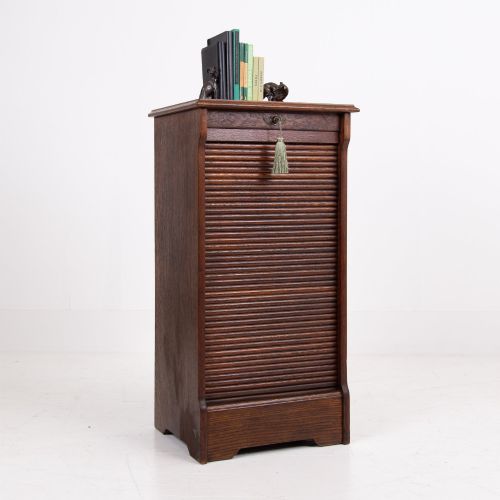
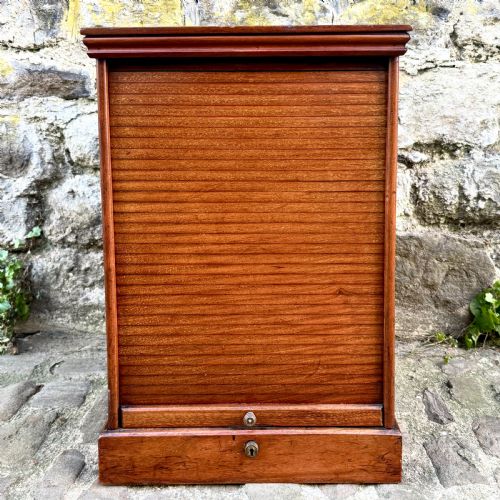
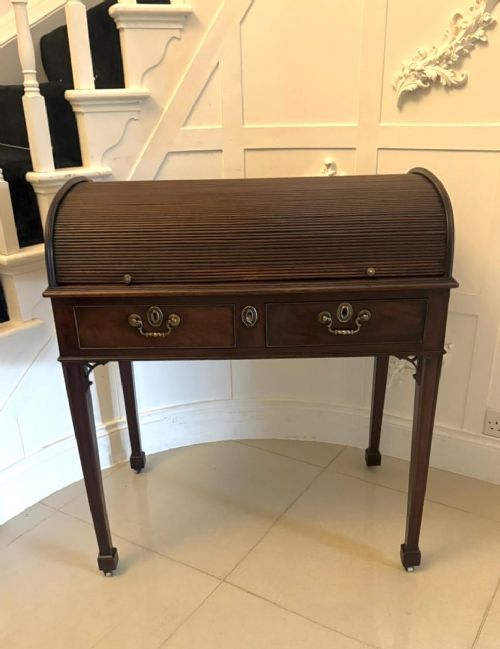
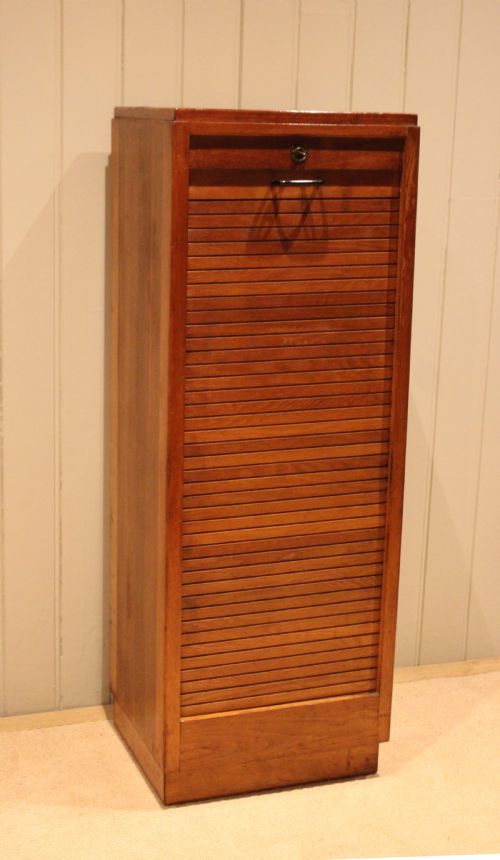
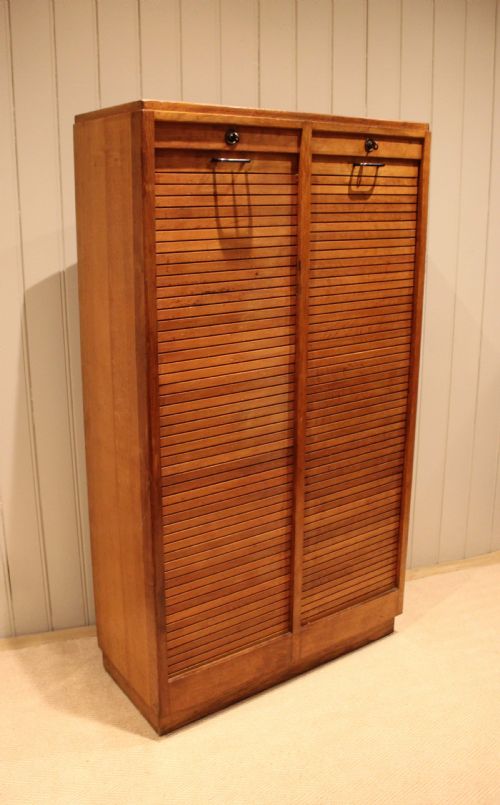
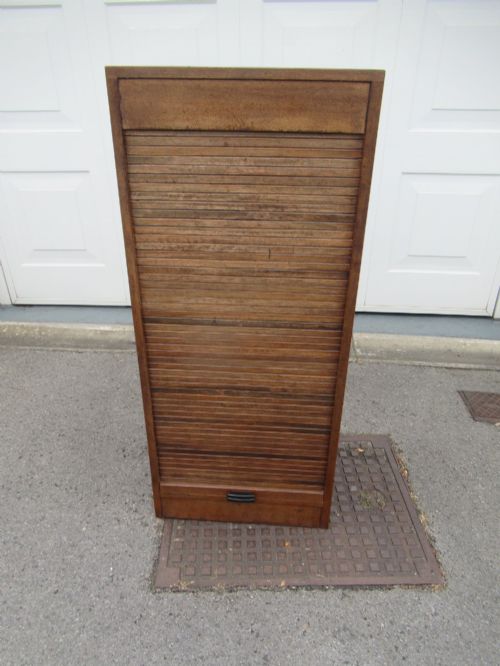
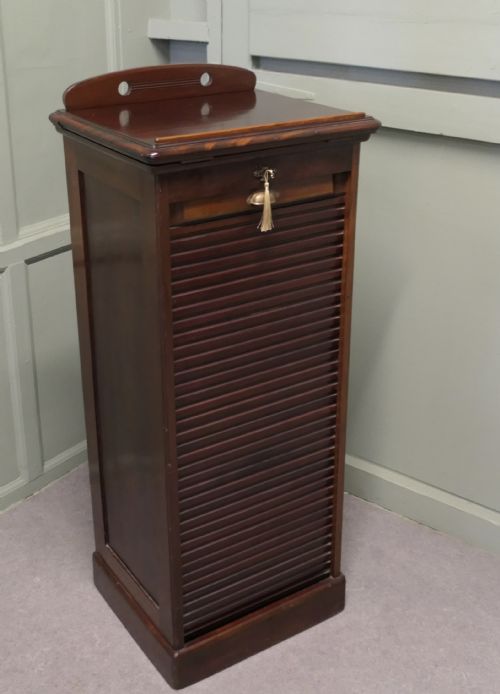
When you search for vintage tambour front items, you encounter clever storage solutions designed for papers, books, and office equipment. These pieces primarily take the form of roll top desks, filing cabinets, and bedside cupboards originating from periods spanning the Victorian era through the 1940s. Oak and mahogany dominate the selection, accompanied by walnut, rosewood, and satinwood examples.
Office furniture forms the majority of the current selection, particularly single and double filing cabinets alongside pedestal desks. You also discover occasional bedroom pieces such as nightstands and bedside cabinets constructed in various woods. Styles range from Georgian and Victorian designs through Edwardian craftsmanship to Art Deco and French utility pieces.
How they were made
Makers constructed the sliding closures from narrow vertical slats of timber glued to a flexible canvas or fabric backing. This textile backing allows the wooden shutter to glide smoothly around curved tracks within the body of the desk or cabinet.
Solid woods like oak and mahogany provide the structural frame, frequently combined with brass hardware, leather writing inserts, and marble tops on select French nightstands. Joinery relies on traditional techniques to house the internal mechanisms and support heavy daily office use.
Office furniture dominates the selection, featuring roll top desks, filing cabinets, cupboards, and occasional bedside tables.
What varies in quality
The smoothness of the sliding mechanism separates everyday office furniture from finer workshop output. A superior tambour door travels along its wooden tracks without binding or sagging, maintaining alignment across the entire curve.
Timber selection and secondary detailing mark the difference between standard utilitarian pieces and distinguished examples. Finely figured mahogany, quarter-sawn oak, and substantial brass fittings elevate the presence of a cabinet or desk significantly.
Maples of London and Paris
The Vintage Tambour Front Glossary
- Tambour
- A flexible shutter made from narrow strips of wood affixed to canvas, allowing it to slide around a curved track to conceal storage spaces.
- Roll top desk
- A large writing desk featuring a tambour cylinder that pulls down to cover the entire work surface and pigeonholes.
- Quarter-sawn oak
- Timber cut radially to the growth rings, producing a distinctive decorative grain pattern often seen in quality Edwardian furniture.
- Pedestal desk
- A heavy writing table supported by two separate stacks of drawers or filing compartments beneath the main work surface.
Vintage Tambour Front: Frequently Asked Questions
How do tambour doors work?
Narrow wooden slats are fastened to a strong canvas backing, which allows the entire shutter to bend and follow a recessed track inside the cabinet.
This mechanism lets the door disappear completely into the body of the furniture when opened, saving space in tight offices.
What periods do these pieces date from?
The listings span from the late nineteenth century through the Edwardian period and into the 1930s and 1940s.
You also encounter occasional Georgian and Victorian examples featuring traditional mahogany and rosewood construction.
Where were tambour cabinets used?
Businesses utilised these filing cabinets and desks to organise ledgers, correspondence, and office stationery securely.
Smaller variants also served domestic purposes as bedside tables, nightstands, and writing desks in home studies.
How do I maintain the sliding mechanism?
Keep the wooden tracks clean and free from dust build-up using a dry cloth or soft brush.
Applying suitable wax or lubricant sparingly to the runners ensures the slats continue to glide freely along the curve.