
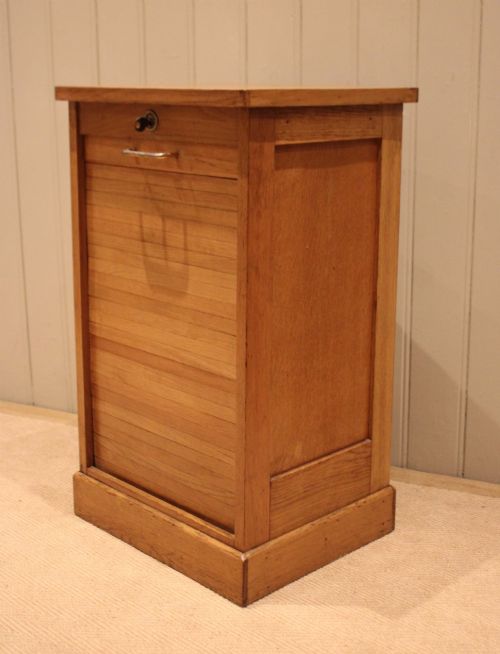
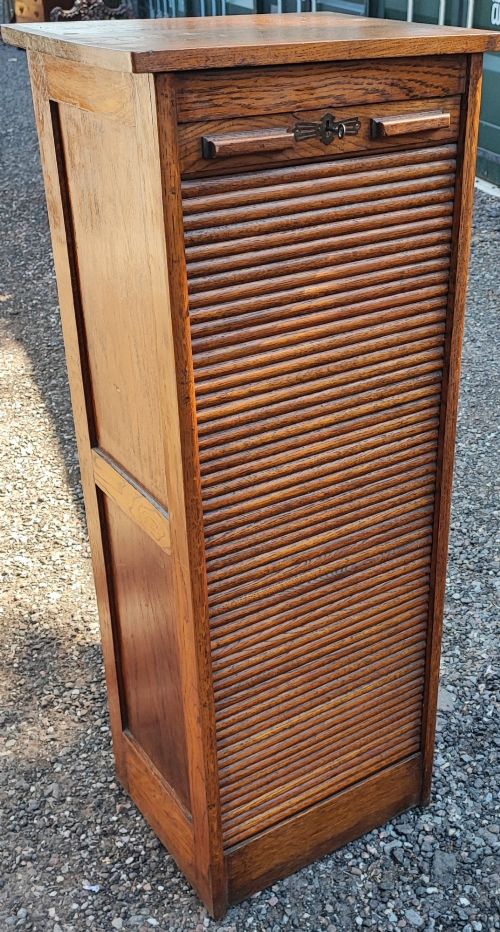
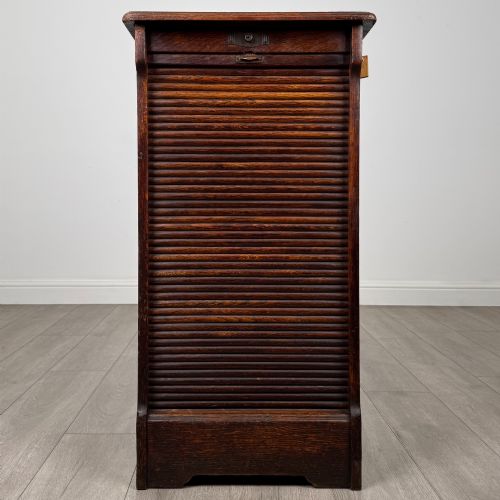
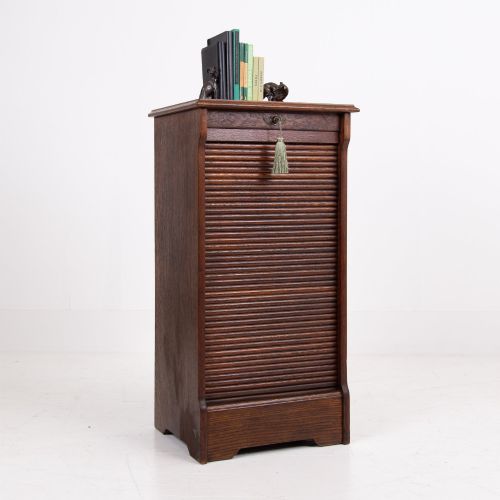
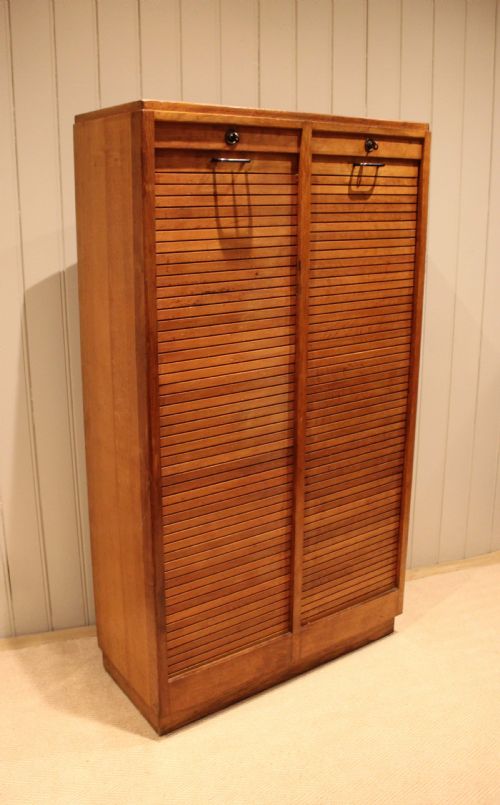
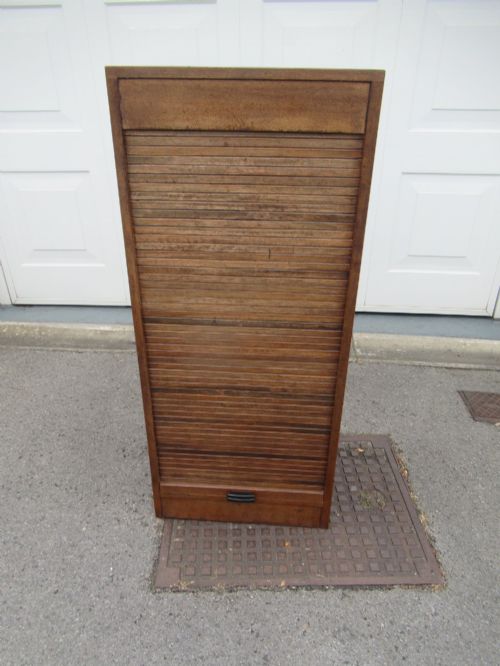
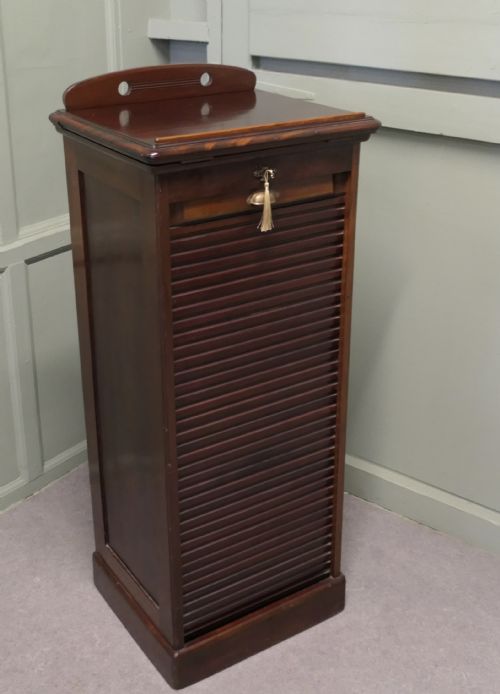

Vintage Tambour Cabinet
A vintage tambour cabinet uses flexible slatted shutters to conceal interior filing or storage with mechanical precision.
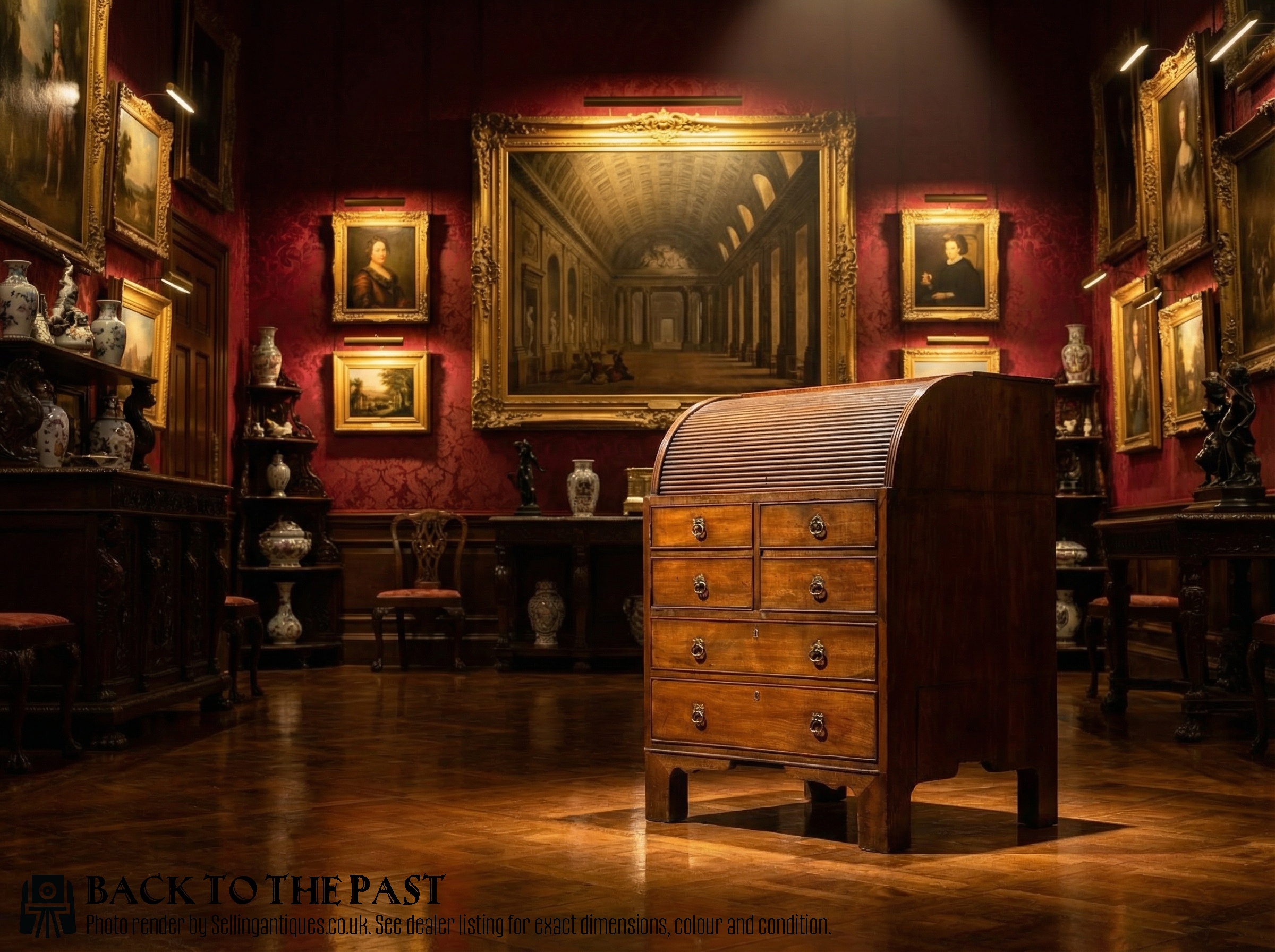
Vintage Tambour Cabinet
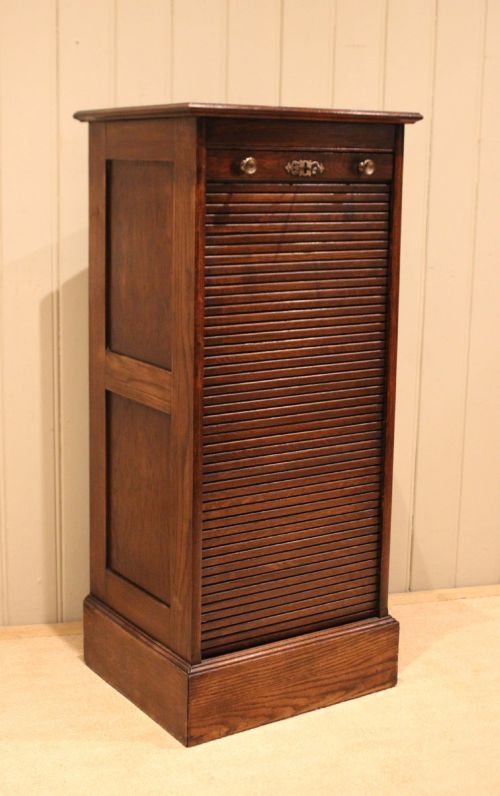
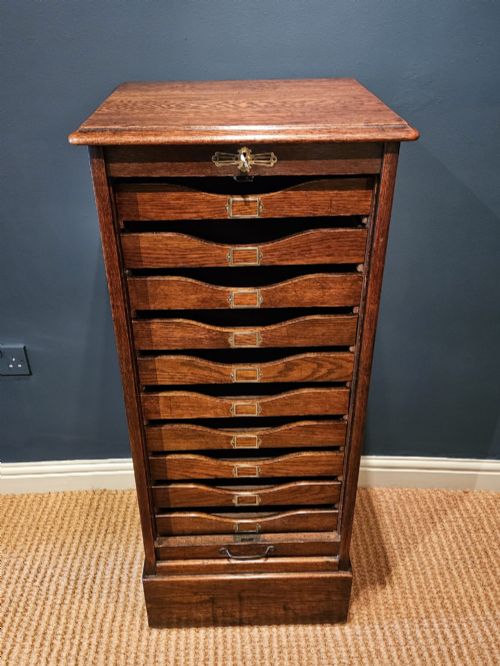
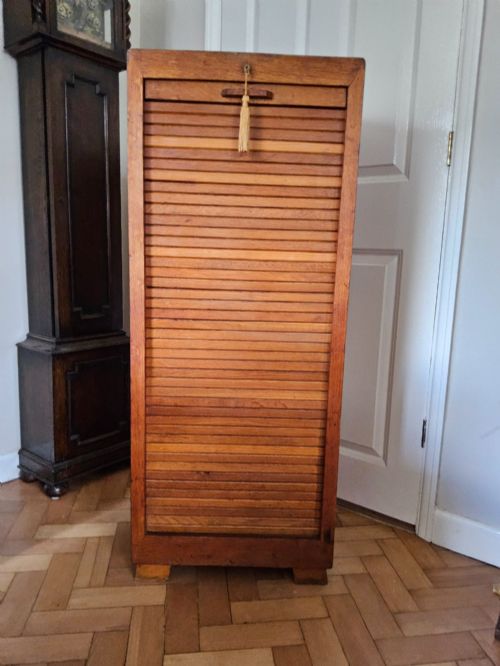
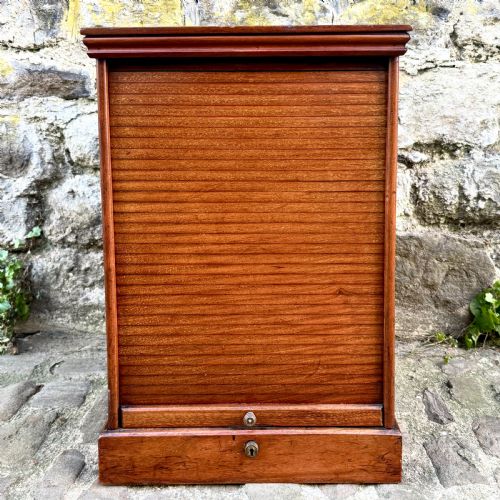
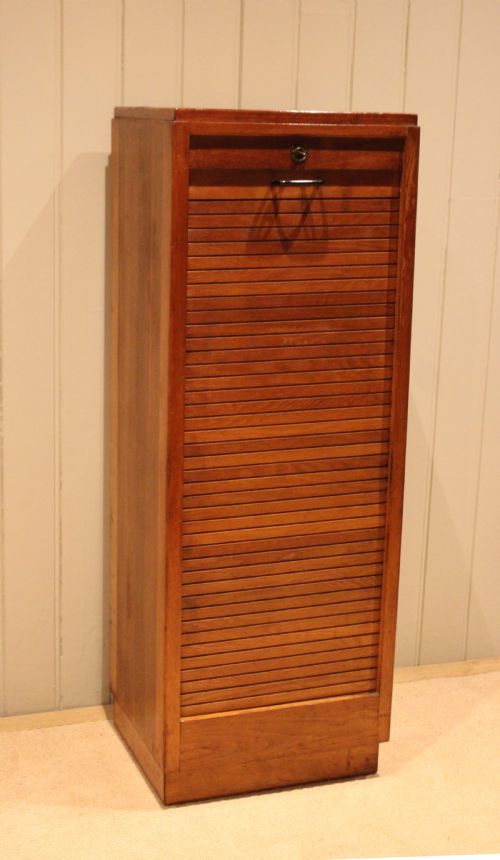
A vintage tambour cabinet serves primarily as a filing cabinet or office storage unit, frequently encountered in oak or mahogany from the Edwardian period and the early twentieth century. These pieces combine functional workspace organisation with domestic bedside or library use, adapting slatted wooden shutters to slide smoothly around curved tracks.
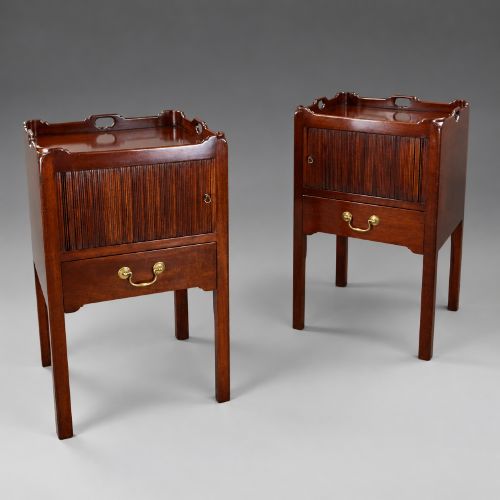
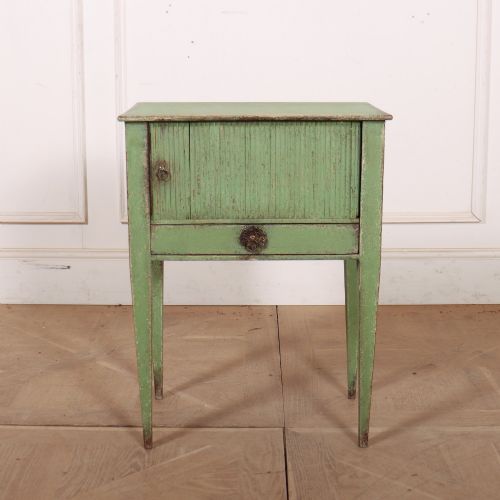
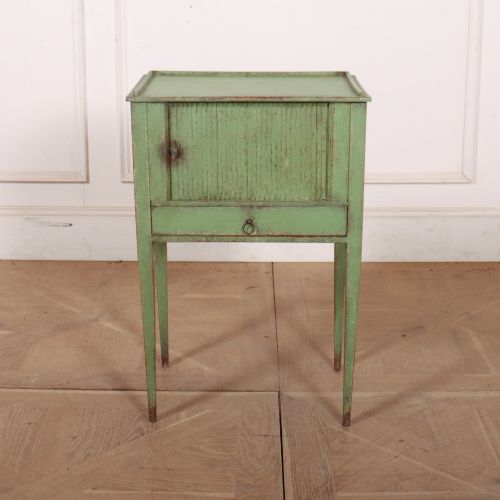
The selection ranges from single and double front filing cabinets to compact bedside tables and writing desks. Oak examples predominate alongside walnut and mahogany, originating from English workshops as well as French and Dutch makers.
Craftsmanship and Proportion
Quality rests upon the smooth operation of the slatted shutter and the integrity of its hidden track system. Superior examples maintain exact alignment along the curve, whereas lesser pieces suffer from jammed slats or sagging canvas backing.
Timber selection and secondary material choices further distinguish the range. Finely figured mahogany and quarter-sawn oak sit above standard painted or utility pieces, while proportion and original brass fittings complete the construction standard.
Listings feature woods spanning oak, mahogany, walnut, and yew alongside practical brass hardware and canvas backing.
The Vintage Tambour Cabinet Glossary
- Tambour
- A flexible shutter formed of narrow wooden slats attached to canvas backing, designed to slide around a curved track. This mechanism allows access to narrow cabinet interiors without requiring clearance for swinging doors.
- Filing Cabinet
- An upright piece of office furniture fitted with internal partitions or drawers for document storage. These units frequently incorporate tambour fronts to enclose the working compartments.
- Marquetry
- Decorative woodwork where thin slices of veneer are fitted into a ground material to form geometric or floral patterns. This technique appears on eighteenth and nineteenth century cabinet doors and tops.
- Nightstand
- A small bedside table or cabinet used to hold personal items. Examples include tambour doors or open compartments for bedside storage.
- Tray-top
- A tabletop finished with a raised moulded edge or gallery to prevent items from rolling off. This feature is common on Georgian bedside cabinets and commodes.
Vintage Tambour Cabinet: Frequently Asked Questions
How do tambour doors operate?
Tambour doors consist of thin vertical wooden slats glued to a flexible canvas backing that runs inside grooved tracks cut into the cabinet sides. As the shutter is pushed upward or sideways, the slats follow the curve of the track to slide out of sight.
Maintaining this movement requires clean tracks free from dust and old wax buildup. Periodic light lubrication keeps the canvas and wood sliding smoothly.
What periods do these cabinets span?
The available selection spans from the late nineteenth century through the Edwardian era and into the nineteen thirties. Earlier pieces often display Georgian styling or elaborate marquetry inlay, while twentieth-century versions focus on office utility.
Distinguishing between periods involves examining the timber grain, handle styles, and secondary framing timbers. Edwardian and early twentieth-century pieces rely heavily on heavy oak carcases.
Where were tambour cabinets used?
These cabinets served primarily in commercial offices, legal practices, and studies to organise correspondence and files securely. Their sliding doors made them suitable for compact spaces where traditional swinging cabinet doors required too much clearance.
Over time, smaller versions transitioned into domestic settings as bedside tables or desk organizers. Their adaptable storage made them popular across both workspace and residential environments.
How should I care for a tambour front?
Keep the sliding tracks free of debris and avoid forcing the shutter if resistance occurs along the curve. Gentle cleaning with a soft cloth preserves both the wooden slats and the underlying textile backing.
Apply traditional furniture wax sparingly to exterior surfaces while avoiding heavy buildup inside the door channels. Stable room humidity prevents the wooden slats from swelling and binding within their grooves.