



Vintage Tabletop Mirror Drawers
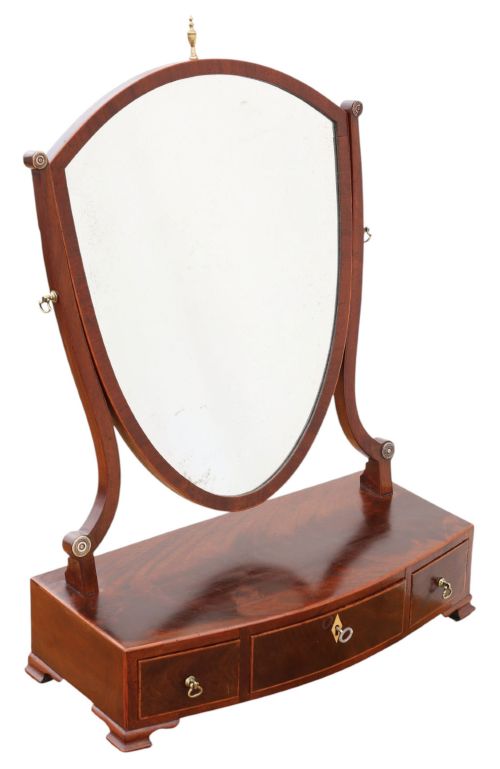
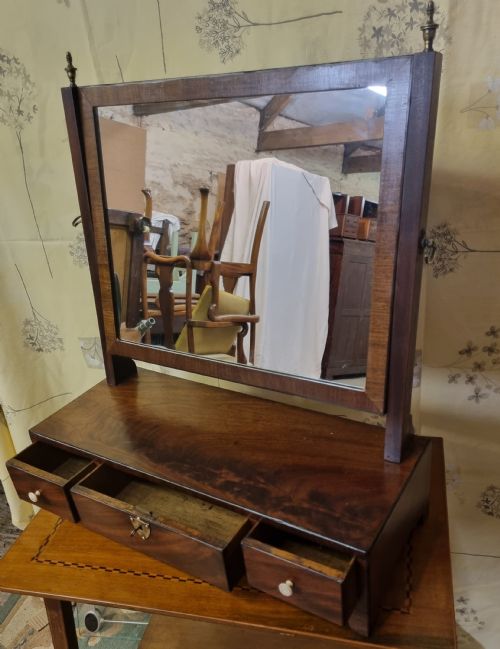
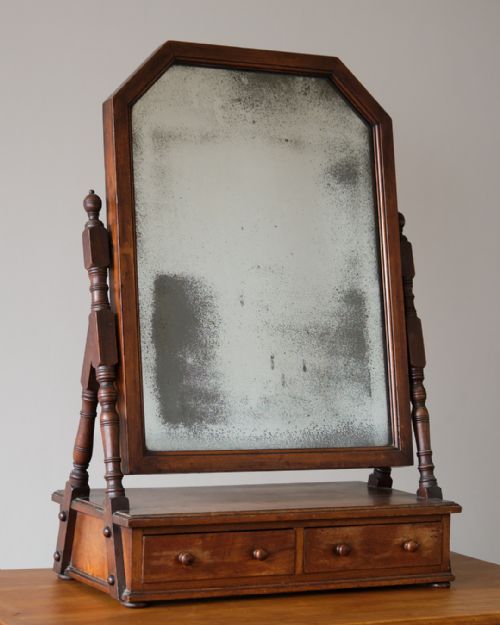
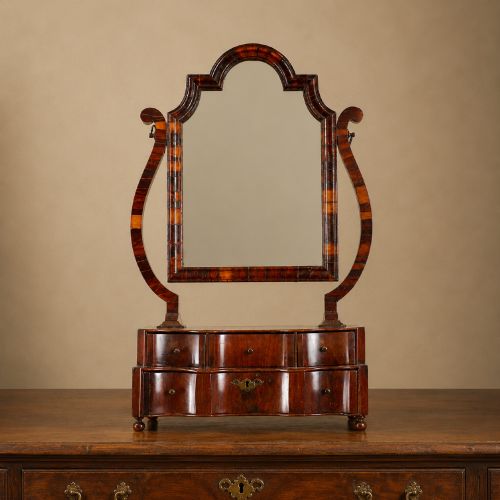
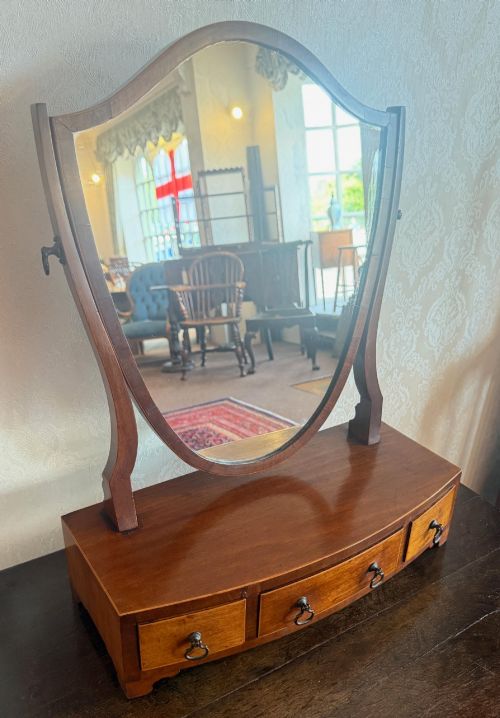
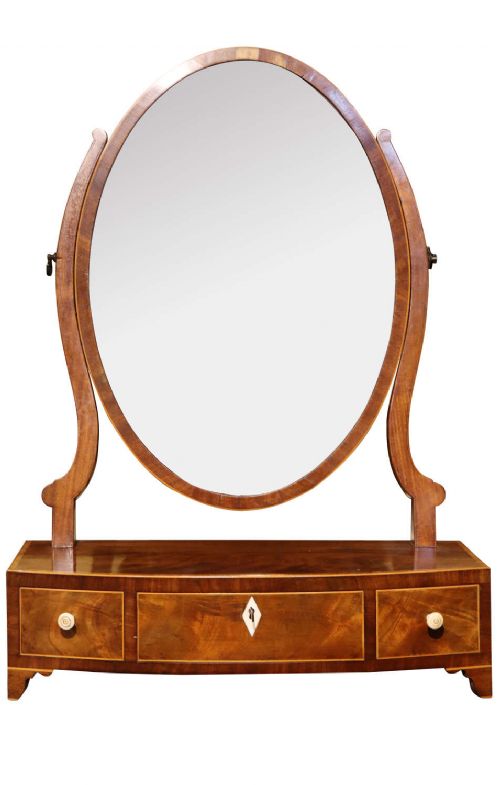
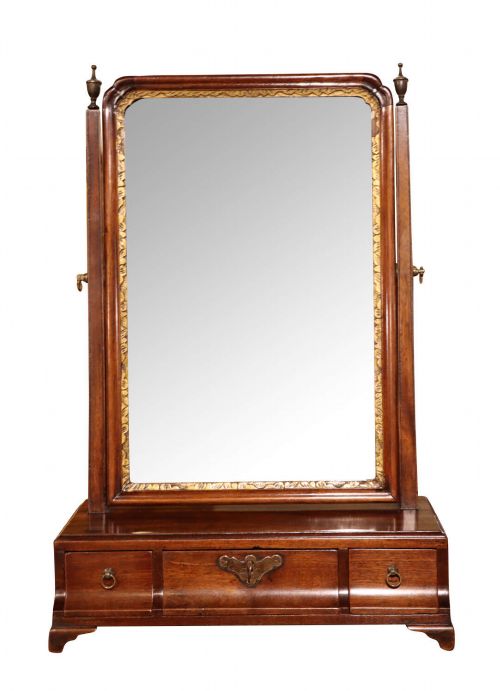
These vintage tabletop mirror drawers are compact dressing mirrors designed for the vanity, offering practical storage alongside an adjustable glass plate.
Vintage Tabletop Mirror Drawers
Vintage tabletop mirror drawers sit upon chests or dressing tables, featuring a swiveling mirror plate mounted above a small base containing functional drawers. These pieces appear in forms such as dressing mirrors, toilet mirrors, and vanity mirrors.
The selections span from the 18th century through the Edwardian period, encompassing Georgian, Victorian, and Queen Anne styles. Buyers encounter various woods and configurations, including shield shapes, serpentine fronts, and standard rectangular swing mirrors.
What varies in quality
The refinement of the timber selection and the precision of the crossbanding or inlay determine the visual standard of each piece. Superior examples display carefully figured veneers and harmonious proportions between the mirror frame and the drawer base.
Original brasses, well-executed serpentine or shield outlines, and subtle carving details elevate certain pieces above standard utilitarian mirrors from the same era.
The listings on this site feature timbers including mahogany, walnut, satinwood, and birch across pieces dated from the 18th century to the Edwardian era.
Heal & Sons
The Vintage Tabletop Mirror Drawers Glossary
- Toilet mirror
- A portable dressing mirror designed to stand on a table or chest, typically fitted with small drawers beneath the glass. These items became essential bedroom furnishings during the 18th and 19th centuries.
- Swing mirror
- A glass plate hung on pivoting pins within a freestanding frame that tilts to adjust the angle. This mechanism allows the user to alter the reflection during grooming.
- Serpentine
- A curved outline featuring a convex centre flanked by concave curves, frequently seen on the drawer fronts of Georgian mirrors. This shaping requires skilled carpentry.
- Crossbanding
- A strip of veneer applied perpendicularly to the grain of the main surface to create a contrasting border. Cabinetmakers used this technique to frame drawer fronts and mirror surrounds.
- Parcel-gilt
- Partially gilded woodwork where thin layers of gold leaf highlight specific carved details or mouldings. This treatment often accents mahogany frames from the Georgian period.
Vintage Tabletop Mirror Drawers: Frequently Asked Questions
Where should I place a tabletop mirror drawer?
These pieces sit comfortably on top of chests of drawers, sideboards, or dedicated dressing tables.
Their compact footprints require minimal surface area while providing both a usable mirror and small compartments for everyday items.
How do I identify a Georgian style mirror?
Georgian examples typically feature rich mahogany or walnut timbers, often with cockbeaded drawer edges and subtle bracket feet.
Many incorporate shaped crests, shield plates, or serpentine fronts characteristic of 18th-century cabinetmaking.
What is the difference between a toilet mirror and a dressing table mirror?
Historically, the terms are often used interchangeably to describe movable tabletop mirrors equipped with storage drawers.
Both variants serve the same function of aiding personal grooming when placed upon a supporting surface.
How do the swing mechanisms work?
The glass frame pivots between two upright vertical arms using threaded metal screws or wooden pegs inserted into the sides.
Tightening these fixings holds the mirror plate at the desired angle for the user.