

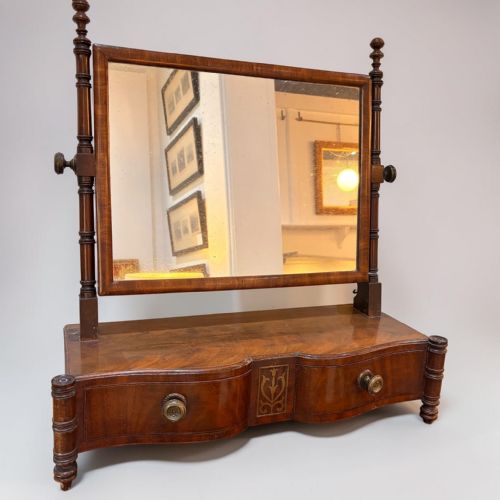

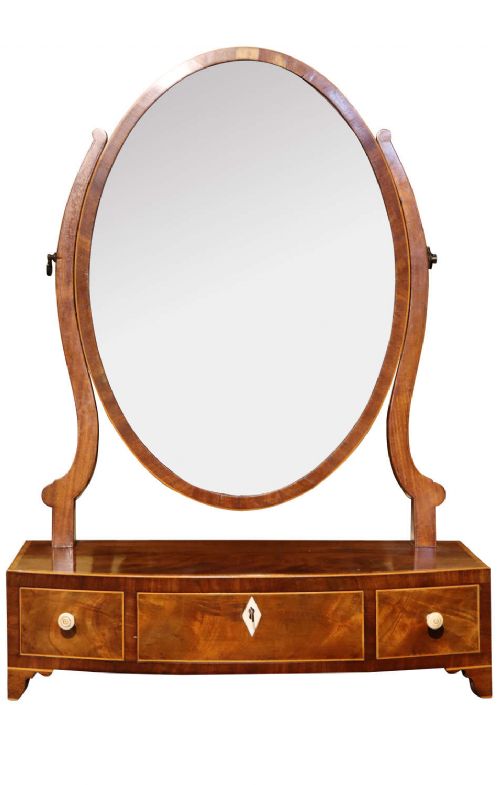

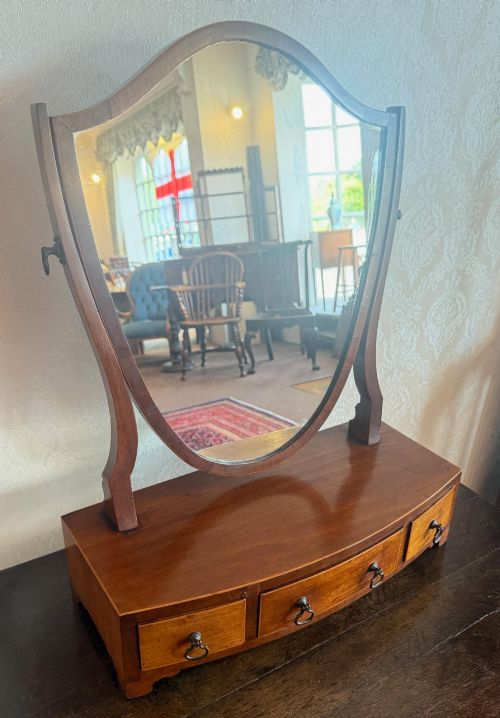


Mahogany Bowfront Dressing Mirror
A mahogany bowfront dressing mirror brings tactile warmth and elegant curves to a room, offering practical use alongside period character.
Mahogany Bowfront Dressing Mirror
A mahogany bowfront dressing mirror is a tabletop looking glass designed for the bedroom or dressing room, combining a curved drawer base with an adjustable glass plate. The form emerges across the eighteenth and nineteenth centuries, spanning Georgian, George III, Regency, and Sheraton styles.
Most examples found here date from the eighteenth and nineteenth centuries, taking the form of dressing table mirrors or toilet mirrors. Makers constructed these pieces using dense timber and fitted them with brass hardware, bone escutcheons, or delicate boxwood inlay.
How they were made
Cabinetmakers selected figured timber such as flame mahogany or burr maple for the visible surfaces, often highlighting the grain with contrasting boxwood inlay or crossbanding. The curved bowfront requires skilled woodworking to shape the solid timber drawers and fit them neatly into the frame.
Mirrors utilise genuine mirror glass secured within upright arms, which allow the plate to tilt. Drawer interiors and secondary framing often incorporate lighter secondary woods, while bone details and brass turnings complete the construction.
Mahogany Bowfront Dressing Mirror Retail Price Guide 2026
Typical asking prices for mahogany bowfront dressing mirror among the pieces listed under this phrase on Sellingantiques today, from the lower quarter to the upper quarter. They describe what is for sale here now, not the wider market.
Listings span the eighteenth and nineteenth centuries, encompassing Georgian, George III, Regency, and Sheraton periods.
What varies in quality
Quality rests on the selection of timber and the crispness of the cabinetwork, particularly in the shaping of the bowfront and the precision of any boxwood inlay. Finer examples display highly figured flame mahogany or burr maple that has aged with a deep, warm tone.
The sophistication of the brass fittings and the presence of original mirror glass influence the desirability of a piece. Well-proportioned uprights and intact bone details indicate superior workshop production from the Georgian and Regency periods.
The Mahogany Bowfront Dressing Mirror Glossary
- Bowfront
- A convex curved front cabinet shape. This design softens the profile of the base and provides small drawers for storage.
- Crossbanding
- A strip of veneer applied across the grain of the primary timber. It creates a decorative border around the edges of drawers or tops.
- Flame mahogany
- A veneer cut from timber where the grain resembles flickering flames. It produces a highly decorative pattern prized by cabinetmakers.
- Toilet mirror
- A traditional term for a small dressing table mirror. These pieces sat upon chests of drawers or dedicated tables.
- Boxwood inlay
- Contrasting pale wood inserted into the darker mahogany surface. This technique forms geometric lines and delicate decorative borders.
Mahogany Bowfront Dressing Mirror: Frequently Asked Questions
Where should I place a dressing mirror?
These mirrors sit comfortably upon a chest of drawers, a sideboard, or a dedicated dressing table. Their compact footprint allows them to bring function and period style to smaller spaces.
Ensure the surface is stable and level to support the weight of the timber frame and glass plate safely.
How do I care for antique mahogany?
Keep the wood away from direct sunlight and steady sources of heat to prevent the mahogany and its veneers from drying out. Dust regularly with a soft, dry cloth.
A light application of traditional wax polish helps nourish the grain and maintain the natural lustre of the timber.
Are the mirror plates original?
Many surviving pieces retain their original mirror glass, which often displays gentle foxing and age spots. Some mirrors have received replacement glass over the centuries to maintain a clear reflection.
Examining the silvering and the edges of the glass helps determine whether the plate dates to the period of the frame.
How do I distinguish Regency from Georgian styles?
Georgian and George III pieces frequently display classical proportions, bracket feet, and refined boxwood stringing. Regency examples often incorporate bolder brass mounts, sweeping scroll supports, and rich mahogany grains.
Both periods share a high standard of cabinetmaking, though the decorative vocabulary shifts toward bolder classical influences by the early nineteenth century.