


Vintage Suzani Wall Hanging
A vintage suzani wall hanging brings Central Asian textile artistry into a modern interior, offering rich embroidered designs created in nineteenth- and early twentieth-century workshops.
Vintage Suzani Wall Hanging
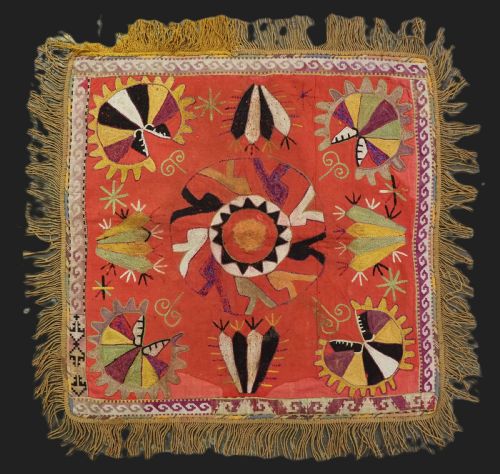
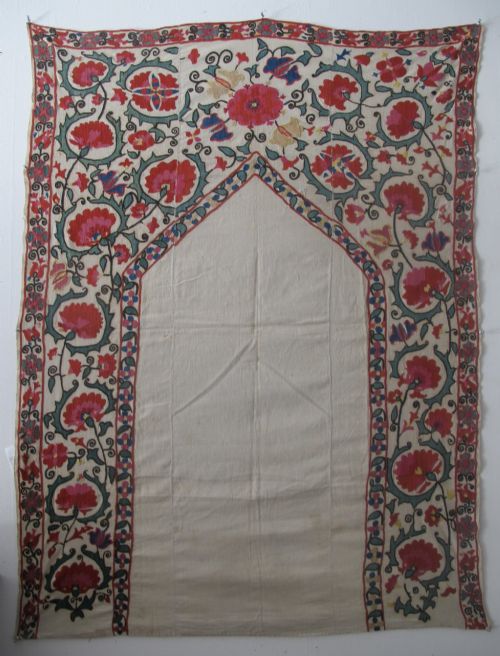
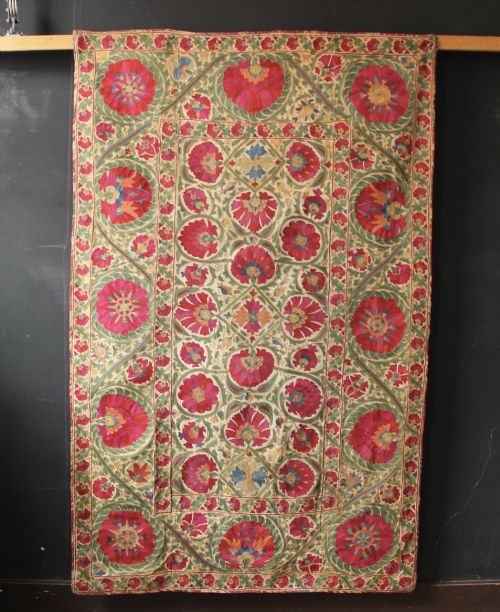
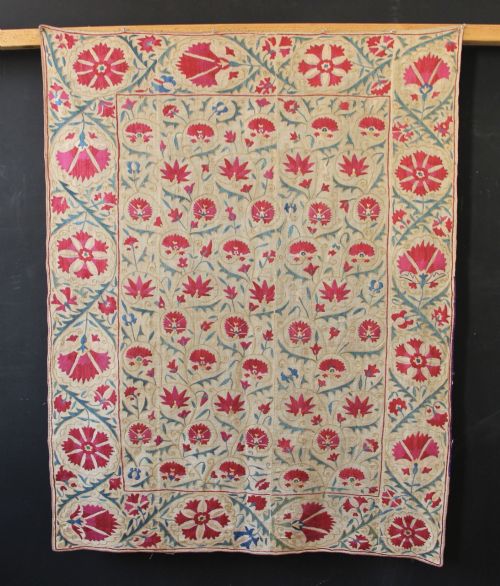
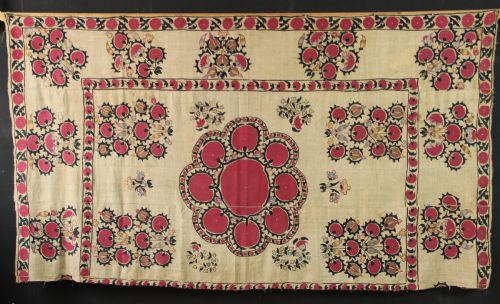
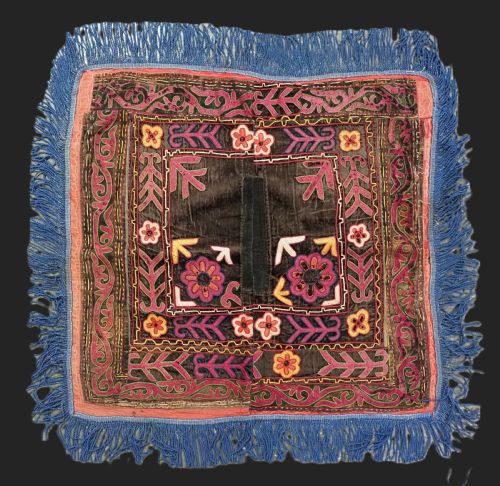
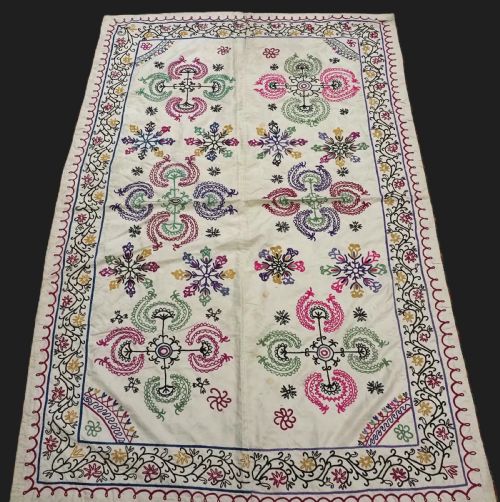
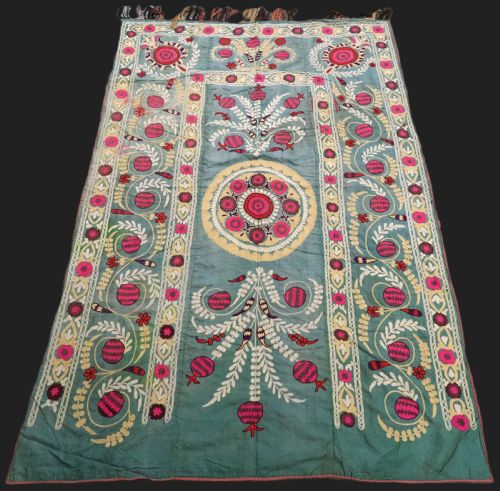
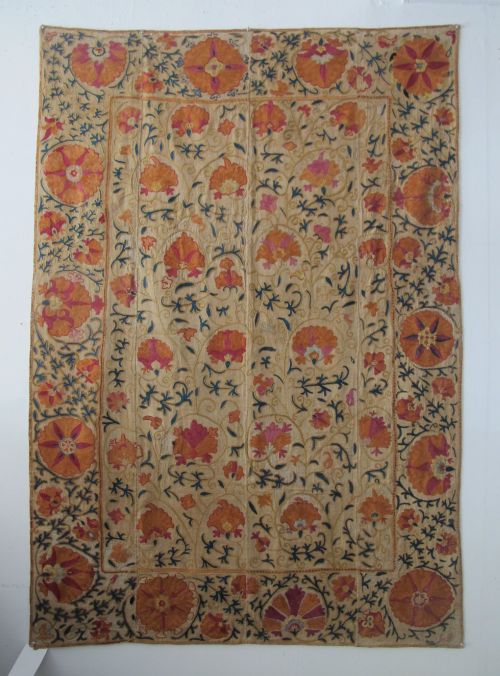
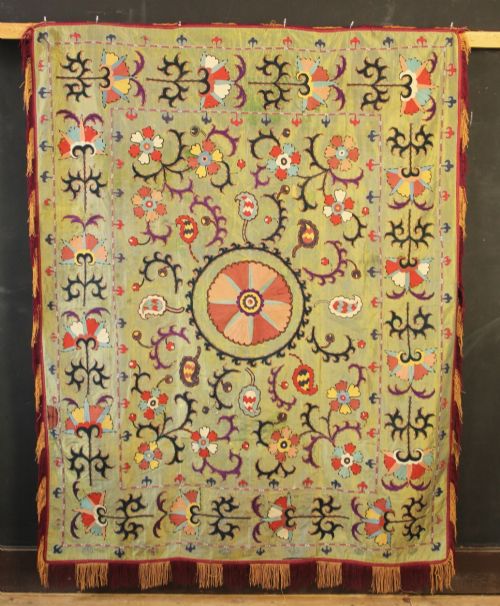
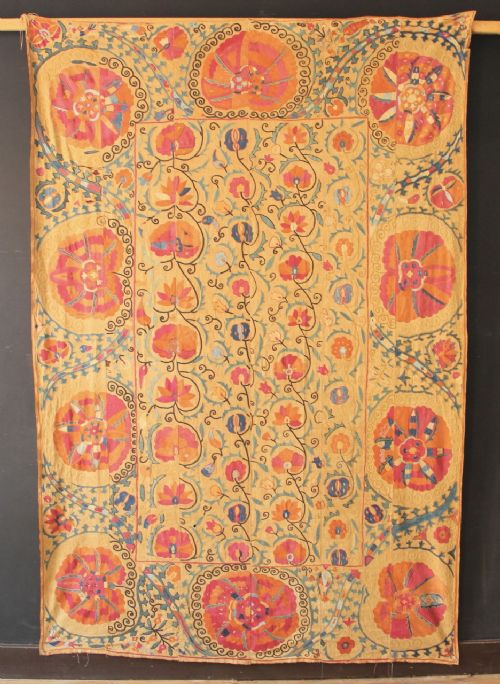
A vintage suzani wall hanging represents traditional Central Asian needlework, encompassing forms such as large medallion panels, smaller nim suzani panels, and regional pieces from Bukhara, Tashkent, and Shakrisabz. Buyers will frequently encounter nineteenth- and early twentieth-century examples originating from Uzbek, Tajik, and Lakai tribal makers.
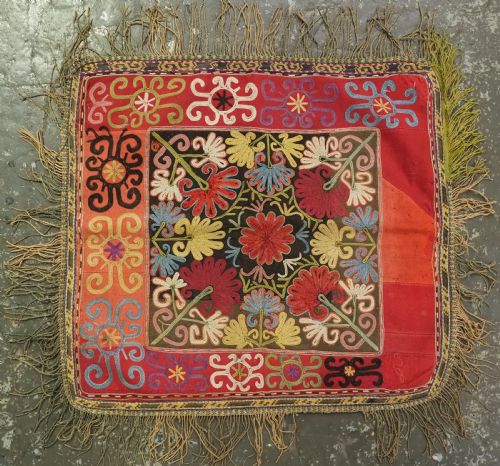
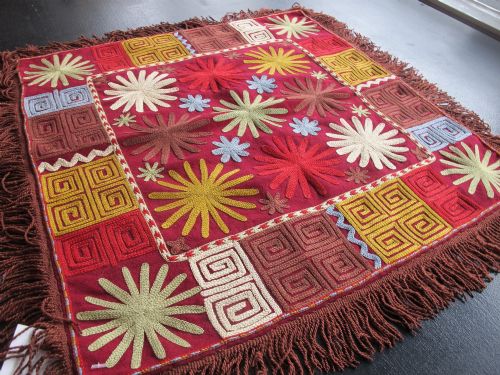
These textiles display distinct regional styles, ranging from full-work architectural and floral compositions to compact tribal designs created by nomadic groups. The variety spans diminutive square panels to large room-scale wall pieces produced across Central Asia.
Materials and construction
The foundation fabrics consist primarily of woven cotton, silk, and wool grounds, including blended adras fabric and rich red wool or dyed cotton backings. Embroidery is executed using fine silk thread to form dense, colourful motifs across the surface.
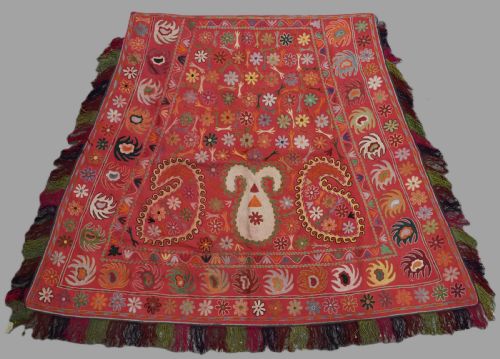
Nomadic and regional workshops employed varied embroidery techniques, visible in the distinct needlework of Lakai tribal pieces and the elaborate full-work coverage seen in Tashkent and Bokhara examples. Pieces often incorporate contrasting borders, wool fringe, and structural variations like kilim weaves.
Vintage Suzani Wall Hanging Retail Price Guide 2026
Typical asking prices for vintage suzani wall hanging among the pieces listed under this phrase on Sellingantiques today, from the lower quarter to the upper quarter. They describe what is for sale here now, not the wider market.
Several textiles served as ceremonial horse covers and saddle rugs, proving that nomadic horses deserved fine embroidery just as much as brides.
Distinctions in quality
Quality in a vintage suzani wall hanging is determined by the density of the needlework and the complexity of the design, with full-work examples requiring extensive labour compared to lighter layouts. The fineness of the silk thread and the precision of the execution distinguish superior workshop output from simpler regional pieces.
The harmony and vibrancy of the natural dye palette on the silk embroidery and ground fabrics heavily influence the visual impact of the piece. Additionally, the clarity of traditional regional motifs - such as architectural elements, large medallions, or prayer formats - marks the distinction between standard and exceptional examples.
The Vintage Suzani Wall Hanging Glossary
- Suzani
- An embroidered textile from Central Asia, traditionally made as part of a bride's dowry. The word derives from the Persian term for needle.
- Nim suzani
- A half-size version of a standard suzani panel. These smaller textiles were typically quicker to produce while retaining the characteristic embroidery styles of their region.
- Ilgich
- A small embroidered hanging or dowry piece produced by the Lakai tribe. They often feature bold geometric patterns and dense silk thread work.
- Ru-i-jo
- A traditional Central Asian bed cover designed with decorative embroidery intended to be displayed across the bed. These pieces frequently utilise silk on silk or cotton grounds.
- Adras
- A traditional Central Asian blended fabric woven from silk and cotton. It provides a textured ground for needlework.
Vintage Suzani Wall Hanging: Frequently Asked Questions
How do I hang a suzani?
A vintage suzani wall hanging can be displayed by attaching a fabric sleeve to the reverse and sliding a thin wooden batten or metal rod through it. This method distributes the weight evenly across the top edge without damaging the antique fabric.
Alternatively, a professional restorer can sew discreet fabric loops along the back top edge for hanging from small wall hooks. Avoid using direct pins or nails through the textile, as this stresses the historic silk threads and cotton ground.
Where were suzanis made?
These textiles originate primarily from historic centres and nomadic communities across Central Asia, notably within modern-day Uzbekistan, Tajikistan, and Kyrgyzstan. Specific regions such as Bukhara, Tashkent, and Shakrisabz developed distinct urban embroidery styles.
Nomadic groups like the Lakai tribe also produced notable work featuring unique tribal motifs and formats. Each area contributed specific colour palettes and compositional layouts to the tradition.
What is a nim suzani?
A nim suzani is a smaller variant of the full-sized embroidery panel, with 'nim' translating to half in Persian. These pieces were practical for smaller spaces within traditional homes while maintaining the same intricate silk needlework.
They appear frequently in nineteenth- and early twentieth-century inventories. Their compact dimensions make them straightforward to incorporate into contemporary wall displays.
How old are these textiles?
The pieces available typically date from the mid-nineteenth century through the early twentieth century, spanning periods from the 1850s to the 1930s. Dating is determined by stylistic conventions, material choices, and the specific regional workshop traditions.
Earlier examples from the mid-nineteenth century often display distinct natural dyes and regional drawing styles. Later pieces from the 1920s and 1930s reflect evolving folk art patterns and transitional materials.