
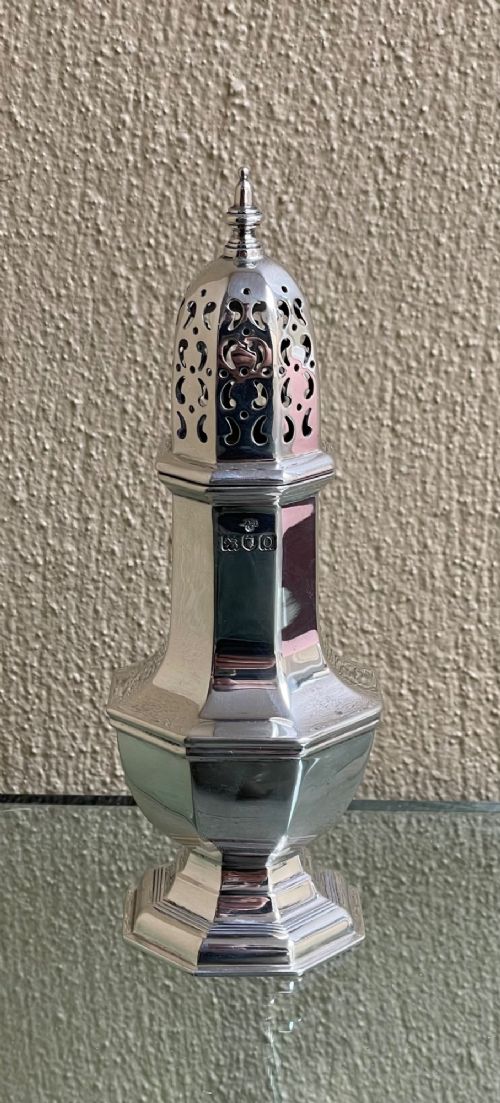
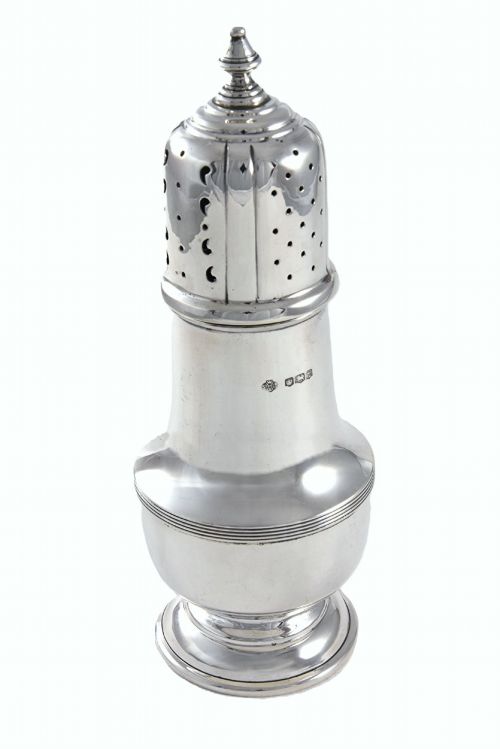
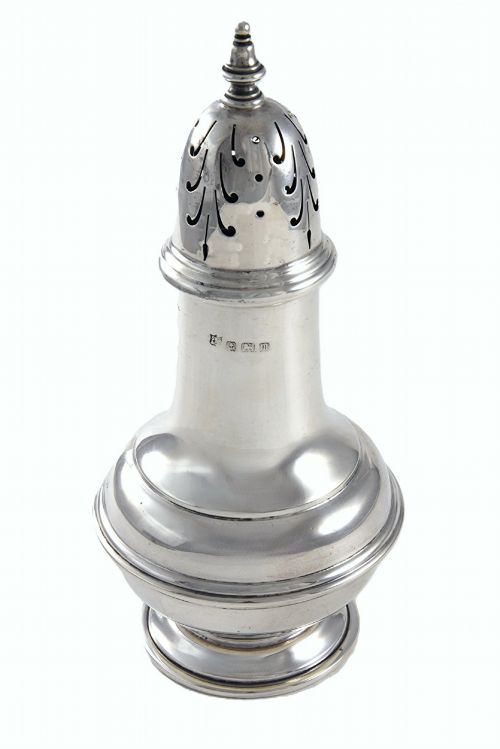
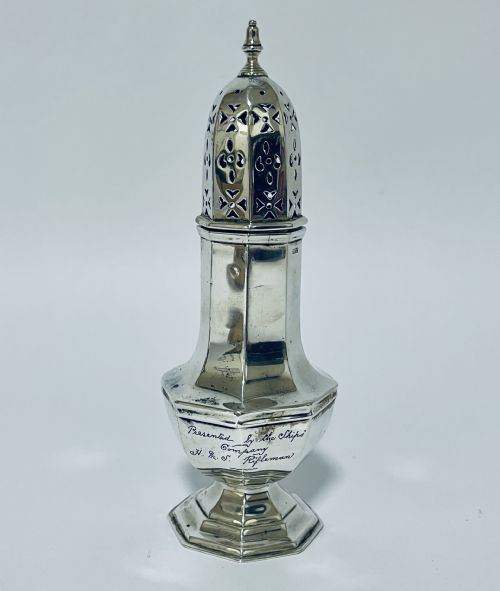

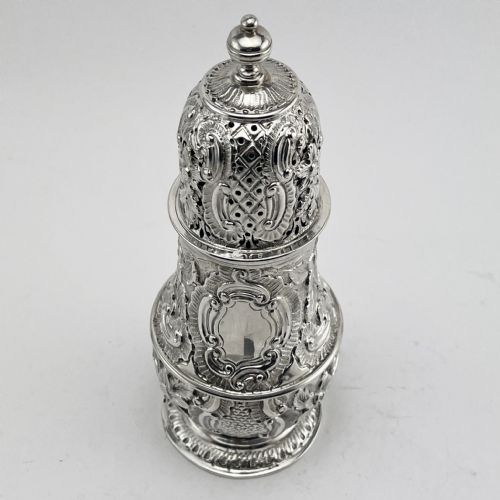


Vintage Sugar Caster
These vintage sugar casters bring heavy sterling silver and cut glass directly to the dining table for dusting fine pastries.
Vintage Sugar Caster
A vintage sugar caster is a tabletop vessel designed for sprinkling fine sugar over desserts, pastries, and fruit. When you search for this phrase, you encounter tall, perforated vessels spanning the Victorian, Edwardian, and Art Deco periods.
The pieces listed here appear in sterling silver, silver gilt, cut glass, hard-paste porcelain, and brass. Forms range from straightforward polygon sides to ornate cornucopia and rococo revival silhouettes.
Edwardian and Victorian iterations dominate the selection, often accompanied by George V and George VI silver shaker designs. Alongside traditional tableware, related desk accessories like pounce pots also surface.
Materials and construction
Makers utilised heavy sterling silver, brass, and hard-paste porcelain combined with cut glass to form the body. Pierced slip-in or screw-on covers feature detailed perforations designed to distribute fine sugar evenly.
Silver versions frequently carry full hallmarks denoting the assay office, year, and silversmith. Cut glass examples incorporate sterling silver pierced tops secured to heavy, faceted glass bases.
Some delicate Victorian casters double happily as pounce pots for scattering sand over freshly written ink.
Judging quality in silver and glass
Quality rests upon the weight of the metal and the crispness of the piercing on the cover. Substantial gauge silver and deep, sharp facets in cut glass distinguish better examples.
Maker marks and legible hallmarks elevate a piece, confirming the specific silversmith and date of manufacture. The balance of the form and the secure fit of the pierced lid also indicate superior production.
Barker Brothers·James Dixon & Sons Ltd·Evald Nielsen·Horace Woodward & CO LTD·Roberts & Belk·Berthold Muller Hanau
The Vintage Sugar Caster Glossary
- Sugar caster
- A tall tabletop container with a perforated lid used for sprinkling sugar. It is also known historically as a sugar shaker or castor.
- Hallmark
- An official stamp applied to precious metals indicating the standard of purity, the assay office, and the year of testing. These marks provide precise dating for silver pieces.
- Silver gilt
- Silver that has been coated with a thin layer of gold on the surface. This technique provides the rich appearance of solid gold while utilising a silver base.
- Pounce pot
- A small container with a perforated top used to sprinkle resin powder onto writing paper to blot ink. They share a very similar form to early sugar casters.
Vintage Sugar Caster: Frequently Asked Questions
What is a sugar caster used for?
These vessels serve to dispense fine castor sugar onto desserts, baked goods, and breakfast fruits at the table. The pierced lid ensures an even, controlled dusting.
They function as both practical tableware and decorative items, often left displayed on the sideboard when not in active use during a meal.
How do I clean antique silver?
Silver pieces require gentle washing with mild soap and warm water followed by thorough drying with a soft cloth. Avoid harsh chemical dips that strip the natural patina accumulated over the decades.
Storing silver in anti-tarnish cloths helps maintain the polished finish between uses without the need for aggressive cleaning.
Are sugar shakers and casters the same thing?
The terms are used interchangeably by makers and collectors to describe tall, lidded vessels for dry condiments. Both refer to the same fundamental tabletop form.
Regional preferences and different eras tended to favour one term over the other in contemporary catalogues and retail descriptions.
How do I date a silver sugar caster?
The assay office marks and date letters stamped into the metal provide the exact year of manufacture. Comparing the stylistic cues, such as Edwardian proportions or Art Deco polygon sides, narrows down the period.
Matching the stamped maker's mark against historical records confirms the workshop and active working dates of the silversmith.