
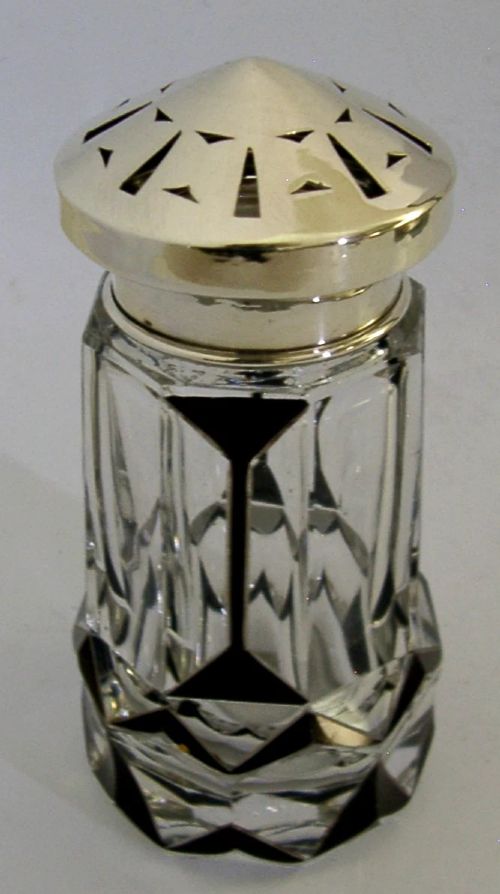
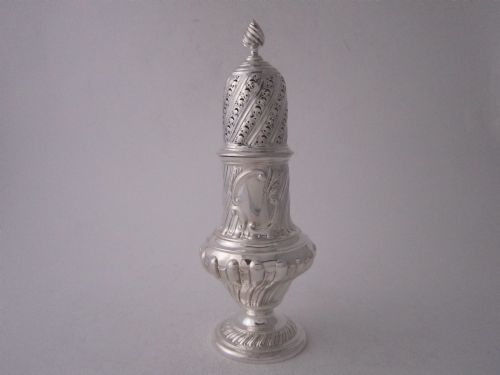
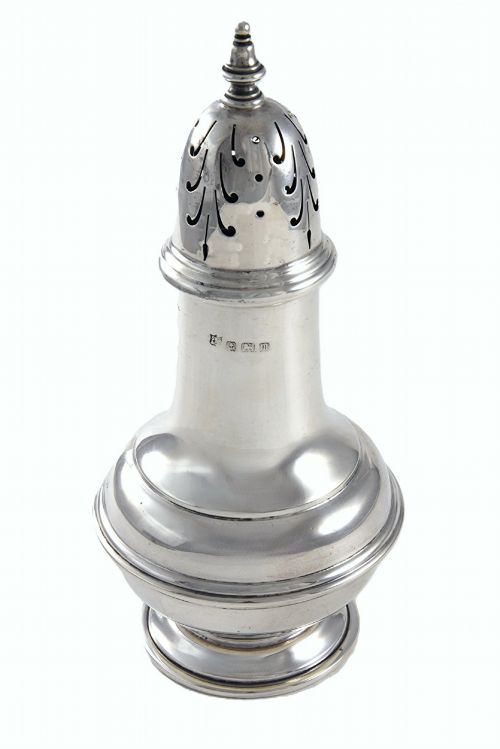
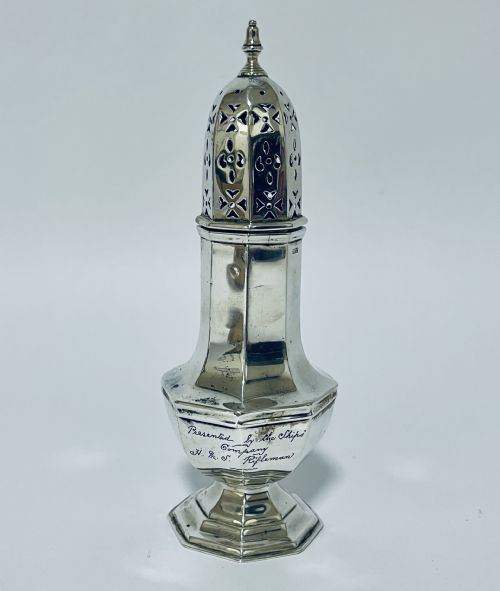
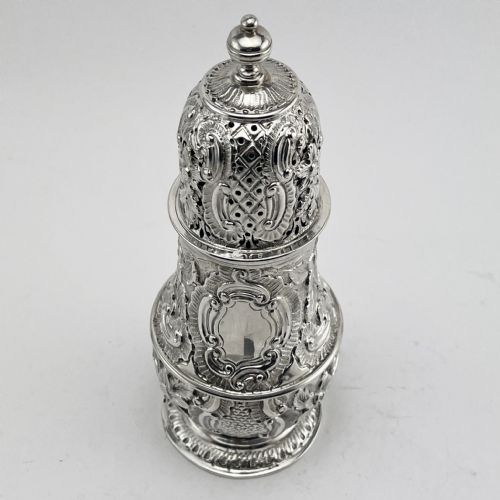


Pierced Silver Sugar Shaker
A pierced silver sugar shaker sits on the table to cast fine sugar over fruit or desserts.
Pierced Silver Sugar Shaker
A pierced silver sugar shaker takes several forms across the Georgian, Victorian, and twentieth-century periods, appearing as casters and desk accessories. These tablewares vary from monumental George III examples to smaller George V shakers, all sharing the core purpose of dispensing sugar through a perforated top.
The most common versions met on this page belong to the Victorian and Georgian eras, alongside later George V pieces. Makers fashioned these vessels in sterling silver, adopting styles from Georgian revival to specific early eighteenth-century models.
Materials and construction
Silversmiths constructed these vessels entirely in sterling silver, shaping the bodies through raising and spinning techniques. The piercing on the tops was executed by hand using tiny saws or specialised punches to create intricate patterns of pierced work.
Lids often feature bayonet fittings or screw threads to secure them to the main body, while bases were weighted or formed with solid foot rims for stability on the dining table.
Listings feature sterling silver sugar shakers spanning from the eighteenth century through the Victorian period to George V.
Assessing quality and craftsmanship
Quality in a pierced silver sugar shaker rests on the crispness of the pierced decoration and the weight of the sterling silver used in its construction. Finer pieces display neatly finished apertures that remain sharp and clear without distortion from wear or polishing.
Proportion and maker attribution elevate certain examples, particularly those bearing the marks of documented silversmiths like Charles Alchorne or Thomas Ross. Substantial weight, such as heavy gauge silver, distinguishes more substantial production from lighter domestic wares.
Thomas Ross·Charles Alchorne
The Pierced Silver Sugar Shaker Glossary
- Caster
- A container with a perforated lid used for sprinkling sugar or spices over food. This term appears interchangeably with shaker in the listings.
- Pounce pot
- A small shaker used to sprinkle resin powder onto rough paper to blot ink and create a smooth writing surface. It shares a nearly identical form to the sugar shaker.
- Pierced work
- Metal ornament formed by cutting or punching openings through the silver sheet to create decorative patterns. This technique allows the contents to be shaken out through the lid.
- Sterling silver
- An alloy consisting of ninety-two point five percent silver by mass, with the remainder being other metals, usually copper. It provides the standard material for British silver tablewares.
Pierced Silver Sugar Shaker: Frequently Asked Questions
What is a pierced silver sugar shaker used for?
These vessels served on the dining table to dispense granulated or powdered sugar onto desserts and fruit.
Their perforated lids allowed fine control over the distribution of sugar during meals.
How do I date a silver sugar caster?
Dating relies on the hallmarks stamped into the silver, which record the assay office, date letter, and maker's mark.
Stylistic cues such as Georgian revival or Victorian ornamentation also help assign pieces to specific periods.
Are sugar shakers and casters the same thing?
Yes, the terms are used interchangeably by makers and dealers to describe vessels with pierced tops for dispensing dry seasonings.
Historical records also apply similar forms to desk accessories like pounce pots.
How should I clean my silver shaker?
Gentle washing in warm soapy water removes dust, while specialised silver cloth maintains the polished appearance.
Harsh abrasive dips should be avoided to preserve the definition of the pierced decoration and hallmarks.