
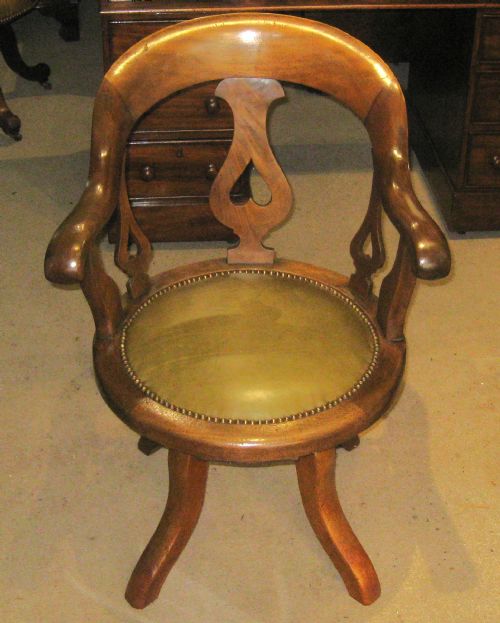
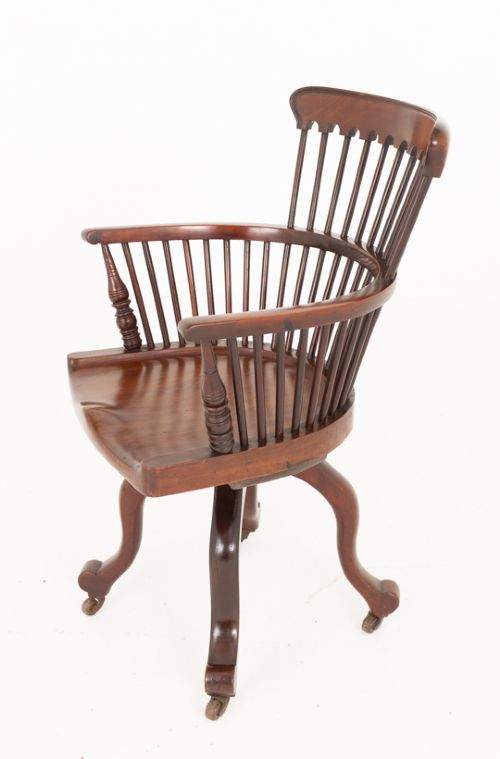
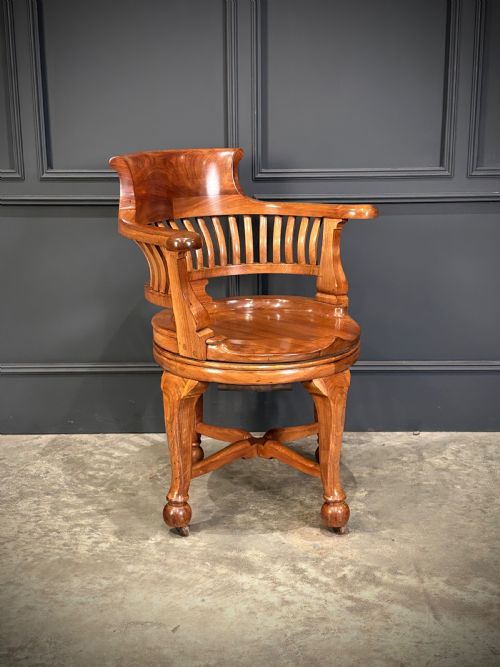


Vintage Study Swivel Armchair
A vintage study swivel armchair brings working character to a room, offering practical movement alongside period timber and hide.
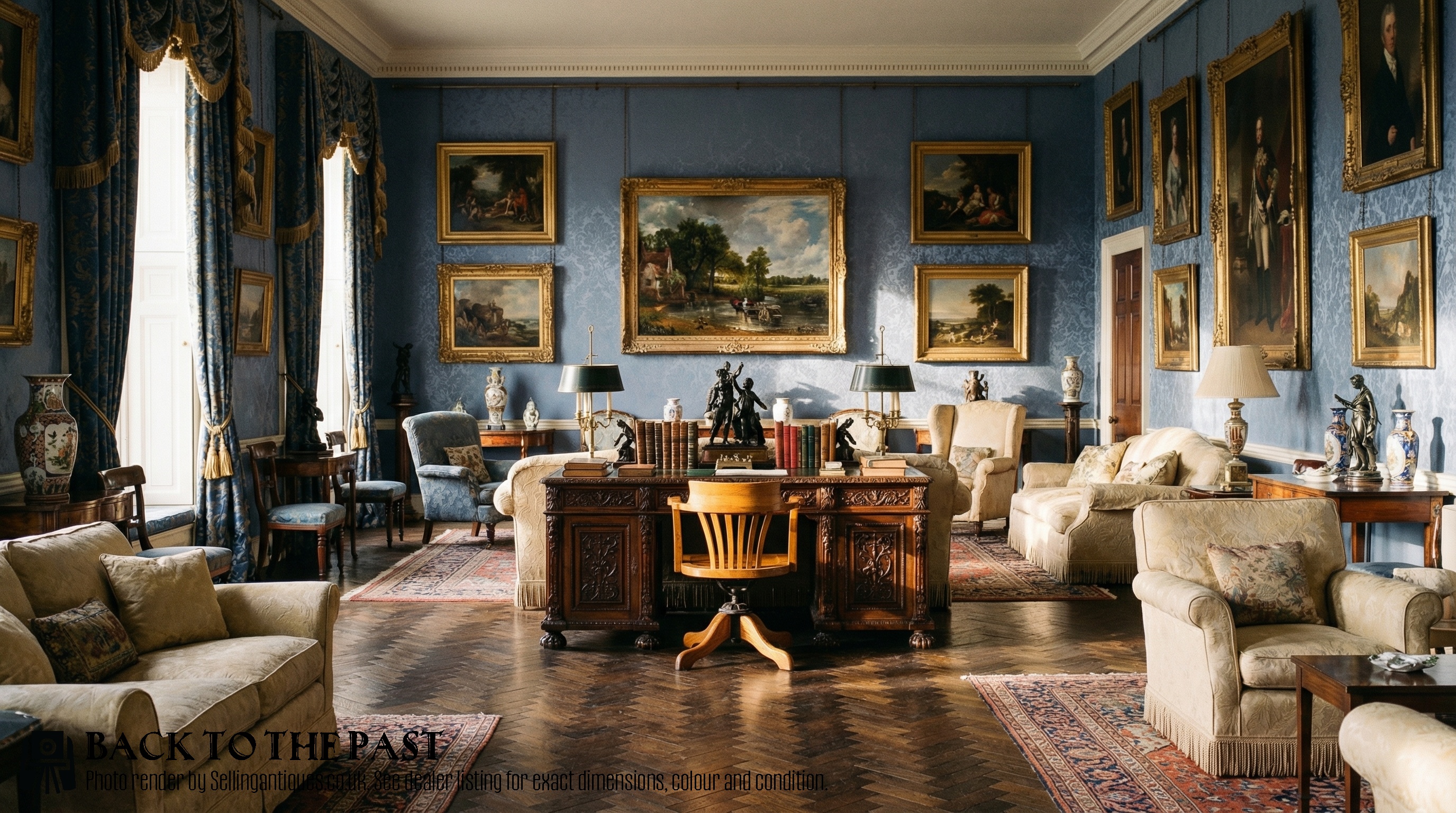
Vintage Study Swivel Armchair
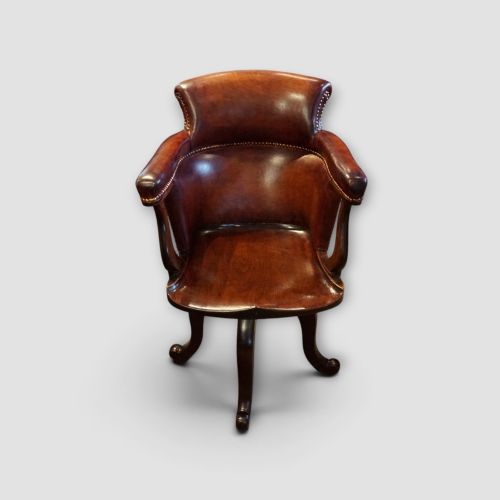
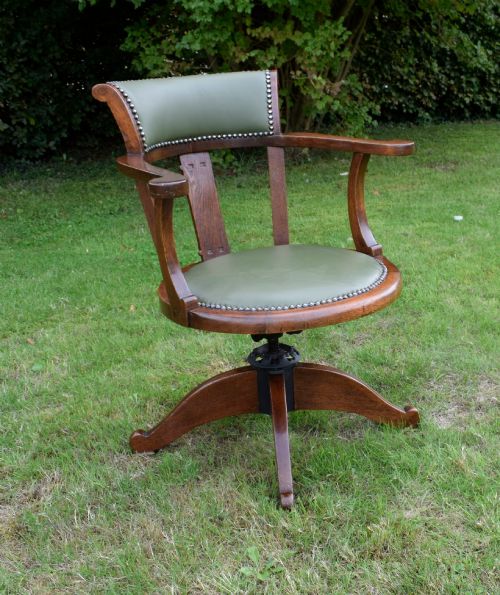
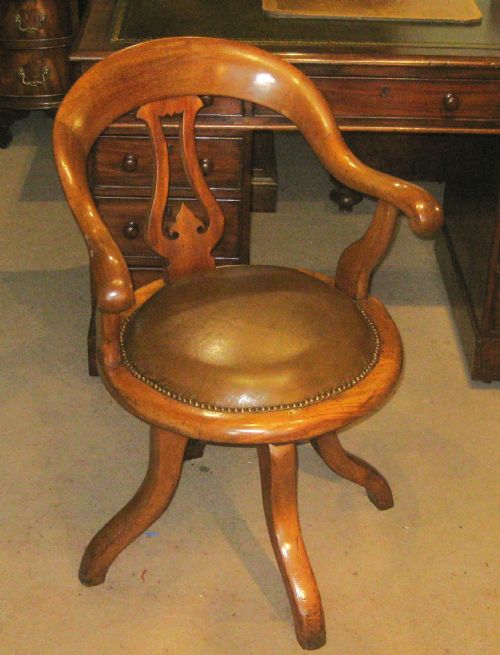
A vintage study swivel armchair serves as a functional seating choice for a desk, combining revolving mechanisms with traditional timber frames. You will frequently encounter Edwardian and Victorian examples on this page, built from solid woods like mahogany and oak.
These forms span simpler office configurations to more substantial library and captain styles. The common thread is a pivoting base paired with supportive armrests designed for extended periods at a desk.
How they were made
Framed predominantly in hardwoods such as mahogany, oak, walnut and beech, these chairs rely on robust joinery to support mechanical swivel components. Metal and brass fixings underpin the revolving actions, while cast iron frequently appears in the adjustable underframes.
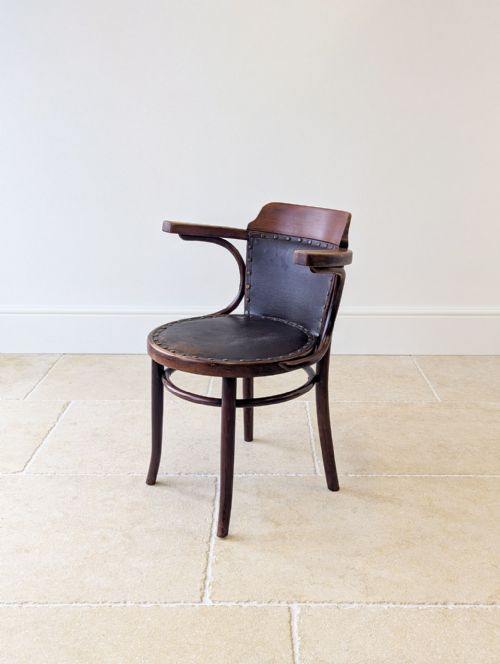
Upholstery relies heavily on leather, tan hide and occasionally bergere cane work, secured with studding to solid wooden bases. Bentwood techniques also feature in specific early twentieth century iterations.
Some nineteenth century desk chairs are built so solidly they weigh nearly as much as a small writing desk.
What varies in quality
The distinction between tiers rests upon timber selection and the complexity of the revolving mechanism. Dense golden mahogany and figured walnut frame superior examples, whereas simpler beech or general hardwoods form more utilitarian pieces.
Refinement in carving, the integration of adjustable height systems, and the quality of the original leather hide elevate certain pieces above standard workshop production.
George Bartholomew & Co.·Edward William Godwin
The Vintage Study Swivel Armchair Glossary
- Swivel
- A mechanism allowing the upper seat portion to pivot independently of the base. This engineering permits movement around a desk without shifting the chair legs.
- Bergere
- A traditional French upholstered armchair style featuring woven cane panels. It appears on specific period office and study seating.
- Hide
- Untanned or tanned heavy cattle leather used for durable upholstery. It provides the characteristic seating surface on many period desk chairs.
- Bentwood
- Wood softened by steam and bent into curved structural forms. This technique creates rounded backs and frames on particular early twentieth century models.
Vintage Study Swivel Armchair: Frequently Asked Questions
What periods do these chairs cover?
The selection spans from the late nineteenth century through to the early twentieth century. Victorian and Edwardian periods dominate the available forms.
You will also find pieces originating from the 1870s up to the 1930s, reflecting changing office and study designs.
Are all these chairs adjustable in height?
Many of the revolving models incorporate mechanical systems that allow height adjustment. Others maintain a fixed seat height whilst offering a swivel action.
Examine the specific underframe and spindle mechanism to determine the exact range of movement for each individual seat.
What woods are commonly used?
Mahogany and oak form the primary structural timbers across the majority of pieces. Walnut, beech and mixed hardwoods appear in various regional and stylistic interpretations.
Golden mahogany frames frequently denote Victorian examples, while oak and beech align closely with Edwardian production.
How do I care for the leather?
Leather and hide upholstery benefit from regular dusting and occasional conditioning to maintain suppleness. Avoid placing them in direct sunlight to prevent drying out.
Preserving the surface grain helps maintain the natural patina developed over decades of use.