

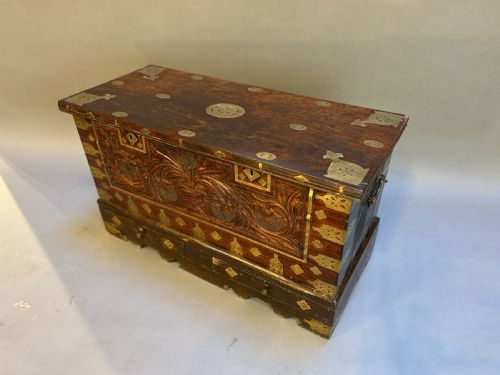


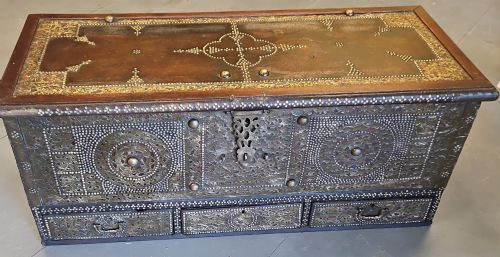


Vintage Studded Storage Trunk
A vintage studded storage trunk brings tangible travel history and robust utility into a room, offering tactile hide, metal and timber surfaces.
Vintage Studded Storage Trunk
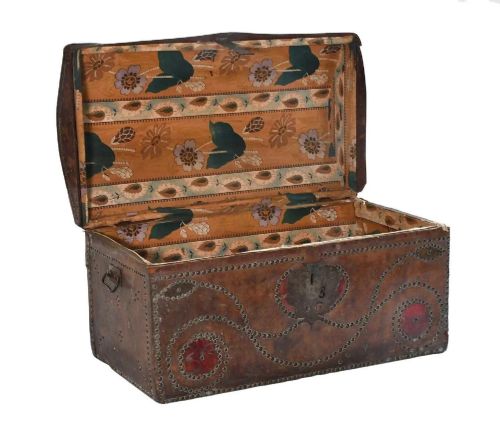
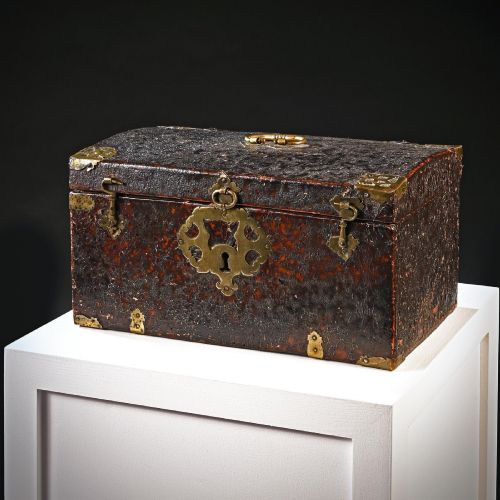
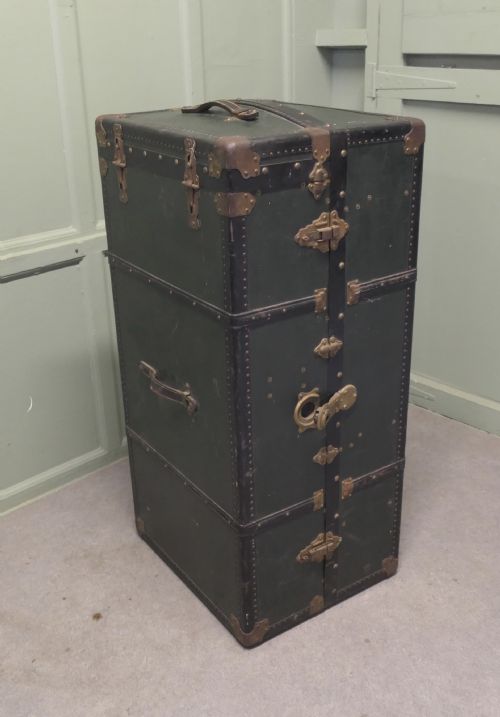
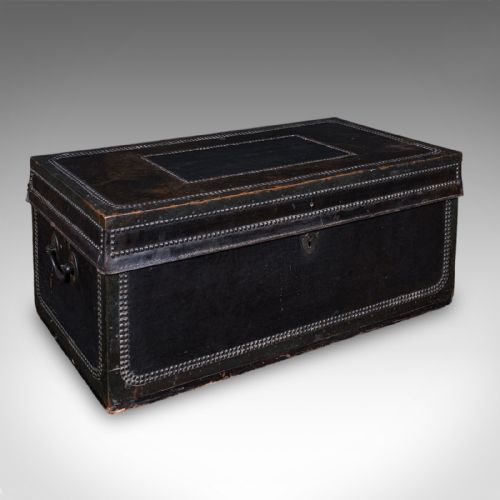
When you search for a vintage studded storage trunk, you encounter robust receptacles designed for travel, trade and household storage across multiple centuries. These pieces encompass forms ranging from substantial coaching trunks and dome-topped coffers to camphorwood blanket boxes and leather ottomans.
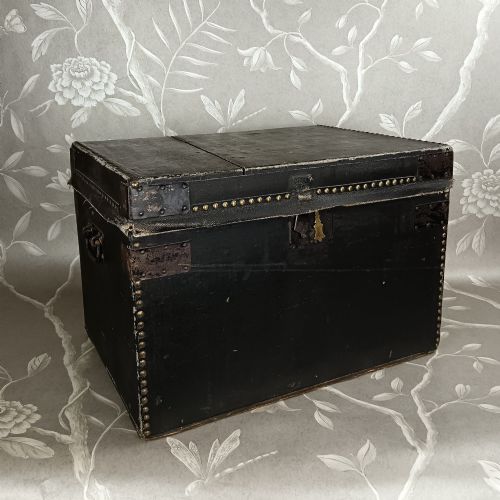
The versions most frequently met on this page date from the nineteenth century, including Victorian examples and trading chests from distant ports. Their forms reflect practical utility, combining heavy lids, substantial iron or brass fastenings and internal compartments intended for long journeys or domestic organisation.
How they were made
Construction relies upon durable timbers such as hardwood, teak, pine, mahogany and camphorwood, providing a rigid structural core for daily use. These wooden frames are frequently clad in natural materials like leather, hide or brass sheeting to protect against the rigours of transit.
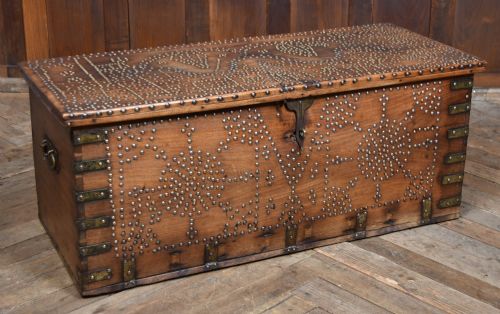
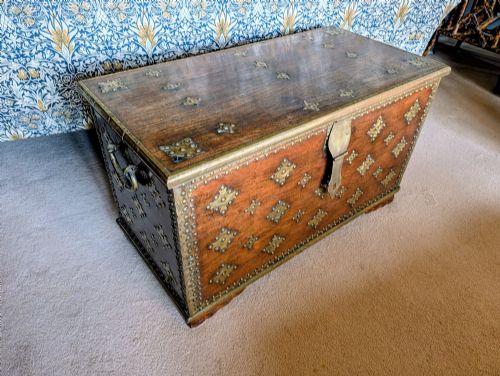
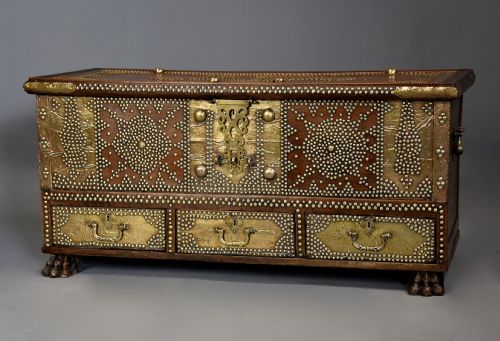
Decorative and functional reinforcement is achieved through applied metalwork, including iron bands and countless individual brass studs hammered by hand into geometric patterns. Leather elements are often hand-dyed or secured with structural tacks that double as decorative borders.
Many historical camphorwood trunks retain a faint, lingering trace of aromatic spice from voyages made centuries ago.
What varies in quality
Quality rests upon the integrity of the original construction, the density of the chosen timber and the precision of the metalwork. Pieces displaying integrated carrying handles, original locks and intact internal fittings demonstrate a higher standard of workshop production.
The refinement of the decorative brass studding and the suppleness of surviving leather or hide surfaces distinguish exceptional examples from standard utilitarian boxes. Original maker labels or stamps further elevate a piece by confirming its documented origin.
Samuel Pratt·Wm Insall of Bristol
The Vintage Studded Storage Trunk Glossary
- Coaching Trunk
- A sturdy travel chest designed to be strapped to the roof of a stagecoach or carriage during transit. These usually feature reinforced corners and durable leather or metal bindings.
- Zanzibar Chest
- A traditional storage chest originating from East Africa and India, characterised by heavy brass studding, strapwork and often constructed from dense hardwoods like padouk or camphorwood.
- Coffer
- A large box or chest used historically for holding valuables, textiles or documents. They frequently feature hinged dome tops and substantial iron locking mechanisms.
- Portmanteau
- A large travelling case or trunk that typically opens into two distinct compartments, functioning much like a portable wardrobe for long journeys.
- Camphorwood Chest
- A storage box made from fragrant wood traditionally utilised to protect stored textiles from insects. The timber imparts a distinct aromatic scent.
Vintage Studded Storage Trunk: Frequently Asked Questions
What were vintage studded storage trunks used for?
These trunks served primarily as durable luggage for travellers navigating coaching routes, sea voyages and colonial expansions. They protected clothing, valuables and documents from rough handling and the elements.
In domestic settings, similar chests functioned as blanket boxes or household storage receptacles for heavy textiles. Their robust construction allowed them to double as occasional furniture or seating when closed.
How do I live with a trunk at home?
A studded trunk places easily at the foot of a bed or beneath a window to provide concealed storage for spare linens and bulky winter blankets. The flat top surface also accommodates lamps, books or decorative objects.
In a living room, larger trunks work effectively as coffee tables that introduce textural contrast and hide clutter. Their patinated leather and brass surfaces integrate naturally with both traditional and contemporary interiors.
How do I tell periods apart?
Earlier pieces from the seventeenth and eighteenth centuries often feature simple wooden frames clad in raw hide with minimal iron bindings. They display rugged hand-forged construction methods appropriate to their early origins.
Nineteenth-century examples frequently exhibit more elaborate brass stud patterns, specialised camphorwood interiors or trade-specific markers like those found on Zanzibar chests. Victorian and Edwardian trunks introduce sophisticated locking systems and labelled maker plates.
What is a Zanzibar chest?
A Zanzibar chest is a distinct form of trading trunk built from dense hardwoods and heavily decorated with brass studs, geometric strapwork and intricate lock plates. They were produced for maritime trade across the Indian Ocean.
These pieces often include internal secret compartments and heavy drop handles for loading onto ships. Their exotic materials make them distinct from standard European travel trunks.