

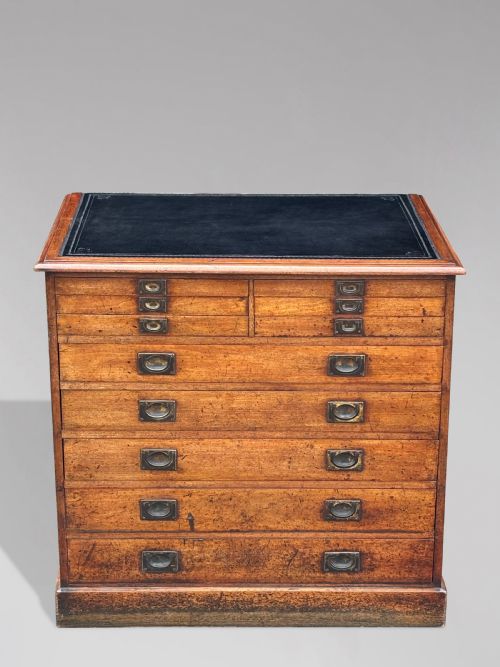


19th Century Leather Chest
These pieces range from campaign trunks to country house ottomans, bringing tactile historic texture and robust storage into domestic spaces when you buy a 19th century leather chest.
19th Century Leather Chest
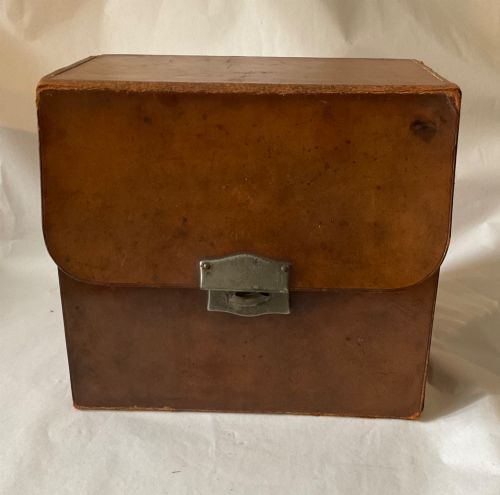
A 19th century leather chest encompasses travelling trunks, campaign cases, and domestic storage boxes produced across the Georgian, Regency, and Victorian periods. Most examples found on this page function as sturdy luggage or household receptacles, shaped by the practical demands of transit and stately home organisation.
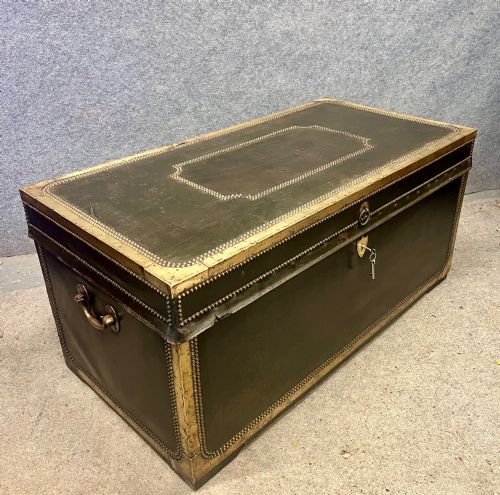
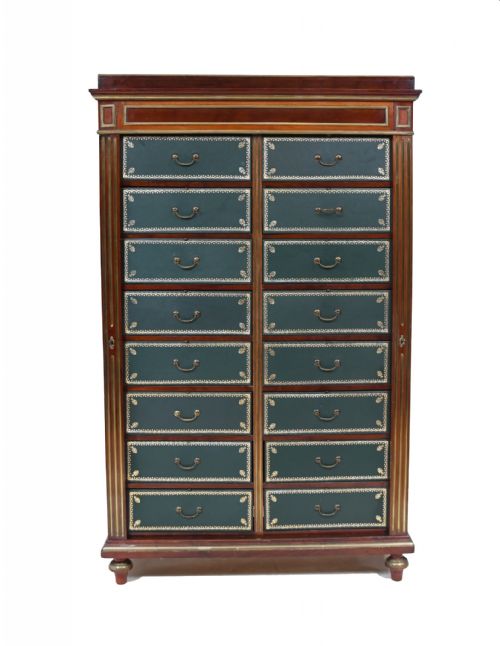
The selection ranges widely in form, incorporating Chinese Export camphor wood chests, French cartonnier filing cabinets, and studded leather military luggage alongside large ottomans. Buyers frequently encounter pieces bound in brass or metal, reflecting an era when durable travelling equipment prioritised reinforced edges and secure closures.
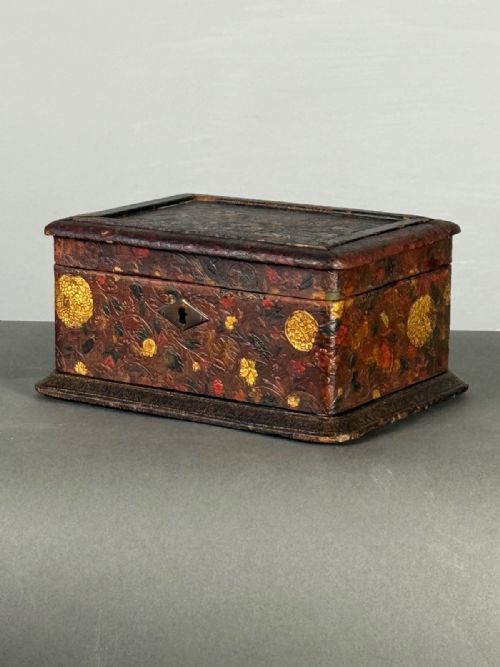
Origins span English workshops, French ateliers, and China Trade ports, bringing diverse timber foundations such as mahogany, birch, and camphor wood beneath their leather coverings. These variations mean a collector can select between plain utility trunks and intricately painted or gilt-brass mounted specimens.
How they were made
Constructed around solid wooden carcases of mahogany, pine, walnut, or camphor wood, these chests rely on internal frames designed to endure heavy travel. Hide or leather covers these timbers, often secured with brass studs and metal banding to protect corners and seams from rough handling.
Surface decoration involves tooling, pigment application, and gilt-brass mounting, particularly on export pieces from China and refined French cartonnieres. Cabinetmakers utilised iron hardware and substantial brass locks to ensure both security and structural rigidity during long journeys.
The listings demonstrate a strong presence of camphor wood cores beneath leather surfaces, particularly among pieces originating from the China Trade.
What varies in quality
The distinction between ordinary utility items and exceptional pieces rests upon the choice of underlying timber, such as camphor wood or figured mahogany, and the precision of the brass work. Superior examples exhibit hand-hammered studding, intact original leather surfaces, and functional, high-grade locks bearing maker signatures.
Construction methods also dictate grade, where dovetailed internal joints and sound framing distinguish bespoke commission pieces from standard production trunks. Finer items retain original pigments, hand-tooled gilt details, and well-preserved linings that reflect the status of their original owners.
Susse Freres Paris·Samuel Pratt·Seabrook of St Pauls·Drew and Sons·Johnstone and Jeanes·Gillows·Holland and Sons
The 19th Century Leather Chest Glossary
- Campaign trunk
- A portable storage chest designed for military officers or travellers, typically fitted with recessed brass drop handles and reinforced corners for transit.
- Cartonnier
- A set of desktop or standing drawers designed for holding papers and documents, frequently encountered in French furniture of the period.
- Camphor wood
- An aromatic timber native to Asia, utilised for trunks to repel insects and protect stored textiles from humidity.
- Studded leather
- A method of securing leather skins to a wooden carcase using rows of decorative or structural brass nails.
- China Trade
- Goods manufactured in China during the 19th century specifically for export to Western markets, often combining local timbers with European forms.
19th Century Leather Chest: Frequently Asked Questions
How do I clean a leather chest?
Dust the surface regularly with a soft cloth and apply a specialised conservation wax designed for historic leather to maintain suppleness.
Avoid modern chemical cleaners or excessive moisture, which can permanently darken the hide or damage original brass mounts and pigment.
Were these chests used for travel?
Many examples served as military campaign luggage or coaching trunks, built to withstand the rigours of 19th-century transit.
Others remained stationary in country houses or offices as blanket boxes, filing cabinets, or apothecary storage.
How can I tell a Regency chest from a Victorian one?
Regency pieces often display cleaner classical lines, lighter timbers like mahogany, and restrained brass detailing typical of the early 19th century.
Victorian examples frequently present heavier proportions, darker finishes, and more elaborate studding or canvas bindings.