
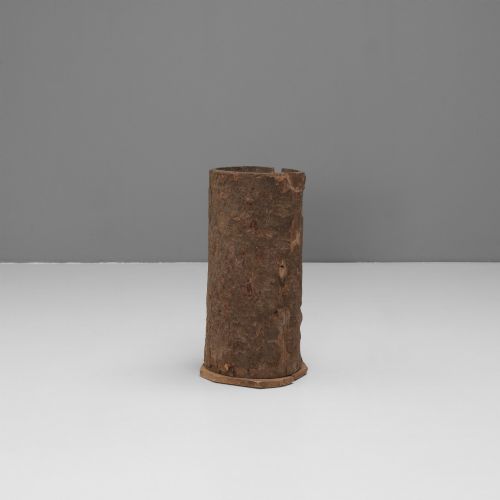


Vintage Stick Stand Holder
A vintage stick stand holder organises hallway clutter with substance, turning practical storage into a focal point of period design.
Vintage Stick Stand Holder
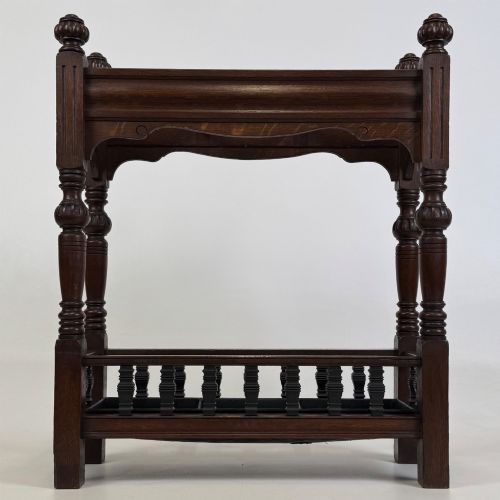
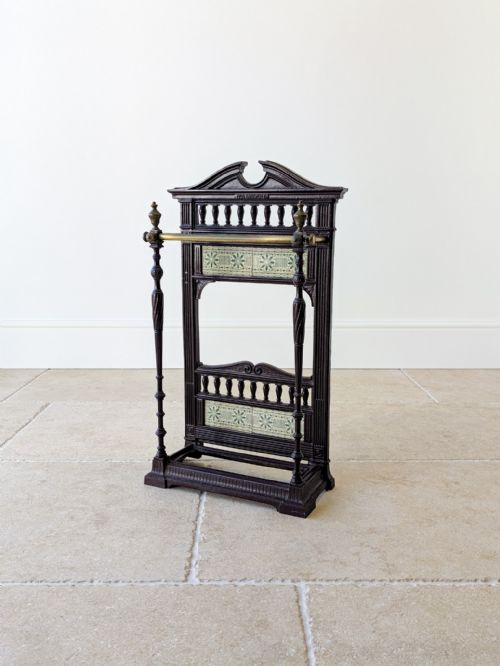
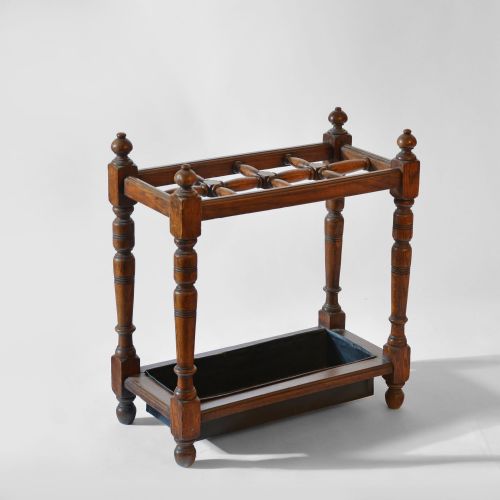
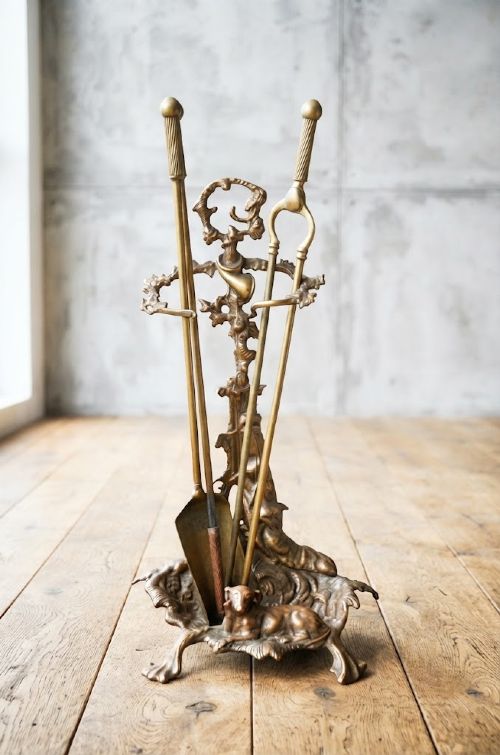
When you search for a vintage stick stand holder, you encounter hall furniture designed to receive wet umbrellas and walking sticks upon entering the home. The pieces span the nineteenth and twentieth centuries, taking the form of dedicated umbrella stands, combined coat and hat stands, and multi-functional hall stands.
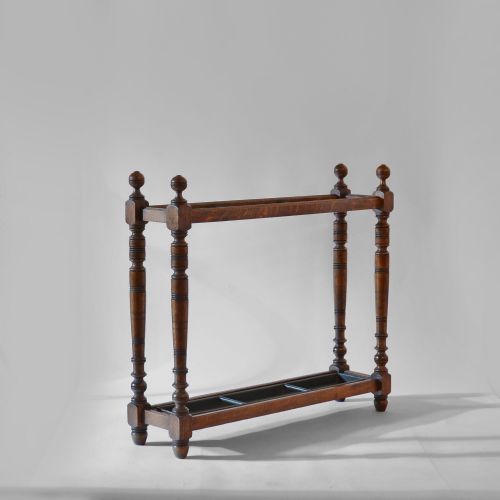
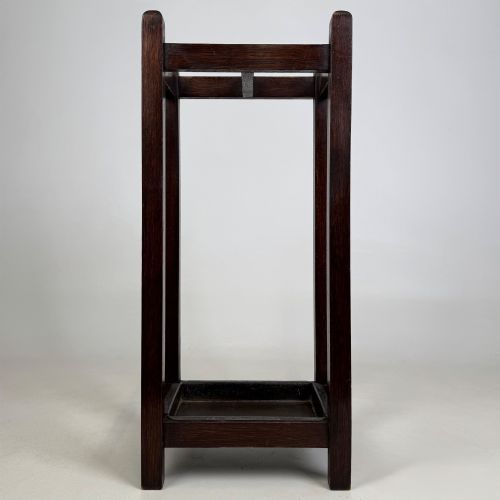
You are most likely to meet sturdy oak examples from the Edwardian period or cast iron vessels from the Victorian era. These utilitarian objects served domestic and institutional entryways, integrating metal drip trays to protect timber floors from moisture.
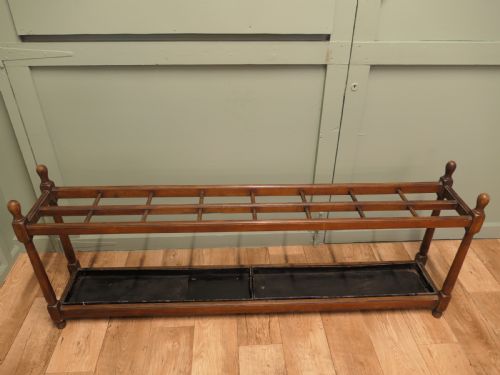
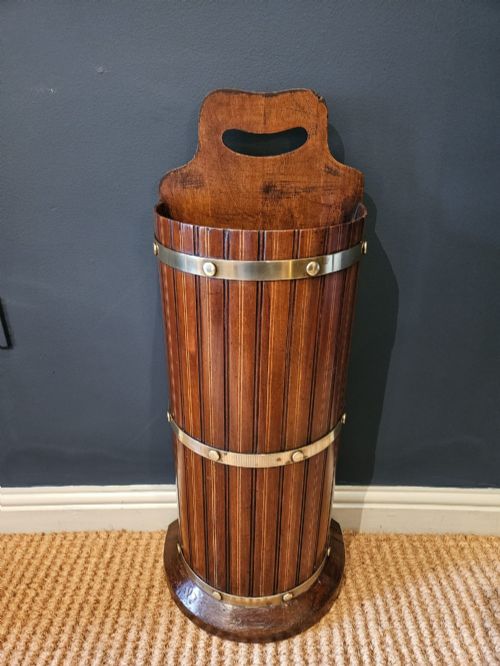
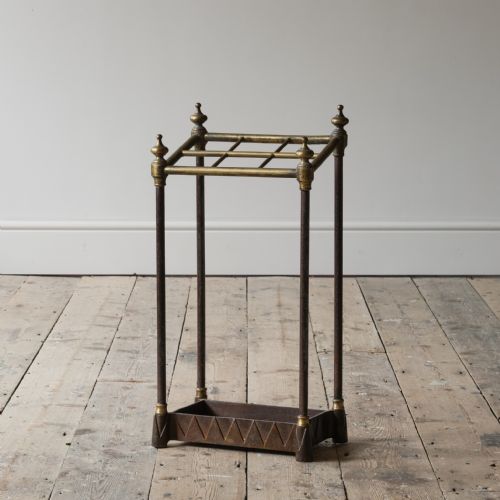
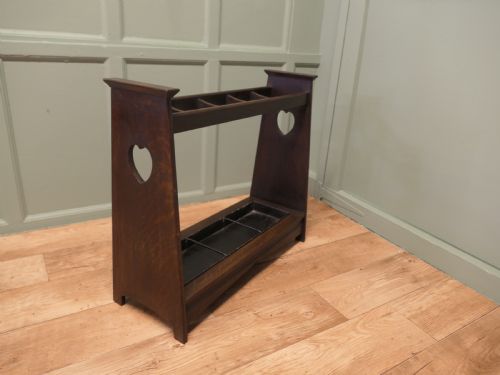
The selection ranges from coopered barrel designs bound in brass to demi-lune metal frames and Arts and Crafts oak frameworks. Makers utilised the domestic architecture of the hallway, creating narrow footprints suitable for tight entry spaces.
Materials and construction
Makers constructed these holders using structural timbers such as oak, mahogany, and pine, frequently combining them with cast iron, brass, and copper components. Timber frames relied on coopered staves, panel construction, or bentwood techniques to achieve curved silhouettes.
Metal elements, including cast iron and brass, were cast or spun, incorporating decorative ball finials, perforated drip trays, and division rails. Rivets, metal banding, and screws secured the structural joints of wooden barrels and metal frames alike.
Some hallways once accommodated comical golfer figures holding caddy cocktail sticks alongside your daily walking gear.
Distinctions in manufacture
The standard of a piece rests on the integrity of its original components, particularly the presence of matching metal drip trays and secure structural banding. Cast iron examples separate themselves through crispness of moulding detail, while timber versions depend on sound joinery and well-preserved surface finishes.
Makers identified with specific design movements, such as Arts and Crafts or Aesthetic Movement ideals, exhibit more deliberate attention to proportions and material pairing than generic utilitarian pieces. The weight of the metal and the thickness of the oak staves dictate the physical stability of the holder.
Coalbrookdale·Liberty Design·Mappin And Webb·Sudre
The Vintage Stick Stand Holder Glossary
- Demi-lune
- Half-moon shape, typical of stick stands designed to sit flush against a hallway wall. This configuration saves floor space while accommodating multiple walking sticks.
- Coopered
- Constructed from wooden staves bound together with metal hoops, exactly like a barrel. This technique provided the waterproof strength required for umbrella storage.
- Drip tray
- A removable metal basin positioned at the base of the stand to catch water runoff. Original trays are an indicator of completeness.
- Japanned
- Finished with a hard, black lacquer inspired by Asian decorative arts. This technique was applied to metal or wood surfaces during the Edwardian period.
- Arts and Crafts
- A design movement prioritising visible craftsmanship and honest materials. Pieces from this tradition often feature plain oak construction and hand-beaten metal accents.
Vintage Stick Stand Holder: Frequently Asked Questions
What is a stick stand holder?
A stick stand holder is a piece of hallway furniture designed to store walking sticks, umbrellas, and canes upright. They keep entryways tidy by containing damp items in a dedicated footprint.
These pieces use heavy materials like cast iron or waterproofed timber to prevent tipping when loaded with heavy walking gear.
How do I identify an Edwardian stick stand?
Edwardian examples frequently utilise oak timber, sometimes featuring copper or brass banding and decorative cut-out panels. They often display lighter proportions than their Victorian predecessors.
Look for original metal drip trays inside the base, which confirm the piece retains its factory configuration.
Were these used for umbrellas?
Yes, these holders accommodated both rain umbrellas and walking sticks interchangeably in period households. The inclusion of a metal drip tray at the bottom specifically managed the water running off wet umbrellas.
Many listings describe them as umbrella and stick stands due to this dual domestic function.
What metals were used?
Cast iron, brass, copper, nickel, and silver plate appear frequently across the manufactured elements of these stands. Cast iron provided heavy bases for stability, while brass and copper formed decorative rails, bands, and finials.
Some pieces also incorporated iron drip trays to resist corrosion from standing water.
How do I care for a wooden holder?
Protect timber frames by ensuring wet umbrellas are dried before storage or by emptying the internal drip tray regularly. Apply appropriate wax polish to maintain the finish of oak or mahogany surfaces.
Keep the stand away from direct heat sources to prevent the timber staves or panels from drying out and splitting.