




Vintage Sterling Silver Candelabra
These vintage sterling silver candelabra combine practical illumination with substantial metalwork, offering striking focal points for a dining table or sideboard.
Vintage Sterling Silver Candelabra
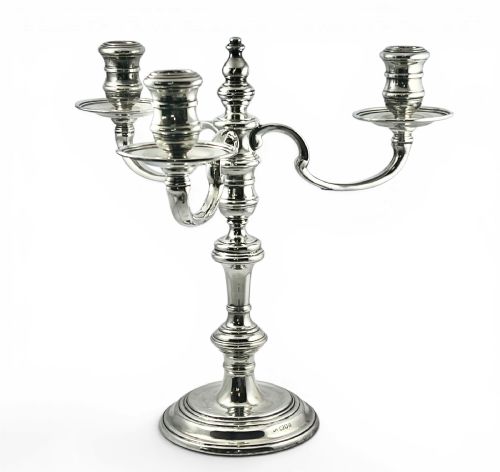
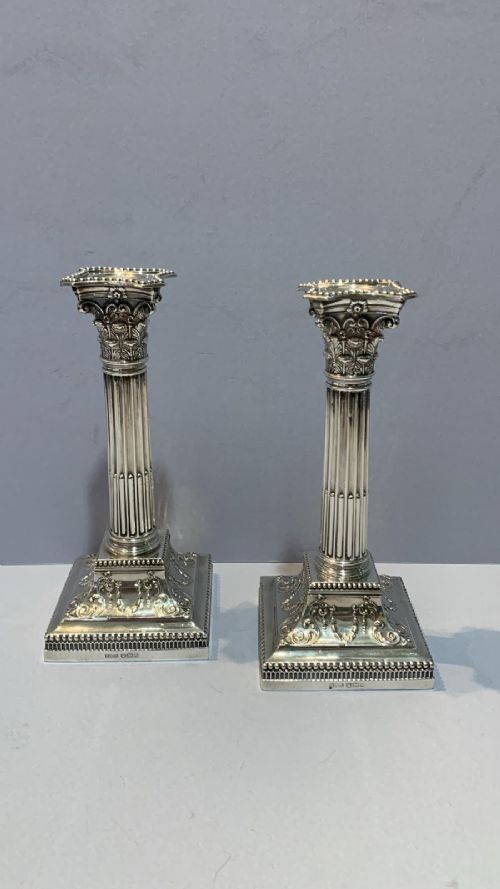
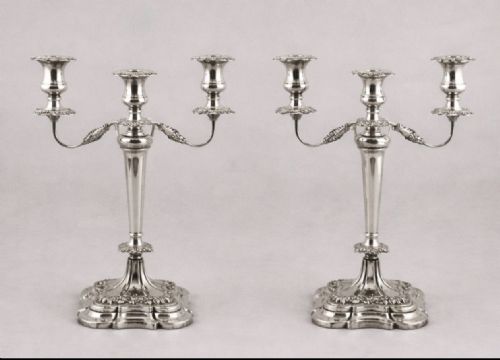
When you search for vintage sterling silver candelabra, you find branched lighting fixtures designed to hold multiple candles, alongside related pairs of single candlesticks. The examples met on this page span from the late nineteenth century through the Edwardian period and into the mid-twentieth century, including works from the 1930s, 1940s, 1950s, and 1960s.
The forms range from two-light and three-light branched candelabra to matched pairs of candlesticks. Stylistic influences vary widely across the selection, drawing upon Georgian Revival, George I Revival, Art Deco, Arts and Crafts, Rococo Revival, and Neoclassical designs.
How they were made
The pieces on this page are constructed from sterling silver, with certain examples recorded as hand-wrought or hand-made by specific makers. Workshops utilised traditional silversmithing techniques to shape the metal into branched candelabra frames and sturdy candlestick bases.
Makers applied historical revival styles, from neoclassical motifs to ornate rococo curves, alongside the cleaner lines typical of the Arts and Crafts movement and Art Deco period. Hallmarks stamped into the silver record the assay office, such as London and Birmingham, and the year of manufacture.
Listings feature sterling silver candelabra and candlesticks spanning the Edwardian era, 1890, 1930, 1940, 1950, and 1960.
What varies in quality
Quality in these candelabra rests upon the substance of the silver and the precision of the form. Heavier gauges of sterling provide greater stability to multi-branched frames, ensuring the arms balance securely without leaning.
The distinction between standard commercial production and superior work lies in the execution of the details. Hand-wrought pieces and items from notable makers demonstrate sharper chasing, cleaner joints, and more deliberate surface finishing.
Robert Edgar Stone·Elkington And Company
The Vintage Sterling Silver Candelabra Glossary
- Sterling silver
- An alloy containing 92.5 percent silver by weight, mixed with other metals for durability. This standard is universally marked on British silver with the lion passant.
- Candelabra
- A branched candlestick holding multiple candles on separate arms. Single versions are strictly termed candlesticks.
- Hallmark
- A series of official marks stamped onto precious metal items in the United Kingdom. These marks indicate the maker, the assay office, the purity standard, and the year of production.
- Georgian Revival
- A decorative style popular in the twentieth century that reinterprets eighteenth-century furniture and silver designs. It draws upon the proportions and classical motifs of the reigns of George I through George III.
Vintage Sterling Silver Candelabra: Frequently Asked Questions
What is a sterling silver candelabra?
A sterling silver candelabra is a branched lighting fixture made from high-purity silver, designed to hold two or more candles simultaneously.
These pieces function as both functional light sources and decorative centrepieces for dining tables and formal rooms.
How do I date a silver candelabra?
Dating a silver candelabra relies primarily on the official hallmarks stamped into the metal, which include specific date letters corresponding to assay office records.
Stylistic indicators, such as Art Deco geometric lines or Edwardian proportions, also help narrow down the period of manufacture.
How do I clean antique silver?
Cleaning antique silver requires a soft cloth and a specialised silver polish formulated to remove tarnish without abrading the metal surface.
Harsh chemical dips and abrasive pads should be avoided because they strip away the subtle patination built up over decades.
How were different periods styled?
Different periods drew upon distinct historical and artistic movements, ranging from ornate Rococo revival curves to the clean geometry of Art Deco.
Arts and Crafts examples emphasised hand-wrought textures, while Neoclassical pieces favored symmetrical urns and classical columns.