
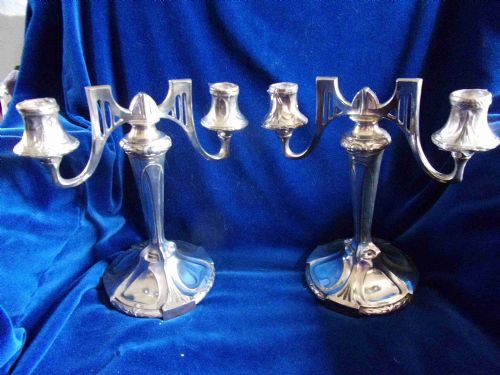


Twin Light Silver Candelabra
These twin light silver candelabra bring dual-flame illumination to a table or wall, combining practical lighting with decorative presence.
Twin Light Silver Candelabra
A twin light silver candelabra provides dual branches for candles, originating in periods from the late nineteenth century through to the mid twentieth century. These pieces appear in forms such as table candelabra, wall sconces, and candelabra lamps.
The selection includes Continental, American, and English origins, spanning styles from Edwardian and Victorian revivals to Art Deco, Jugendstil, and Arts and Crafts. Pieces are encountered in pairs or as individual items fashioned from sterling silver, silver plate, and silvered metals.
Materials and construction methods
Construction relies on sterling silver, 916 silver, and silver plate over base metals, alongside alternative elements like spelter, onyx, and marble. Techniques range from hand wrought working to detailed casting used in figurative or architectural components.
Makers utilised electroplated nickel silver and silver gilding to finish surfaces, while older examples demonstrate traditional hallmarking and hand-finished detailing.
Mermaids hold the candles in one Edwardian wall mounted pair.
Factors of distinction
Quality differentiates through the weight and purity of the metal employed, moving from heavy sterling silver down to plated base metals or spelter. Superior examples exhibit crisp casting, hand wrought execution, and intact hallmarking.
The precision of the joints between arms and stems, along with the preservation of surface finishes such as silver gilding, separates standard production items from finer workshop pieces.
Robert Edgar Stone·Elkington and Company
The Twin Light Silver Candelabra Glossary
- Sterling silver
- A silver alloy containing 92.5 percent pure silver by mass, typically marked to denote fineness. This material forms the primary standard for durable domestic metalwork.
- Silver plate
- A layer of silver applied to a base metal core, such as copper or nickel silver. This technique offered a decorative finish at a lower cost than solid silver.
- Candelabra
- A branched candlestick designed to hold multiple candles simultaneously. Twin light versions specifically support two candles from a central stem.
- Spelter
- A zinc alloy frequently used as a substitute for bronze or brass in decorative figures and bases. It takes plating and patination well for sculptural items.
- Jugendstil
- The continental European manifestation of Art Nouveau, prevalent around nineteen hundred. It emphasises organic lines and stylised natural motifs.
Twin Light Silver Candelabra: Frequently Asked Questions
What periods do these pieces date from?
The selection spans from the late Victorian and Edwardian eras through the Art Deco and Arts and Crafts movements up to the mid twentieth century.
Dates are established through stylistic markers, stamps, and English or Continental hallmarks found on the metalwork.
How were twin light candelabra used?
They served as decorative and functional sources of lighting on dining tables, sideboards, and mantlepieces.
Wall mounted variations were also employed in pairs to illuminate hallways and drawing rooms.
What materials are most common?
Sterling silver and silver plate over base metals appear most frequently across the listed items.
Alternative materials like spelter, onyx, and marble are also seen in figurative or decorative bases.
How do I care for silver candelabra?
Regular dusting with a soft cloth helps prevent the accumulation of debris in detailed casting.
Polishing should be done sparingly with appropriate silver care products to preserve the underlying metal and any plated finishes.