



Solid Silver Table Candelabra
Solid silver table candelabra bring genuine presence to a dining room, casting a warm light from sterling silver branches.
Solid Silver Table Candelabra
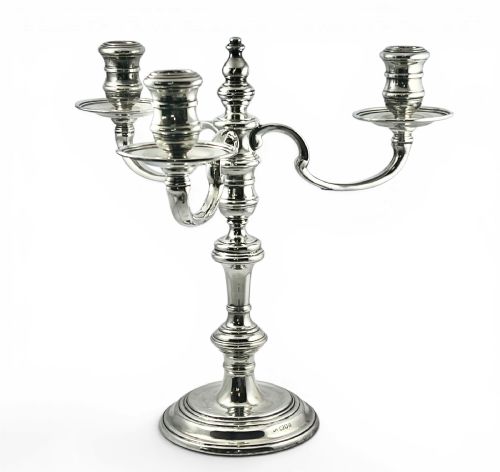
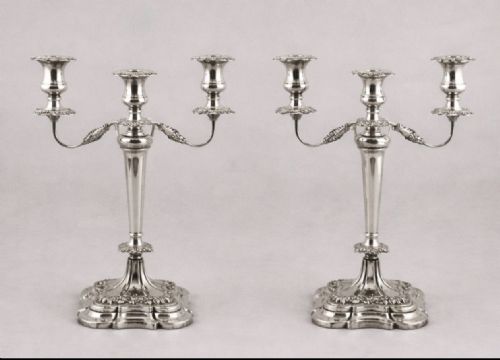
Solid silver table candelabra are substantial lighting pieces designed to hold multiple candles, appearing in forms from two-light designs up to four-branch examples. When you search for solid silver table candelabra, you encounter items intended for formal dining tables and sideboards.
The pieces listed here span the late nineteenth century through the mid twentieth century, including Edwardian, Victorian, and later decades. You are most likely to meet sterling silver versions shaped by historical revivals or mid-century modern aesthetics.
Makers fashioned these objects as matched pairs or single large showpieces, often incorporating detachable branches that allow the main support to function as a simple candlestick. Their origins range from British workshops to American and Italian makers.
How they were made
Silversmiths utilised sterling silver and standard silver, shaping metal through traditional casting, spinning, and hand wrought techniques. Robert Edgar Stone and other makers employed skilled hammering to give surfaces a tactile, worked finish.
Construction typically involved weighted bases to ensure stability when the upper branches held lit candles. Artisans assembled multi-light branches using threaded fittings or soldered joints, applying period styles such as Art Deco, Arts and Crafts, and Rococo Revival.
Some multi-branch pieces can be dismantled into simple candlesticks, proving that even formal dining gear appreciated a practical modular trick.
What varies in quality
Quality rests in the architectural harmony of the branches and the crispness of the chased or cast ornament. Pieces that retain their original weighted balance and clean hallmarks demonstrate superior manufacturing discipline.
Hand wrought examples by known makers command attention through individual hammer work and distinctive proportions. Mass-produced casting lacks the sharp detail and deliberate weight distribution seen in the finest workshop output.
Robert Edgar Stone
The Solid Silver Table Candelabra Glossary
- Sterling silver
- A silver alloy containing 92.5 percent pure silver by mass, providing durability for functional tableware. This standard is verified by official assay office hallmarks.
- Candelabrum
- A branched candlestick holding multiple candles on a single base. The plural form is candelabra.
- Hallmark
- An official stamp applied to precious metals indicating the standard of purity, the maker, and the year of assay. These marks provide precise dating for British items.
- Art Deco
- A design style prevalent from the nineteen-twenties into the nineteen-forties, characterised by sleek geometric forms and streamlined shapes. It appears in several pieces on this page.
- Arts and Crafts
- A movement celebrating hand craftsmanship and simple, honest construction rather than machine production. Pieces in this style show visible traces of the maker's hand.
Solid Silver Table Candelabra: Frequently Asked Questions
How do I clean solid silver candelabra?
Use a soft cloth and a reputable silver polish, avoiding abrasive pads that can wear away thin plating or fine chasing. Regular, gentle wiping prevents heavy tarnish buildup in the recessed details of period ornament.
Take care around weighted bases, keeping moisture away from the interior filling material to preserve the structural integrity of the piece.
Can I use modern candles in these?
Most antique and vintage pieces accept standard dinner candles, though sizing can vary slightly across different periods and origins. Test the fit gently without forcing the candle into the nozzle.
If a candle feels loose, use a small drip of melted wax or a discreet adaptor ring to hold it upright and secure during use.
Are all these pieces sterling silver?
The selection includes items marked as sterling silver alongside pieces described simply as silver or silver plate. Hallmarks and maker stamps help confirm the exact metallic composition of each item.
British examples typically feature standard assay marks that date the piece and guarantee the silver content.
How do I tell an Edwardian piece from a Victorian one?
Victorian items often lean towards heavier ornamentation, such as Rococo Revival curves and elaborate floral chasing. Edwardian examples frequently show lighter Classical Revival influences or cleaner lines.
Checking the date letter within the hallmark provides the definitive year of manufacture for British items.