
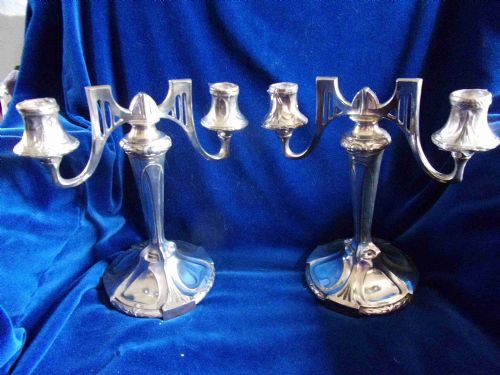


Two Light Silver Candelabra
Two light silver candelabra bring genuine warmth to a dining table, holding twin candles with the grace of past decades.
Two Light Silver Candelabra
When you search for two light silver candelabra, you encounter branching table pieces designed to hold a pair of candles at once. These items appear across various twentieth century decades and the late nineteenth century, spanning sterling silver, silver plate, silvered pewter, and silver gilt. Forms include pairs of matched table branches, occasional wall lights, and convertible candlesticks.
The aesthetic vocabulary stretches from Victorian and Arts and Crafts through Jugendstil and Art Nouveau to Art Deco and revival styles like George I and French Chateau. On this page, you are most likely to meet silver plated or sterling silver pairs originating from British, American, and continental European workshops. They range from clean modernist hand wrought examples to ornate figural maiden and cherub designs.
Factors influencing quality
The distinction between ordinary and superior pieces rests on the weight of the metal and the crispness of the casting. Heavier sterling silver and substantial hand wrought work display a depth of finish that lightweight stamped plate simply cannot match.
Artistic execution in decorative details, such as figurative elements or Jugendstil and Art Nouveau organic lines, dictates the refinement of the piece. Well preserved original surfaces without excessive polishing wear hold greater integrity.
Materials span sterling silver, silver plate, base metal, silvered metal, glass, crystal, silvered pewter, and silver gilt.
Barker Ellis·WMF·Robert Edgar Stone·Elkington and Company
The Two Light Silver Candelabra Glossary
- Sterling silver
- A standard alloy consisting of silver and other metals, usually copper, containing a high purity proportion. This material provides the primary substance for higher grade table pieces.
- Silver plate
- A thin layer of silver applied over a base metal foundation such as copper or nickel brass. This technique offered an accessible alternative to solid silver.
- Silver gilt
- Silver that has been coated with a thin layer of gold on its surface. This process yields a warm golden sheen over the silver base.
- Bobeche
- A removable collar or tray fitted beneath the candle nozzle to catch dripping wax. It protects the structural arms and branches below.
- Jugendstil
- The continental European manifestation of Art Nouveau, prominent in German speaking regions around nineteen hundred. It is characterised by fluid, plant inspired lines.
Two Light Silver Candelabra: Frequently Asked Questions
How do I clean them safely?
Use a soft cloth and a gentle, non abrasive silver polish designed specifically for precious metals or plated surfaces. Avoid harsh dipping solutions that can strip away thin plating or damage applied patinas.
Take care around weighted bases and delicate cast details by working in small sections and buffing gently to a soft shine.
Are these suitable for everyday use?
Many people enjoy placing them on dining tables or sideboards for meals and gatherings. Solid sterling and robust silver plate handle regular use well when treated with reasonable care.
Ensure candles fit securely in the sockets to prevent leaning and protect surrounding surfaces from dripping wax.
How can I tell the period?
Stylistic cues provide the clearest indication, as Art Nouveau and Jugendstil lean into flowing organic forms while Art Deco favours geometric lines. Revival pieces often mimic eighteenth century George I proportions.
Maker marks, hallmarks, and manufacturing techniques stamped on the bases offer further evidence of exact production eras.
What is the difference between sterling and plate?
Sterling silver consists of solid precious metal throughout the entire piece, marked by specific government assay stamps. Silver plate applies a thin coating of pure silver over a base metal core.
Both materials achieve a similar visual appeal, but solid sterling maintains its intrinsic metal value over time.
Why do some have two branches?
Two branch configurations were designed to provide balanced illumination and symmetrical visual weight on dining tables and mantels. They offered a practical middle ground between single candlesticks and massive multi light candelabra.
This format suited standard domestic room sizes during the Victorian and twentieth century periods.