

Vintage Standing Reading Lamp
A vintage standing reading lamp brings adjustable height and focused illumination to a room, offering both functional utility and period character.
Vintage Standing Reading Lamp
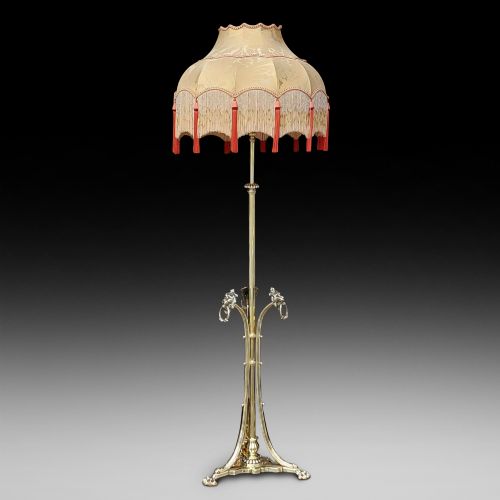
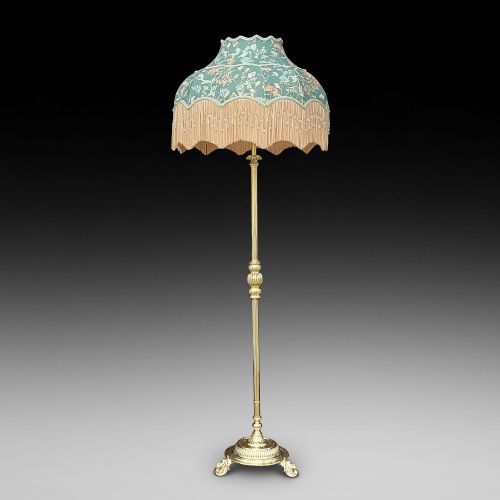
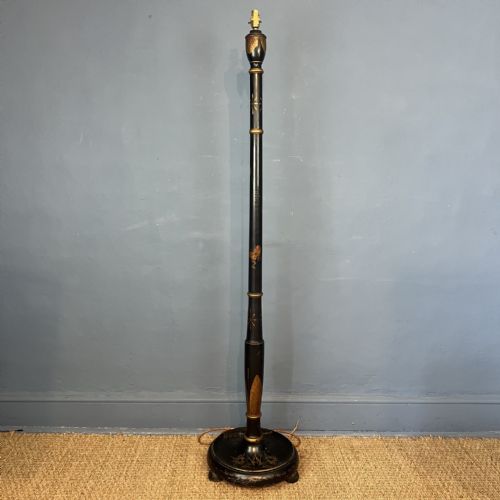
A vintage standing reading lamp combines upright height with task-oriented lighting, appearing primarily as floor lamps, standard lamps, and specialised reading lights across this selection. Buyers frequently encounter nineteenth-century and early twentieth-century examples shaped by Victorian, Edwardian, Art Nouveau, and Art Deco design movements.
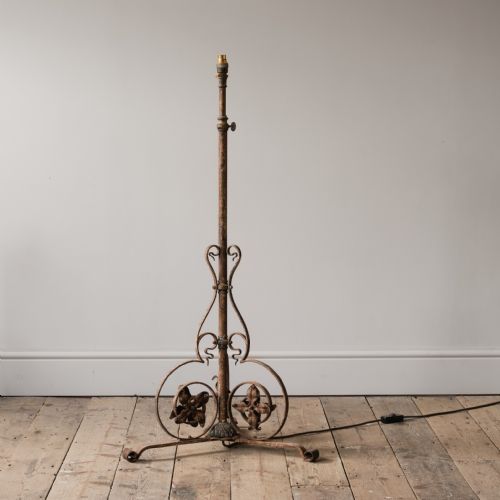
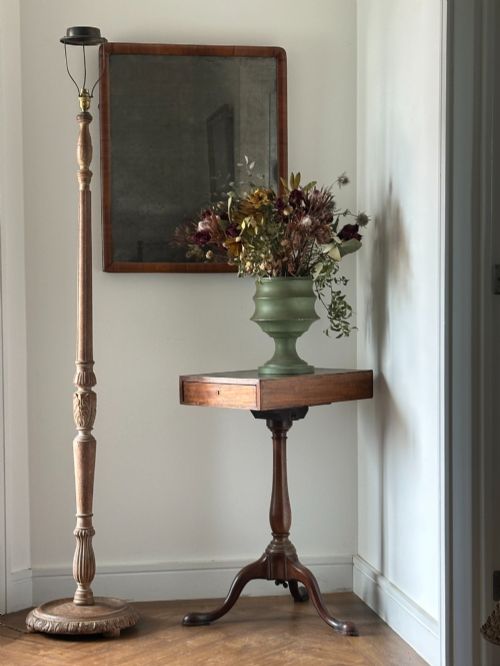
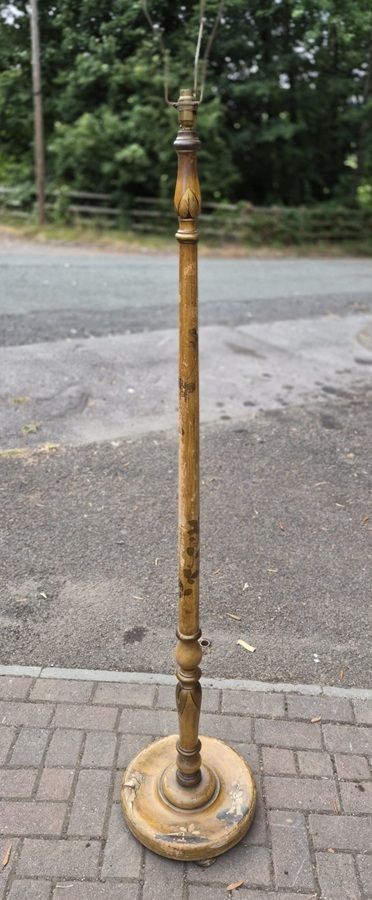
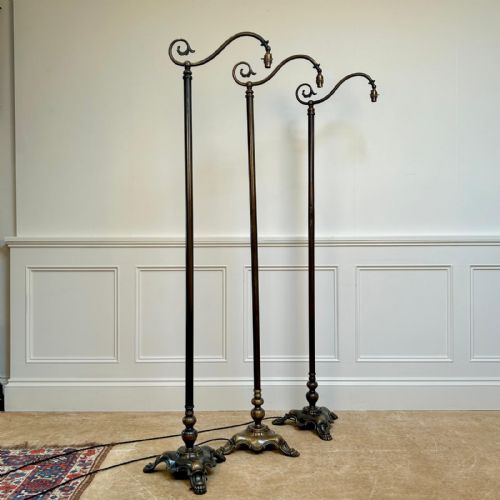
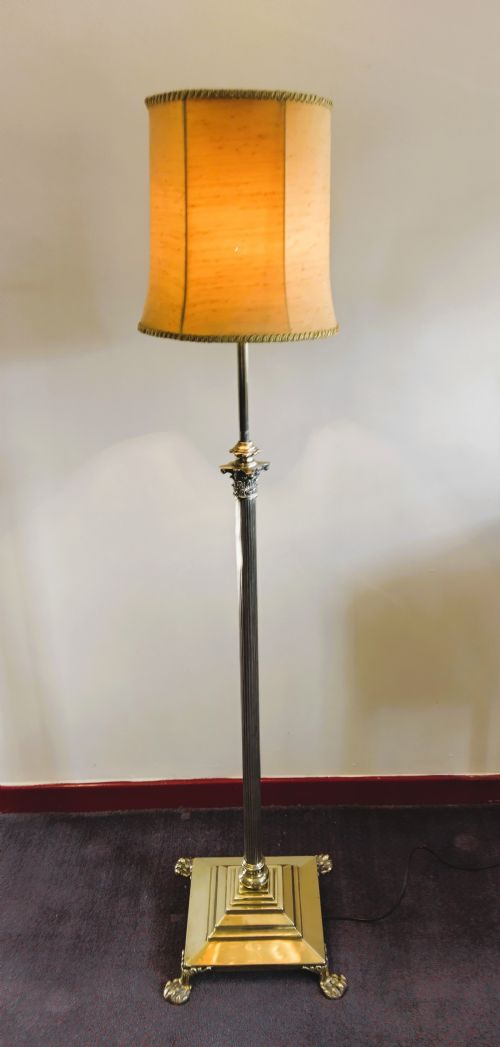
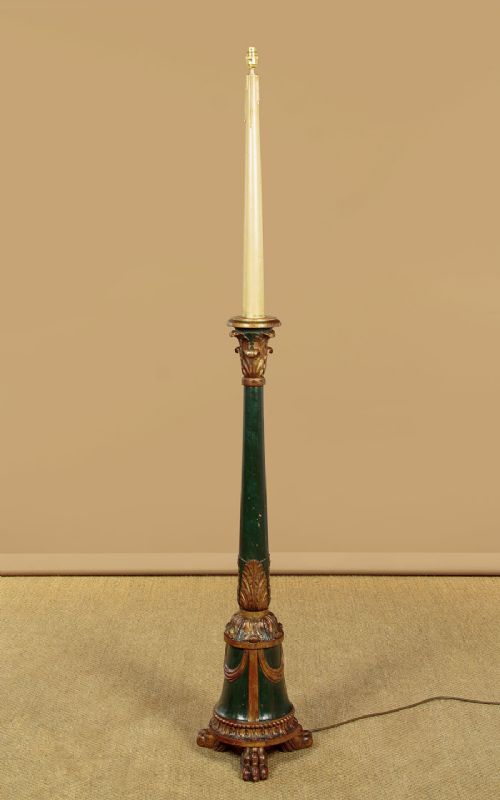
The physical forms range from adjustable brass and copper columns to carved mahogany, walnut, oak, and wrought iron shafts. Many incorporate pivoting arms, swivel mechanisms, and adjustable stems designed originally for oil, candle, or early electric illumination.
Materials and construction methods
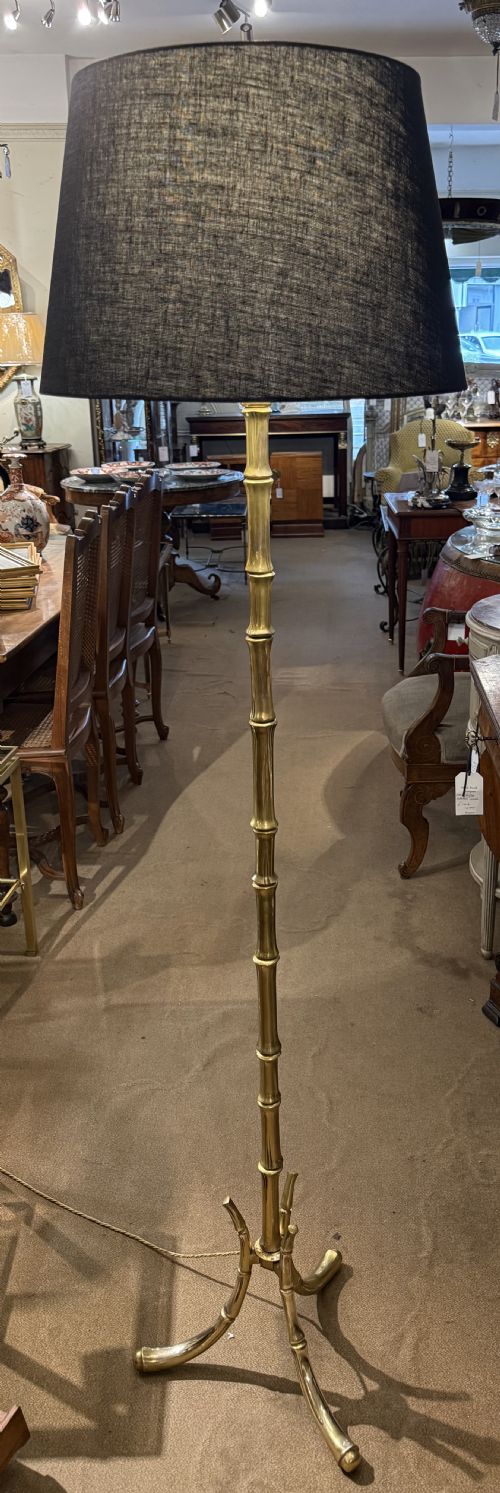
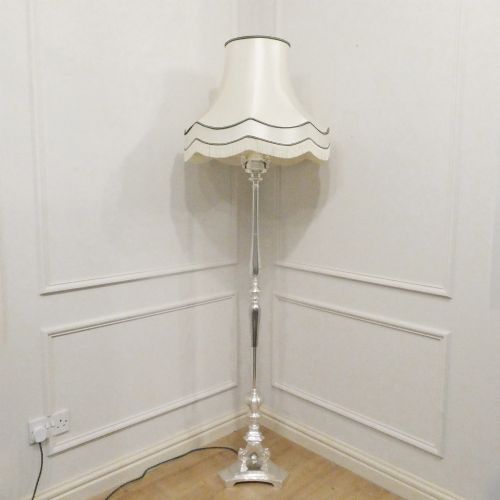
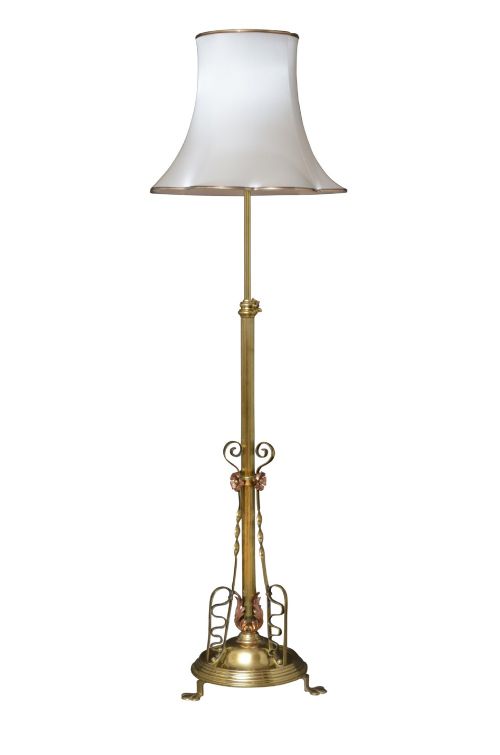
Metalwork dominates the construction, utilising cast brass, copper, wrought iron, chrome, and silver finishes shaped into heavy bases, columns, and scroll arms. Joinery and adjustment mechanisms rely on threaded stems, weighted iron elements, and telescopic fittings that allow height modification.
Listings feature standard lamps spanning the nineteenth century through the 1960s, constructed from brass, copper, wrought iron, oak, walnut, and mahogany.
Assessing craftsmanship and execution
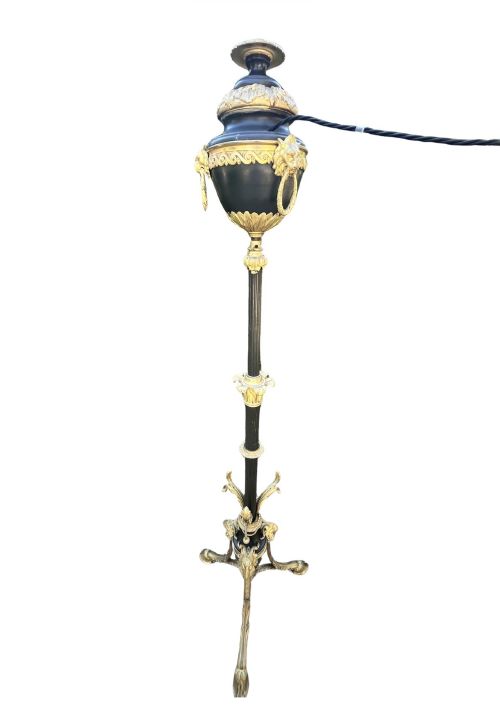
Quality rests in the weight of the metal, the rigidity of the adjustable joints, and the precision of the carved or cast ornamentation. Finer examples display crisp floral openwork, substantial brass gauge, and stable weighted bases that support extended arms without tipping.
The execution of secondary materials further separates standard production from superior pieces, evident in the depth of wood carving, the integrity of original patination, and the smoothness of mechanical height adjustments.
Maison Bagues
The Vintage Standing Reading Lamp Glossary
- Standard Lamp
- A term historically used in Britain for a floor-standing lamp designed to illuminate a room or provide localized light.
- Bouillotte
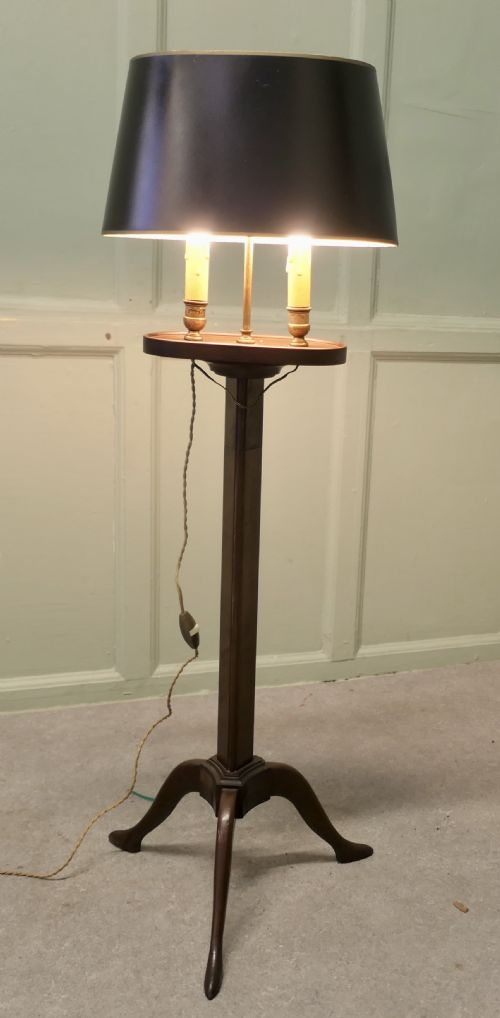
- A style of lamp featuring one or more candle or bulb holders, frequently fitted with an adjustable metal shade.
- Corinthian Column
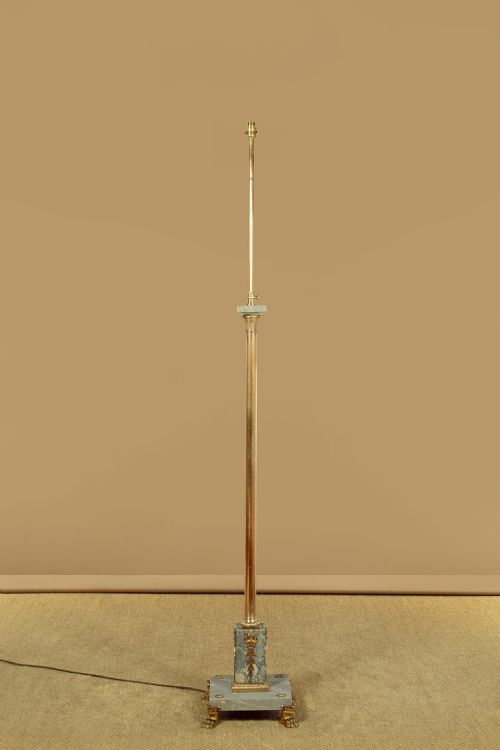
- A classical column design topped with ornate acanthus leaves, often utilised as the vertical shaft for brass floor lamps.
- Steamer Lamp
- A specialised adjustable reading light designed to remain stable in restricted spaces such as marine cabins or train compartments.
- Patination
- The surface sheen and oxidation developed on metal or wood over decades of handling and exposure.
Vintage Standing Reading Lamp: Frequently Asked Questions
How do I adjust the height safely?
Most vintage standing reading lamps utilise a thumb screw, collar, or internal telescopic mechanism located along the vertical column. Loosen the fitting gently while supporting the upper section, set the desired height, and retighten securely.
Avoid forcing rusted or stuck joints. Apply a light lubricant if the metal threads resist movement.
Were these lamps originally electric?
Many nineteenth-century and early twentieth-century standard lamps began as oil or candle burners before conversion to electricity. Brass oil lamp conversions retain their original fonts, burners, and galleries adapted for modern wiring.
Later Edwardian and Art Deco models often incorporated electrical wiring from manufacture, frequently featuring adjustable swing arms or specialised reading configurations.
How do I choose the right shade?
Selecting a shade depends on the proportions of the standard and the intended function of the light. Fabric shades soften ambient illumination, while metal or glass shades direct light downward for reading.
Ensure the fitter type matches the lamp gallery, whether traditional ring fitting, duplex burner holder, or modern spider fitter.
Can these lamps support heavy reading arms?
The stability of an extended reading arm relies directly on the weight of the base and the rigidity of the central column. Heavy brass, wrought iron, and weighted neo-classical columns maintain balance when arms are extended.
Lighter tripod bases require careful positioning to ensure the centre of gravity remains safely over the footprint of the stand.