
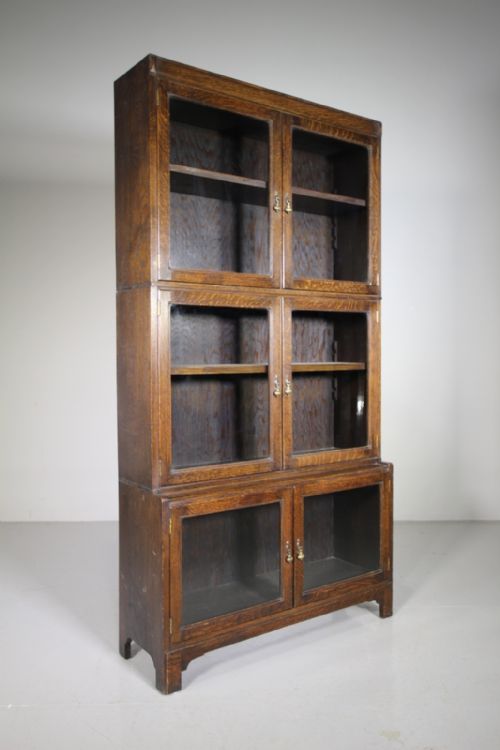
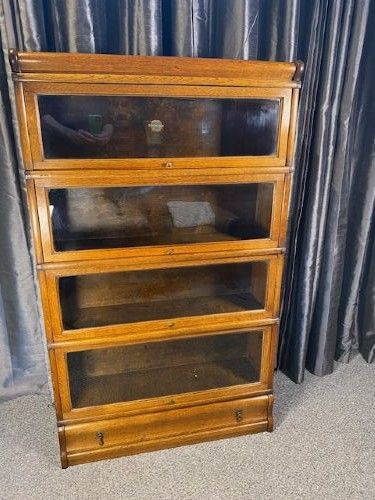
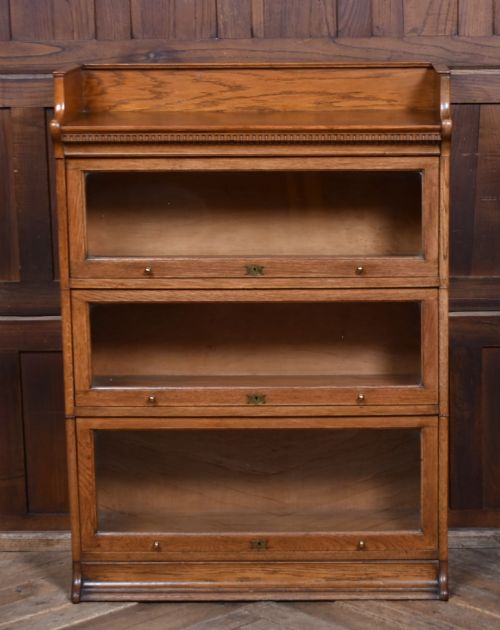

Vintage Stacking Bookcase
A vintage stacking bookcase offers modular utility and period charm, housing libraries behind glazed lifting doors.
Vintage Stacking Bookcase
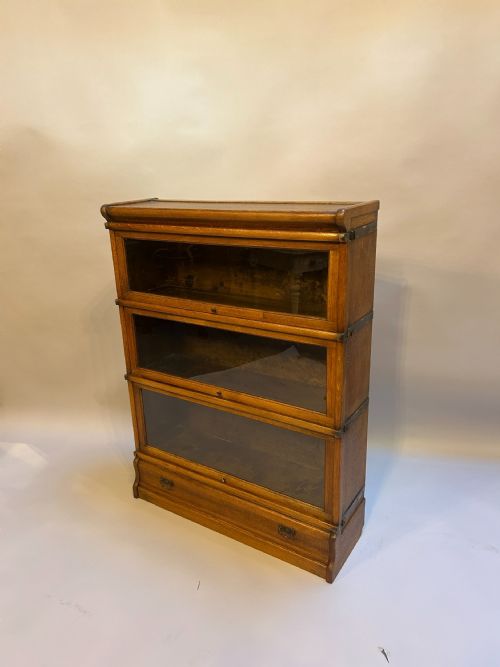
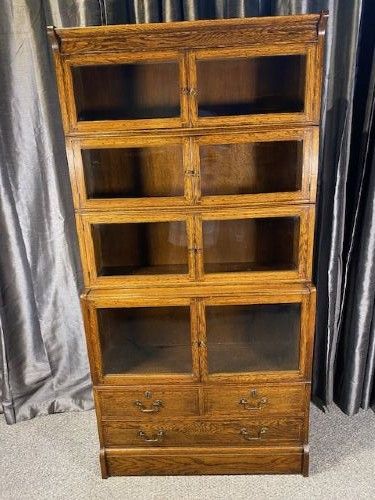
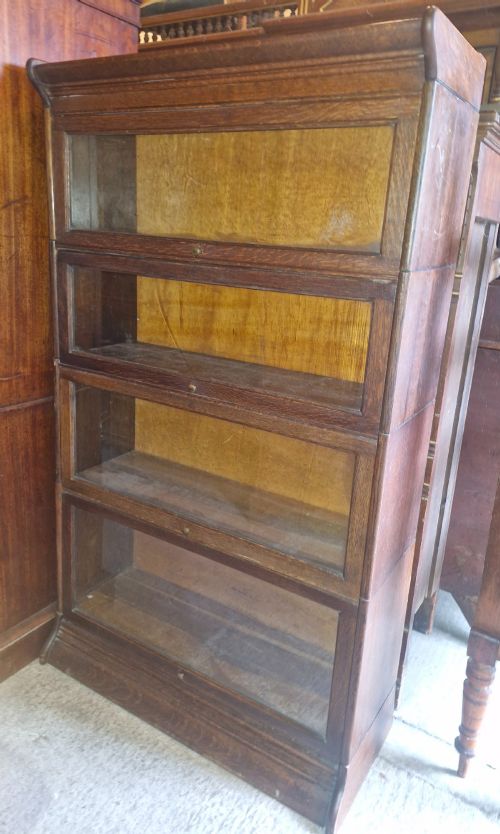
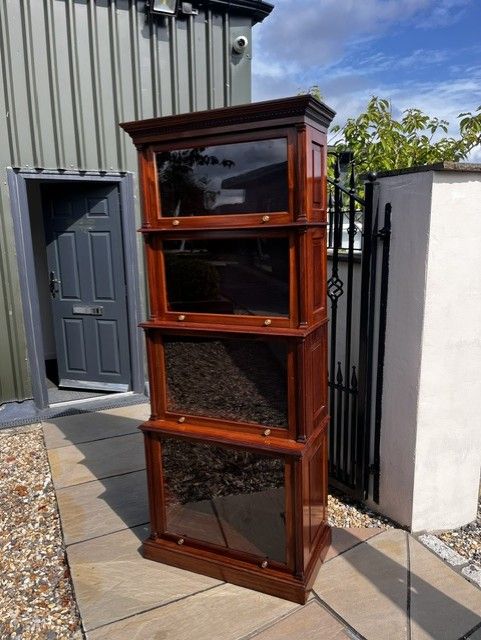
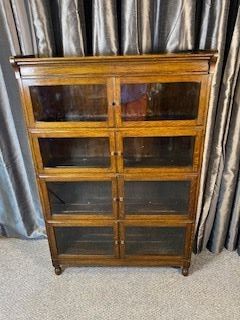
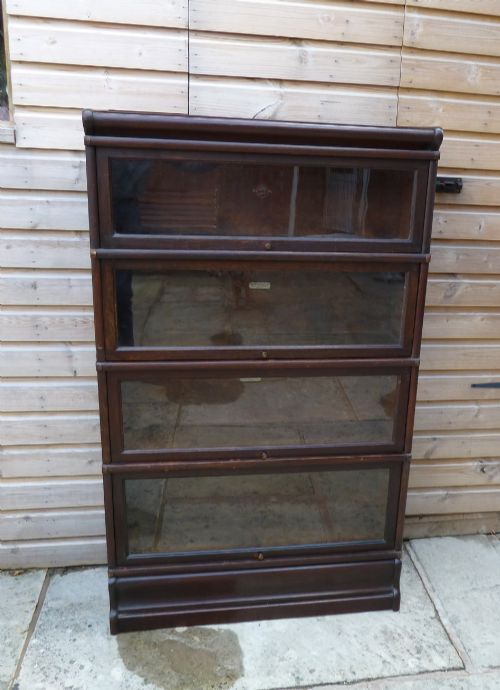
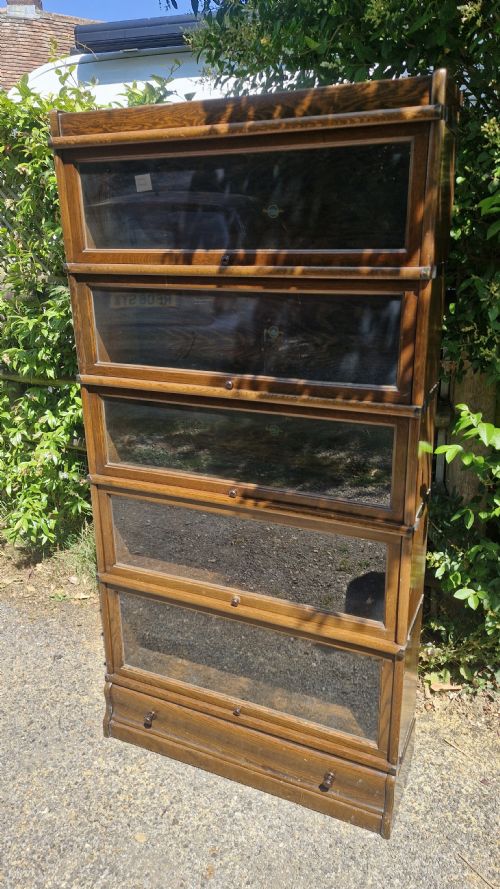
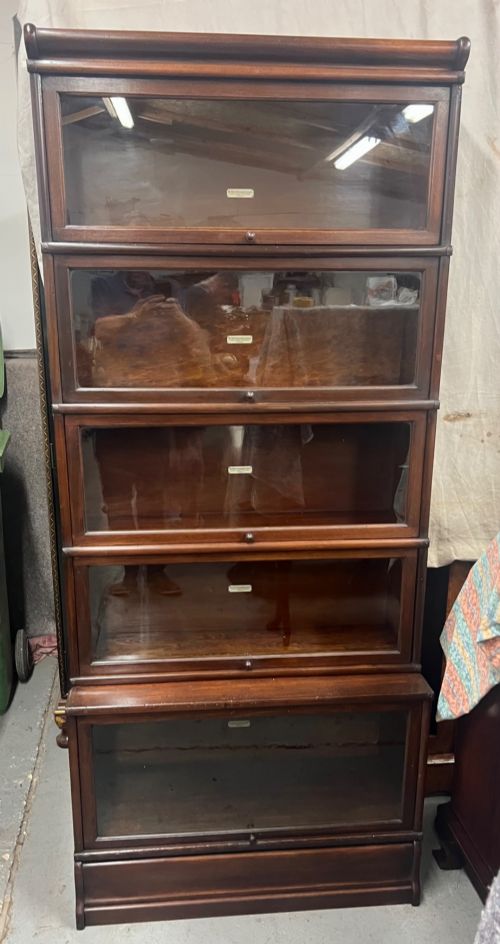
A vintage stacking bookcase consists of modular tiers that stack vertically, allowing owners to build a customized shelving unit. These pieces emerge predominantly from the early twentieth century, spanning Edwardian, 1920s, 1930s, and mid-century periods. The selections here showcase sectional formats designed for functional office and domestic use.
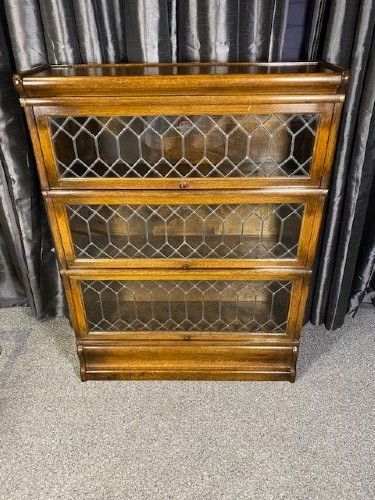
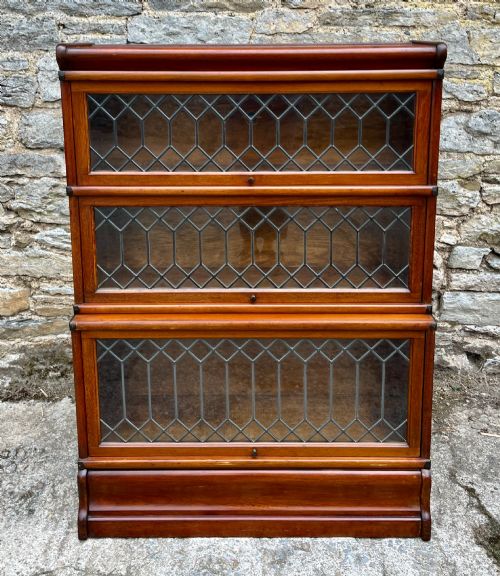
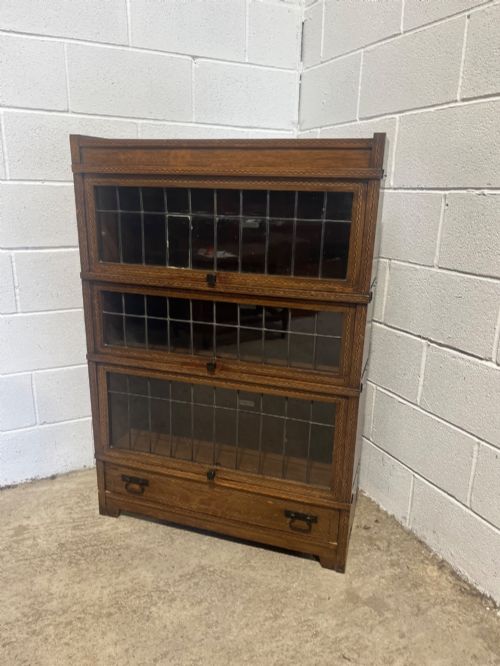
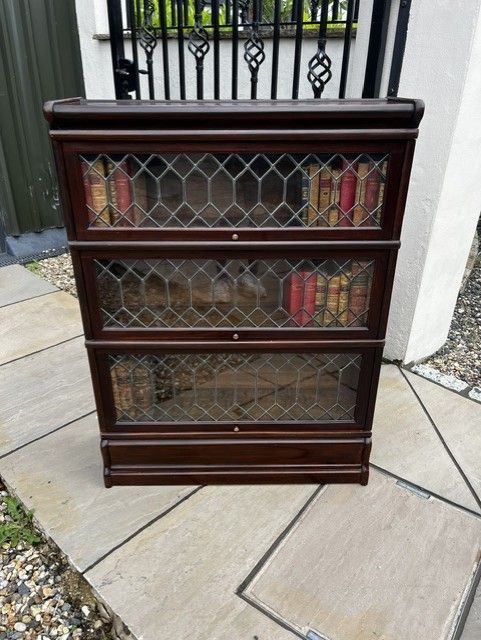
The most common forms on this page include the iconic Globe Wernicke style alongside barrister and sectional cabinets. Makers such as Lebus, Minty, Gunn, and Warwick produced these multi-tier arrangements in oak and mahogany. Buyers encounter configurations ranging from three to five tiers, often featuring glazed or leaded glass doors.
What varies in quality
Quality separates standard utilitarian office units from refined domestic furniture through timber selection and maker attribution. Pieces bearing maker stamps from established firms command attention due to superior joinery and original brass components. The weight of the solid mahogany or golden oak and the smoothness of the tier mechanisms indicate the tier's original grade.
The integrity of the glass panels and the precision of the stacking cornices and bases define the preservation standard. Surviving examples retaining their original finish and uncompromised leaded lights represent the higher echelon of these modular cabinets.
Listings feature oak and mahogany woods, complemented by brass fittings, standard glass, and leaded glass doors across Edwardian to mid-century periods.
Globe Wernicke·Lebus·Minty·Gunn·Warwick·Heals
The Vintage Stacking Bookcase Glossary
- Barrister bookcase
- A modular sectional bookcase featuring glass doors that lift and slide inward above the books. This design protected law volumes from dust while providing easy access in professional offices.
- Sectional bookcase
- A shelving unit built from separate, stackable tiers that lock together vertically. This modular construction allowed growing libraries to expand one tier at a time.
- Globe Wernicke
- A pioneering modular bookcase system patented in the late nineteenth century and produced extensively through the early twentieth century. The name frequently describes any lawyer-style stacking bookcase of similar mechanism.
- Leaded glass
- Glass panes joined together by narrow strips of lead came to form decorative geometric patterns. This technique appears on select glazed cabinet doors from the Arts and Crafts and Edwardian periods.
- Cornice
- The decorative moulded projection that sits atop the uppermost tier of a bookcase. It crowns the modular stack and provides a finished architectural silhouette.
Vintage Stacking Bookcase: Frequently Asked Questions
What is a barrister bookcase?
A barrister bookcase is a modular shelving unit designed with glass doors that lift and slide into the cabinet above each shelf. Legal professionals originally used these cabinets to store and transport law books securely.
Today, these pieces serve as versatile display cabinets in domestic settings. The enclosed tiers protect vintage volumes from dust while offering clear visibility.
How to date a vintage stacking bookcase?
Dating relies on stylistic clues such as the presence of Edwardian oak, 1920s hardware, or 1930s Art Deco and limed finishes. Maker stamps from firms like Minty or Lebus provide specific chronological anchors.
Construction methods, including the type of timber, brass fittings, and leaded glass patterns, also point toward specific decades between 1900 and 1950.
Where were stacking bookcases used?
These cabinets originated in professional environments like law offices, studies, and libraries where expanding book collections required flexible storage. The modular format allowed professionals to transport or reconfigure their libraries with ease.
Over time, the domestic appeal grew as households adopted the practical design for living rooms and studies. The clean vertical lines fit well into both formal Edwardian interiors and later mid-century spaces.