



Vintage Stacked Side Tables
These vintage stacked side tables offer practical multi-tiered surface space that slides neatly away when floor area is at a premium.
Vintage Stacked Side Tables
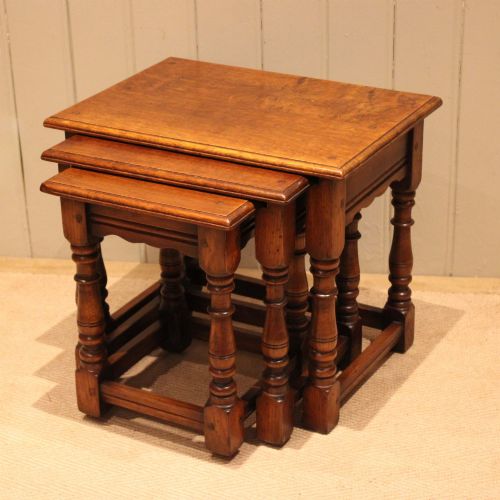
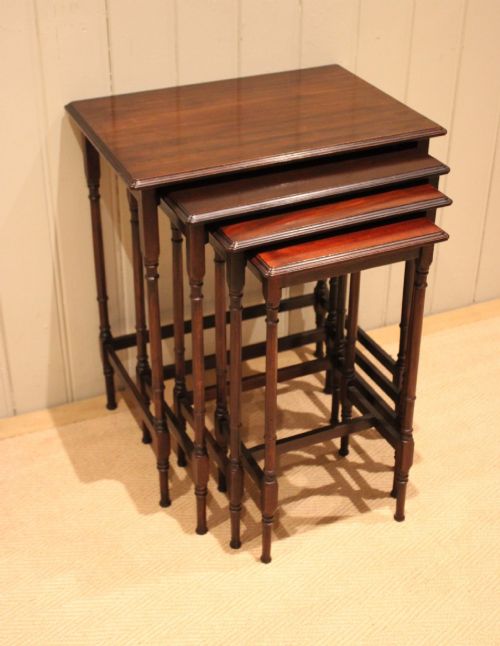
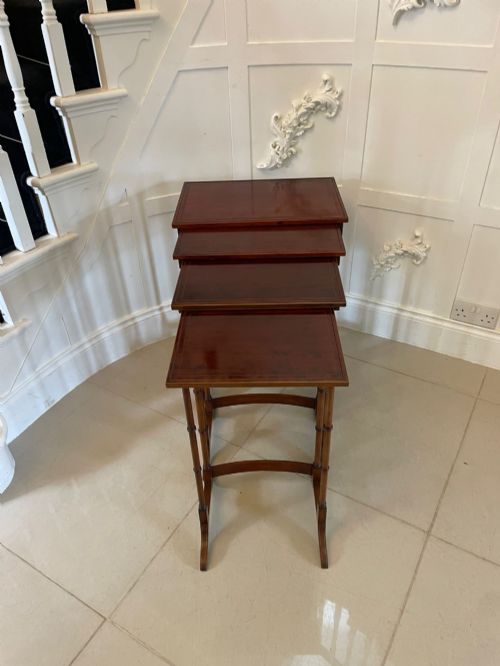
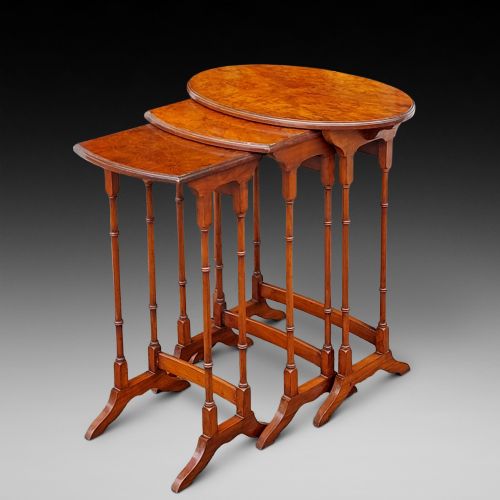
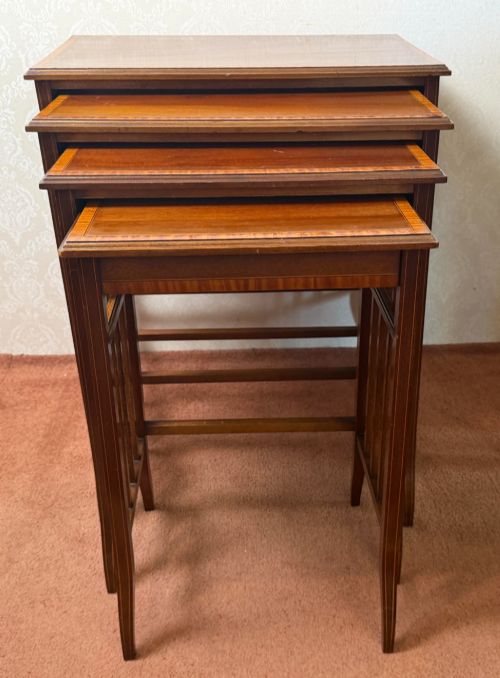
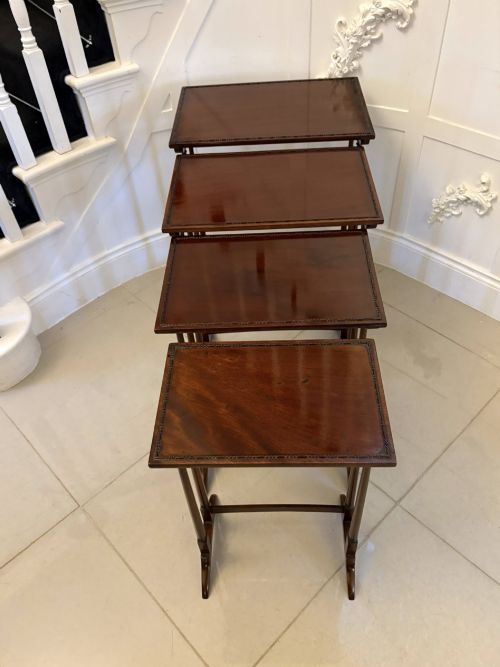
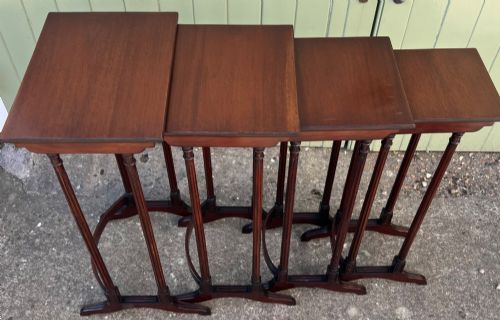
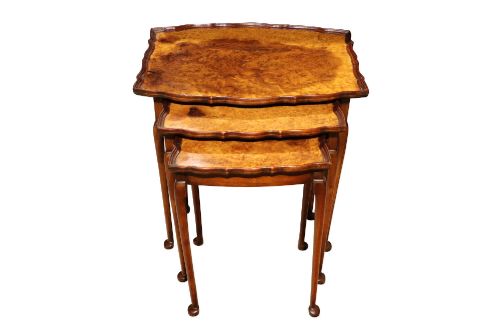
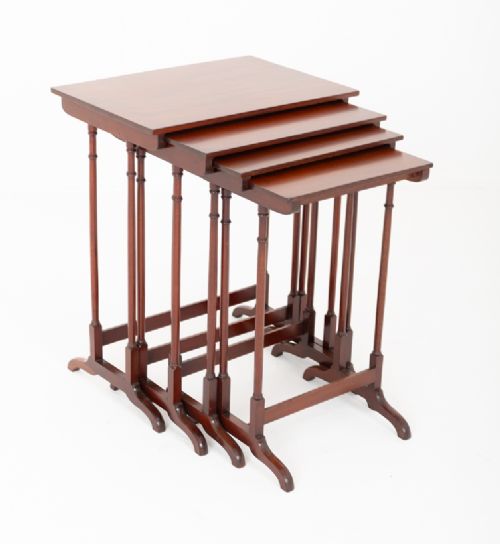
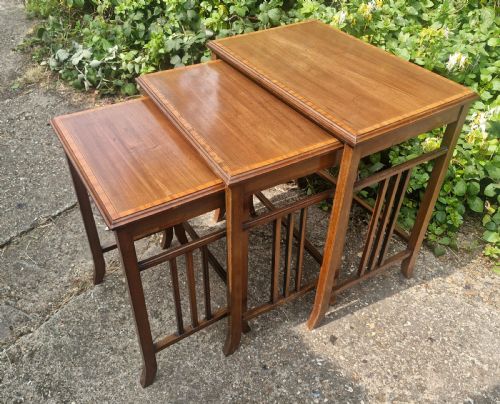
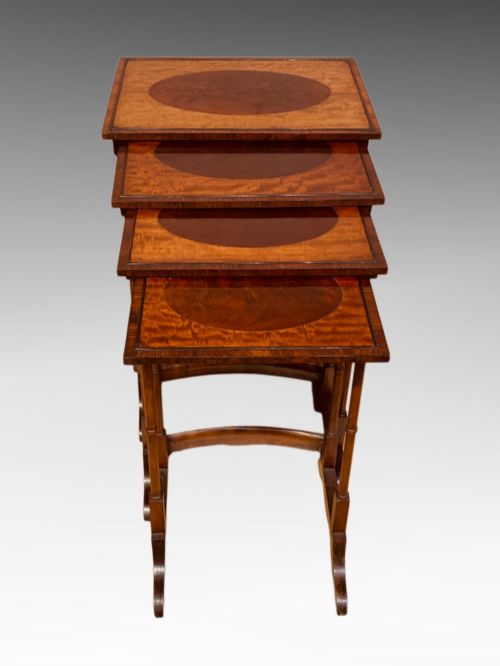
When you search for vintage stacked side tables, you encounter sets of graduated tables designed to slide neatly one beneath another. The most common examples on this page date from the Edwardian period and the early twentieth century, taking the form of nests containing three or four pieces.
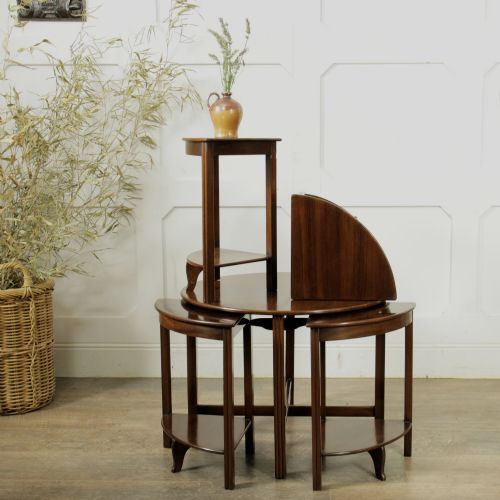
Makers produced these space-saving designs in various configurations, including rectangular sets, circular arrangements, and oval tops. English examples lean towards inlaid mahogany and burr walnut, whilst continental and specialised pieces incorporate rosewood, Chinoiserie decoration, or brass inlay.
How they were made
Cabinet makers utilised solid hardwoods and finely figured veneers, mounting them on slender supports like square tapered legs. Surfaces often received decorative treatments such as satinwood crossbanding, parquetry, floral marquetry, or embossed leather inserts.
Construction relied on tight joints and lightweight frames to ensure the smaller tables passed smoothly beneath the largest member without binding. Workshops applied polish to bring out the natural grain patterns of walnut, mahogany, oak, and rosewood.
Listings feature periods spanning from the Victorian era and the nineteenth century through the Edwardian period, 1920s, and 1930s Art Deco.
What varies in quality
Quality rests in the precision of the nesting action and the selection of timber veneers used for the primary surfaces. Superior sets display careful grain matching across the graduated tops and retain sturdy joints despite repeated extraction and storage.
The degree of hand-finishing marks the distinction between standard utilitarian items and finer commissions. Elaborate inlay work, carved details, and refined French polishing elevate certain sets above simpler production models.
Émile Gallé·Heal's
The Vintage Stacked Side Tables Glossary
- Quartetto
- A matching set of four stacked tables designed to slide together. The term appears frequently in Edwardian and nineteenth-century furniture descriptions.
- Inlay
- A technique where pieces of contrasting timber, brass, or other materials are inserted into depressions in the wood to form decorative patterns. It frequently defines Edwardian mahogany surfaces.
- Crossbanding
- A narrow strip of veneer applied to the border of a tabletop with the grain running perpendicular to the centre. This frames the primary timber and adds visual depth.
- Parquetry
- Geometric patterns constructed from small pieces of wood fitted together on a surface. It is often seen on French walnut tables from the early twentieth century.
- Chinoiserie
- European imitation of traditional Chinese and East Asian artistic motifs, usually rendered in lacquer or painted decoration. It appears on select decorative nests from the Edwardian era.
Vintage Stacked Side Tables: Frequently Asked Questions
What is a quartetto nest?
A quartetto nest is a set consisting specifically of four graduated tables designed to slide one inside the other.
Cabinet makers produced these sets during the nineteenth and early twentieth centuries to maximise surface area in smaller drawing rooms.
How were nesting tables used?
Owners kept the stacked tables tucked away in a corner or beside a sofa until visitors arrived. Individual tables were then pulled out to serve tea, hold books, or display ornaments.
When no longer required, the smaller tables slid neatly back beneath the main frame to save floor space.
How do I identify Edwardian sets?
Edwardian examples typically feature light mahogany framing with delicate satinwood inlay, stringing, or crossbanding. The legs are frequently slender and square-tapered.
These pieces emphasise lightness and elegance, contrasting with heavier Victorian designs.
Where should I place them?
These tables suit sitting rooms, studies, or bedrooms where flexible surface space is useful. They function well beside armchairs or as standalone display stands for lamps and plants.
Because the pieces separate easily, you can distribute them around a room when entertaining guests.