


Vintage Stackable Side Tables
Vintage stackable side tables are clever spacesaving nests of tables that slide neatly beneath one another.
Vintage Stackable Side Tables
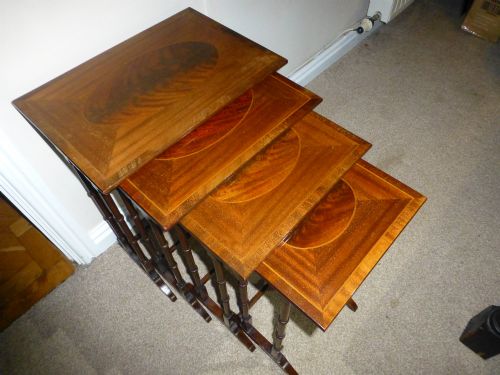
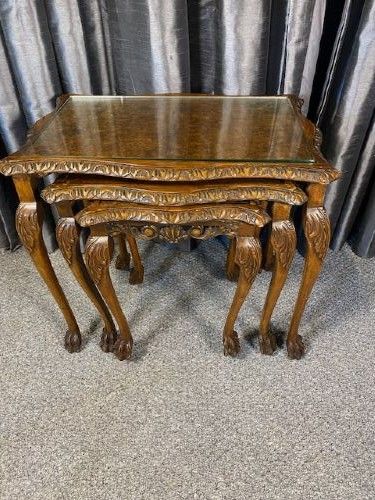
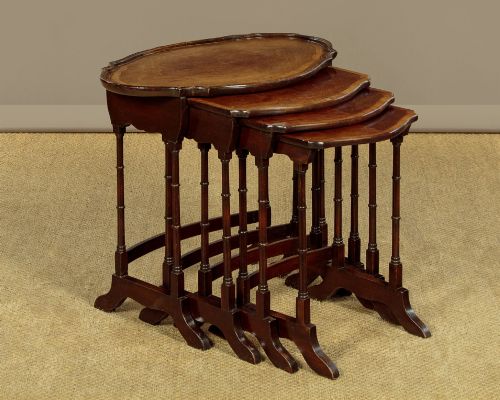
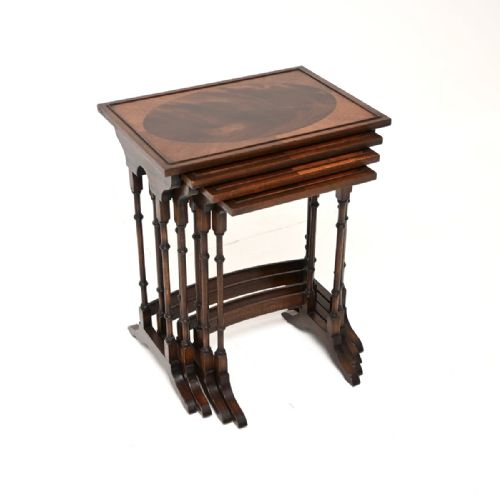
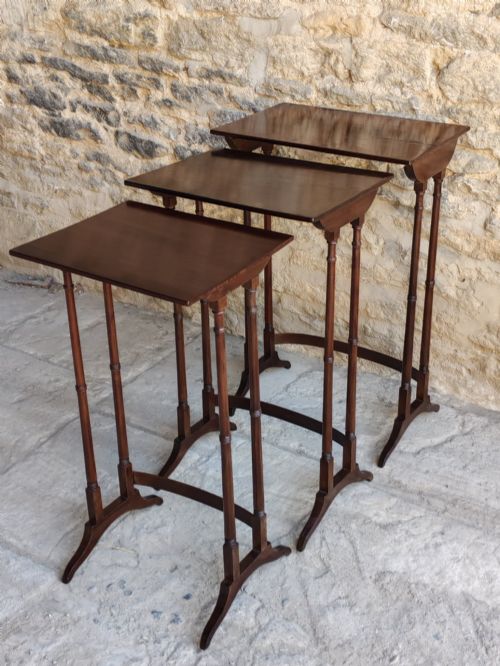
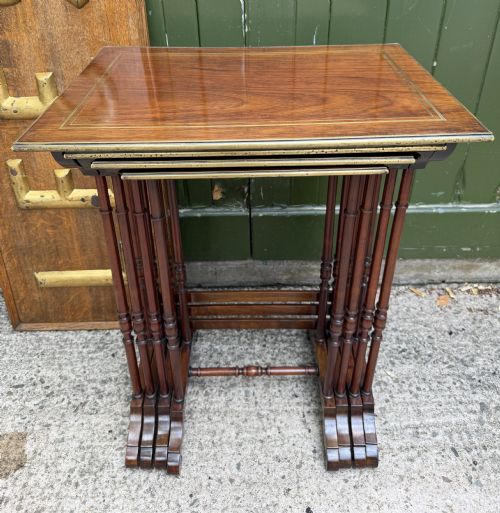
Vintage stackable side tables appear across multiple periods, with Edwardian and 1930s examples forming the majority of the current selection. These multi-tiered surfaces function as space-saving nests, allowing smaller tables to slide cleanly beneath the largest top piece when not in use.
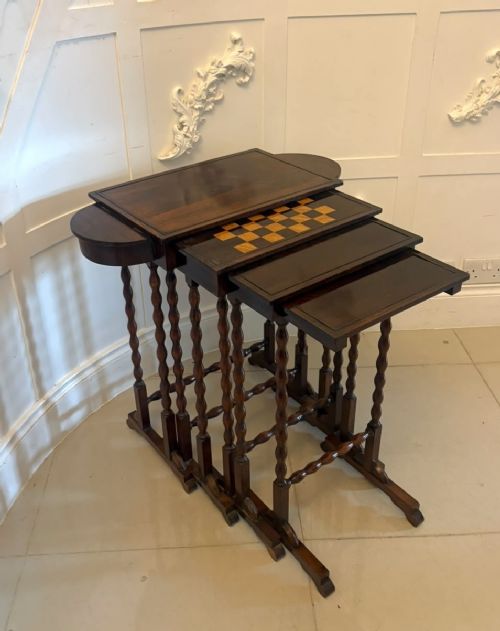
Makers produced these tiered sets in configurations of three or four graduated tables, often referred to historically as quartetto tables. The forms range from simple rectangular tops to oval coffee tables and specialised pieces with integrated chess boards.
The aesthetic vocabulary spans Georgian and Queen Anne revival styles alongside clean-lined Art Deco and ornate French Provincial parquetry. Buyers frequently encounter Edwardian mahogany versions featuring delicate string inlay alongside richer rosewood and walnut iterations.
What varies in quality
The standard of timber selection and veneer matching defines the upper tier of these pieces, where grain patterns flow harmoniously across the graduated surfaces. Lesser examples utilise simpler secondary woods with minimal attention to the continuity of the timber figure.
Refinement in the joinery and the precision of inlaid stringing or parquetry distinguish superior workshops from standard commercial production. The crispness of carved details and the stability of the nested fit indicate the level of care invested in original manufacture.
Mahogany remains the most common timber across these listings, appearing alongside rosewood, walnut, and decorative satinwood veneer.
Heal's
The Vintage Stackable Side Tables Glossary
- Quartetto
- A matched set of four stackable tables designed to slide neatly into one another. This traditional term appears frequently in nineteenth-century and Regency descriptions.
- Parquetry
- Geometric wood-block patterning assembled to create decorative floor or tabletop surfaces. Makers often combined contrasting timbers like walnut for striking visual effect.
- Stringing
- Narrow lines of contrasting wood inlaid into the surface of furniture to create delicate borders. Edwardian makers utilised boxwood stringing extensively on mahogany frames.
- Graduated
- Describing a set of tables where each tier diminishes in size to fit beneath the preceding one. This scaling ensures the entire nest compacts into the footprint of the largest single table.
Vintage Stackable Side Tables: Frequently Asked Questions
How do I date a nest of tables?
Dating relies on combining the stylistic details, timber choices, and construction methods visible across the graduated frames. Edwardian and Art Deco pieces display distinct decorative vocabularies that separate them from earlier nineteenth-century examples.
Examining the underside and the joinery helps confirm the period of manufacture. Secondary timbers and finish types also provide reliable chronological clues.
Were these tables used for dining?
These versatile sets served primarily as occasional furniture for holding drinks, books, or writing materials around the drawing room. The smaller tables could be distributed to guests and stacked away when floor space was required.
Certain specialised variants included integrated chess boards or functioned as compact coffee tables. Their primary purpose remained flexibility within domestic entertaining.
How should I care for veneered surfaces?
Maintaining vintage timber surfaces requires simple dusting with a soft, dry cloth to protect the delicate veneer and polish. Avoiding direct sunlight and extreme humidity prevents the wood from drying and the veneer from lifting.
Periodic application of appropriate furniture wax preserves the lustre of the timber. Gentle maintenance keeps the original finish stable over decades of daily use.
What is the difference between Edwardian and Art Deco nests?
Edwardian nests typically showcase traditional mahogany frames with inlaid stringing, satinwood banding, and sometimes Sheraton revival motifs. They lean towards classic British cabinetmaking traditions.
Art Deco pieces embrace exotic timbers like Indian rosewood and geometric forms that reflect modernism. The silhouettes become streamlined and focused on the natural grain of the wood.