


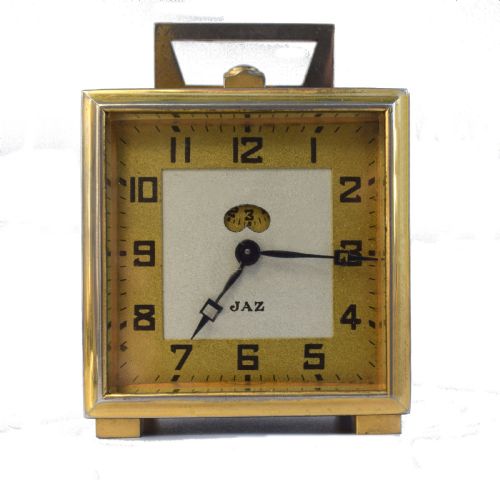

Vintage Square Desk Clock
A vintage square desk clock brings sharp geometry and dependable timekeeping to a workspace, combining period materials like chrome, bakelite and marble.
Vintage Square Desk Clock
When searching for a vintage square desk clock, you encounter pieces spanning the nineteenth century through to the mid-twentieth century. The selection leans heavily towards the 1930s, offering distinct architectural forms shaped by the Art Deco movement.
Most examples function equally well on a mantel or a desk, bridging the gap between utilitarian desk clocks and decorative mantel clocks. These items originate from English, French and broader European makers, utilising materials such as mahogany, brass, glass and chrome.
Materials and construction methods
The construction of these timepieces relies on a combination of heavy metals, dense hardwoods and early synthetic plastics. Chrome plating and polished brass provide metallic brilliance, while bakelite and opaline uranium glass introduce rich industrial textures and colours.
Cabinetmakers and metalworkers shaped mahogany, burr walnut and cast metals into precise rectilinear forms. Dial faces often feature enamel work, glass covers and intricate metal hands driven by mechanical movements or early electric systems.
A promotional garage desk clock from Brooklands lets you check the hours while dreaming of vintage motor racing.
Assessing craftsmanship and finish
Quality reveals itself in the weight of the chassis, the precision of the metal joins and the integrity of the materials. Superior pieces utilise solid hardwoods like mahogany and burr walnut, alongside heavy chrome and genuine marble or glass.
The sophistication of the dial design and the reputation of the clockmaker distinguish standard production items from finer works. Original components, legible numerals and intact enamel or glass elements elevate the standard of the piece.
Smiths Clockmakers England·Blangy Clockmakers French·Elliott of London·French Clockmakers Jaz·P.M. Favre
The Vintage Square Desk Clock Glossary
- Bakelite
- An early form of thermosetting plastic moulded into smooth, durable clock housings during the twentieth century. It offers a glossy finish and deep colour saturation.
- Fusee
- A conical pulley used in mechanical clocks to maintain even tension on the drive chain as the mainspring unwinds. This mechanism improves timekeeping accuracy across the power reserve.
- Ormolu
- Gilt bronze created by applying finely ground gold to a bronze base. It provides a rich, decorative golden surface seen on nineteenth-century pieces.
- Uranium glass
- Glass enhanced with uranium oxide to produce a vibrant yellow-green hue that glows under ultraviolet light. It appears in striking twentieth-century decorative objects.
- Timepiece
- A clock that indicates the time without sounding an hourly strike or chiming mechanism. These units focus purely on visual presence and visual time display.
Vintage Square Desk Clock: Frequently Asked Questions
How do I wind a mechanical desk clock?
Insert the appropriate key into the winding arbor on the dial or backplate and turn it gently clockwise until you feel firm resistance. Do not overwind the spring, as this can damage the internal mechanism.
Allow the clock to settle on a level surface once wound to ensure the balance wheel or pendulum swings evenly. Consistent placement prevents erratic timekeeping.
Are electric vintage clocks safe to use?
Many vintage electric models require professional inspection of their wiring and plugs before connecting them to a modern power outlet. Rewiring preserves the exterior character while ensuring electrical safety in a contemporary home.
Consult a qualified horologist or electrician if the original cord shows wear or insulation breakdown. Safety updates protect both the antique movement and your workspace.
How do I date an Art Deco clock?
Examine the geometric styling, typography on the dial face and the combination of materials like chrome and bakelite. The 1930s produced distinctive rectilinear shapes and streamlined industrial motifs.
Maker marks, patent numbers stamped on the casing, and registration numbers also offer precise chronological clues. Comparing these details against known production records clarifies the decade of manufacture.