






Vintage Spirit Decanter Holder
A vintage spirit decanter holder secures fine bottles with clever locking frames and portable stands, offering a practical centrepiece for after-dinner drinks.
Vintage Spirit Decanter Holder
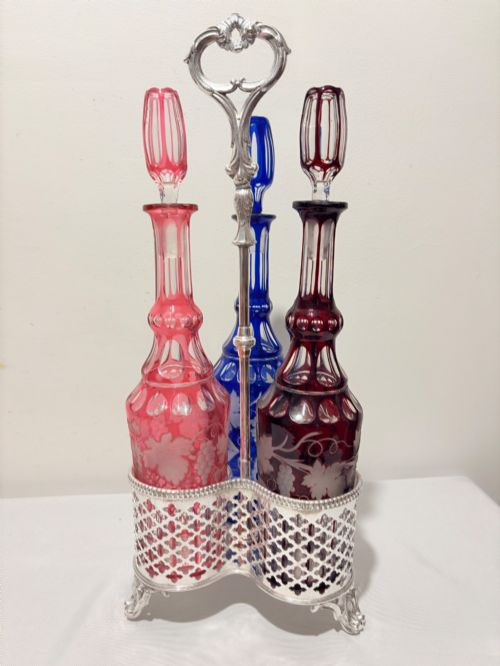
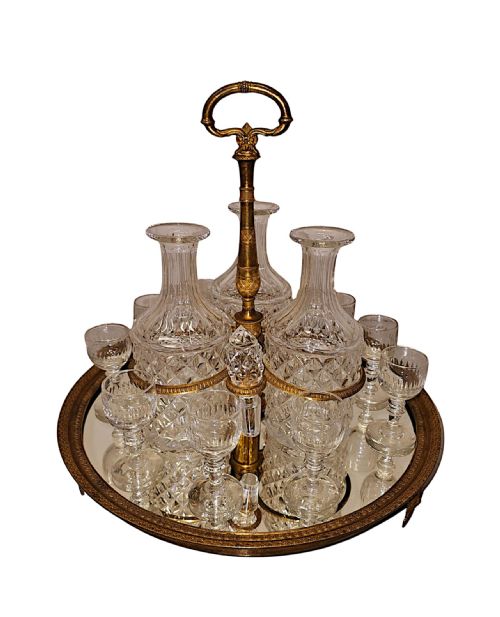
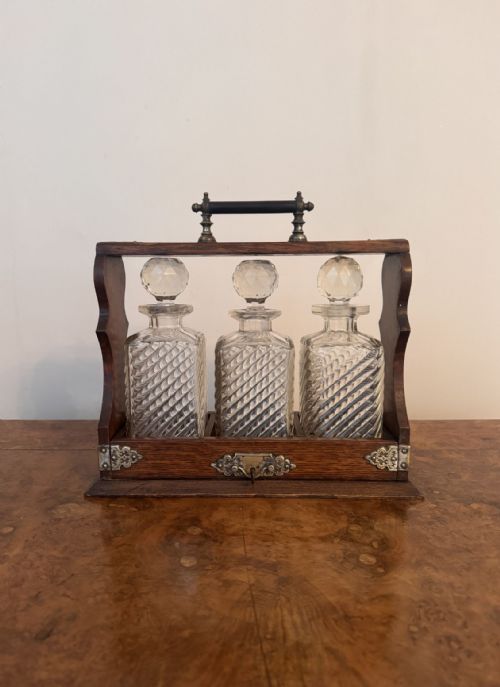
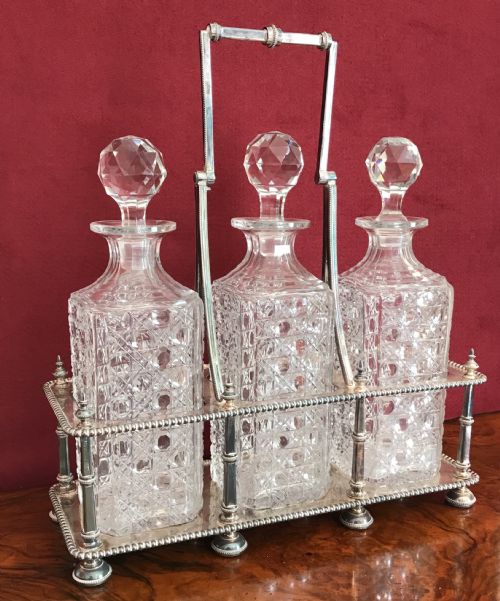
A vintage spirit decanter holder takes many forms on this page, including traditional tantalus frames, fitted decanter stands, and compact liqueur caddies. These pieces protect and display glass bottles in domestic settings.
Most examples date from the Victorian and Edwardian periods, constructed with sturdy timber frames or ornate metal stands. Oak and silver plate dominate the selection alongside later chrome and glass modernist designs.
Buyers frequently encounter three-bottle and two-bottle formats designed to hold cut crystal or coloured glass decanters. Some versions incorporate games compendiums or dry bar storage within the wooden base.
Materials and construction methods
Makers utilised solid blonde oak, satin wood, and silver-plated metal to build robust frames capable of supporting heavy glassware. Timber sections often feature inlaid details and secure locking mechanisms operated by a key.
Metal components combine brass and silver plate, whilst later modernist pieces introduce chromium-plated frames paired with glass mirror bases. Cut glass and cut crystal decanters complete the assemblies with patterned surfaces.
Vintage Spirit Decanter Holder Retail Price Guide 2026
Typical asking prices for vintage spirit decanter holder among the pieces listed under this phrase on Sellingantiques today, from the lower quarter to the upper quarter. They describe what is for sale here now, not the wider market.
Materials recorded across the inventory include oak, satin wood, brass, copper, and mirror glass.
Judging quality in a decanter holder
Quality rests in the precision of the locking mechanism and the weight of the metal plating over the base frame. Finer examples display crisp silver-plated mounts and substantial timber cabinetry with tight joinery.
The sophistication of the associated glassware contributes significantly to the overall merit of the piece. Matching cut crystal decanters and integrated games components elevate the standard of the entire set.
Elkington·Jacques Adnet
The Vintage Spirit Decanter Holder Glossary
- Tantalus
- A locking drink stand that secures decanters within a metal bar frame so guests can see the contents but cannot pour them without a key.
- Silver plate
- A thin layer of silver fused to a base metal core such as copper or brass, commonly used for Victorian and Edwardian stands.
- Games compendium
- A fitted box compartment integrated into the base of certain tantalus sets to store playing cards, dice, and dominoes.
- Cut crystal
- High-clarity glass decorated with deeply ground geometric patterns that refract light across the surface of the decanter.
Vintage Spirit Decanter Holder: Frequently Asked Questions
How does a tantalus lock?
A tantalus secures bottles by means of a metal top bar that engages with the stoppers or necks of the decanters. Turning a key releases the vertical retaining rod so the bar swings open.
Most mechanisms rely on a simple turn-key barrel lock housed in the wooden base or side upright. When locked, the stoppers cannot be removed from the bottles.
What is a decanter stand?
A decanter stand is an open metal or wooden frame designed to carry several bottles without a locking mechanism. These pieces provide portable service during dinner parties.
Such stands often feature a central handle and fitted ring holders to keep the vessels secure during transit between rooms.
How do I date a wooden tantalus?
Dating a wooden tantalus involves examining the timber species, joinery techniques, and hardware style. Victorian examples frequently employ heavy oak and ornate silver plating.
Later pieces from the 1930s lean towards modernist chrome framing and simpler geometric lines. Associated games compartments also reflect the manufacturing fashions of their specific decade.
Can I replace missing decanters?
Replacing missing decanters requires finding vessels that match the exact height and base dimensions of the original frame apertures. Cut glass and crystal bottles must fit comfortably beneath the locking bar.
Because original sets were manufactured together, sourcing exact period replacements demands careful measurement of the collar clearances and neck widths.