






Vintage Spirit Burner
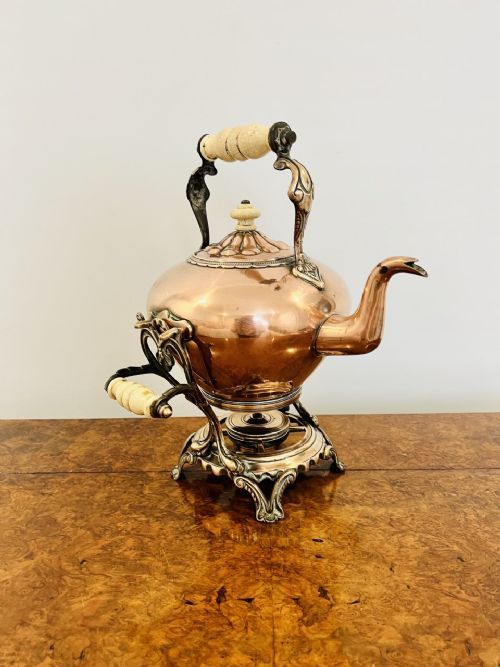
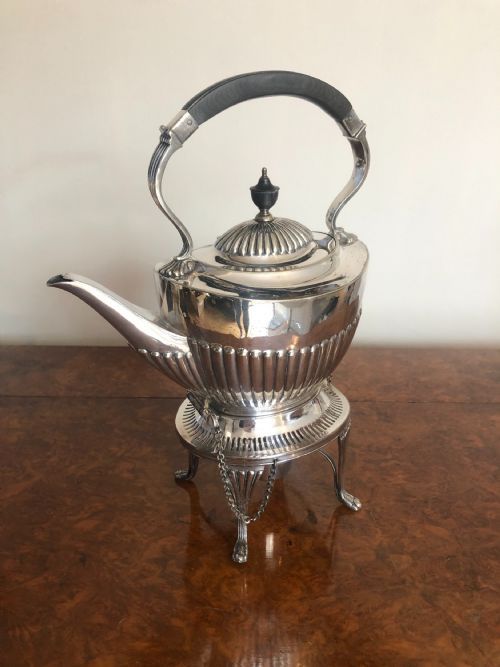
These vintage spirit burner pieces are heated vessels on stands designed to keep liquids warm at the table.
Vintage Spirit Burner
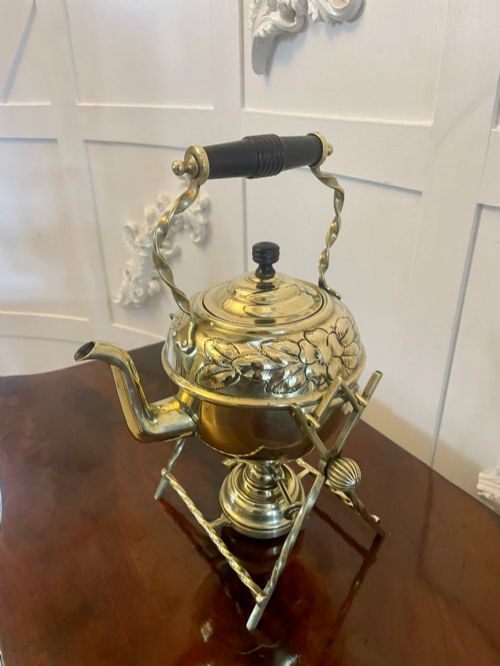
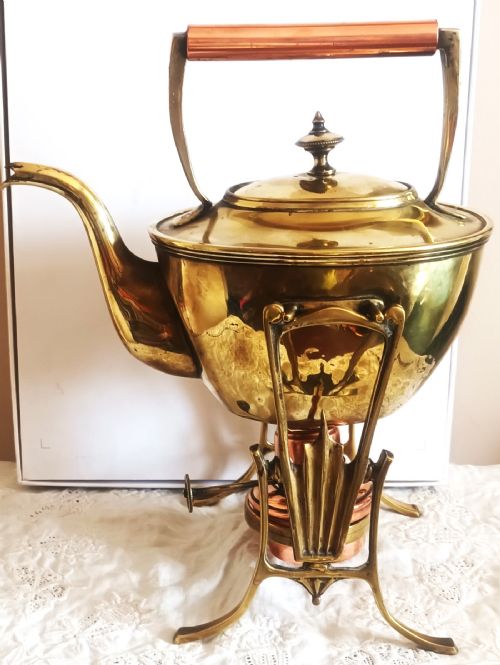
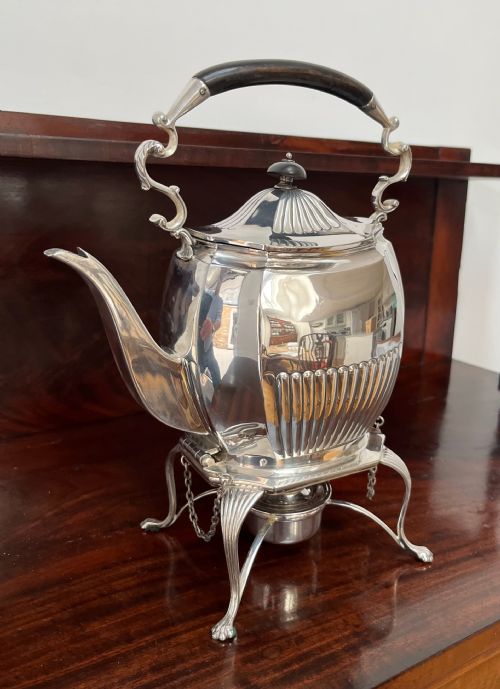
A vintage spirit burner search brings up a range of vessels designed to keep liquids and food warm at the table. Most pieces encountered here take the form of spirit kettles on stands, complete with their original burners.
The selection spans several periods, with Edwardian and Victorian items appearing most frequently alongside pieces from the 1920s and 1930s. Object types extend from standard tea kettles and food warmers to table lighters and rotating dish rings.
Stylistically, these items reflect Victorian, Edwardian, and Arts and Crafts tastes, with occasional Georgian Revival and Art Deco examples. Brass and copper dominate the earlier items, while silver plate defines the later Edwardian and twentieth-century pieces.
How they were made
Metalworking techniques dictate the construction of these items, utilising hammered or sheet copper, cast brass, and silver-plated base metals. Skilled smiths and manufacturers shaped these durable materials to withstand the heat of an active flame.
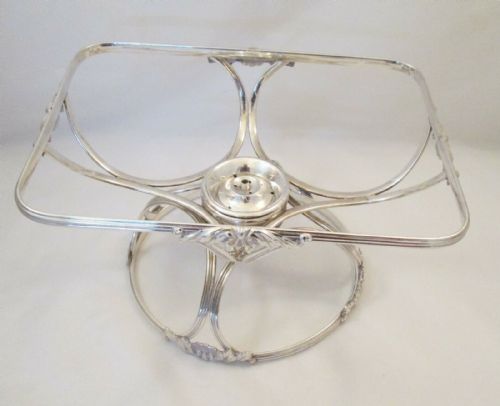
Handles and insulators frequently incorporate contrasting materials such as wood, ebony, and bone to protect the user's hand from conducted heat. Frames and stands utilise wrought iron or matching metals to support the weight of the filled kettle above the burner.
Vintage Spirit Burner Retail Price Guide 2026
Typical asking prices for vintage spirit burner among the pieces listed under this phrase on Sellingantiques today, from the lower quarter to the upper quarter. They describe what is for sale here now, not the wider market.
The listings here span the nineteenth and twentieth centuries, featuring periods from 1850 and the Victorian era through to Art Deco styles.
What varies in quality
The standard of workmanship shows clearly in the weight of the metal and the firmness of the joints on stands and handles. Heavier gauges of brass and copper indicate a more robust construction intended for regular domestic service.
Decorative detail separates standard utility items from finer examples attributed to makers such as William Soutter & Sons. Finishing touches, including well-fitted burners and carefully turned wooden or bone insulators, distinguish superior pieces.
William Soutter & Sons
The Vintage Spirit Burner Glossary
- Spirit kettle
- A water vessel mounted on a metal stand above a small fuel burner. It kept water hot for tea service at the dining or drawing-room table.
- Spirit burner
- A small container holding methylated spirits or alcohol with a wick, placed beneath a kettle or food warmer to supply heat. The burner fits securely into the centre of the supporting frame.
- Silver plate
- A thin layer of silver applied to a base metal such as copper, brass, or nickel silver. This technique offered the appearance of solid silver at a lower cost.
- Chafing heat dish
- A table vessel designed to keep food warm using a heat source below. These dishes often feature rotating mechanisms or fitted covers.
- Trefoil
- A three-lobed decorative shape often seen in metalwork and table lighters. The motif reflects Arts and Crafts or Gothic Revival influences.
Vintage Spirit Burner: Frequently Asked Questions
What is a vintage spirit burner?
A vintage spirit burner is a small fuel-filled container used with a metal stand to heat a kettle or food warmer at the table.
These portable heating units allowed hosts to maintain warm water for tea or keep dishes hot without returning to the kitchen.
How do I date a spirit kettle?
Dating relies on stylistic clues, materials, and manufacturing marks found on the metal stand or base. Victorian and Edwardian examples often display distinct decorative motifs characteristic of their respective decades.
Earlier pieces favour heavy brass and copper construction, whereas later twentieth-century items frequently utilise silver-plated finishes.
Can I still use the burner?
Many burners retain their original wicks and fuel chambers, though testing requires caution regarding vintage seals. Most buyers treat these pieces primarily as decorative display items for the dining room.
If restoration is attempted, modern denatured alcohol serves as a standard fuel replacement for historical spirit burners.
What materials are most common?
Brass and copper appear frequently among nineteenth-century Victorian and Arts and Crafts examples. Silver plate becomes the dominant finish on Edwardian and later twentieth-century kettles.
Details like handles and insulators often incorporate wood, ebony, or bone to manage heat transfer.