





Edwardian Spirit Burner
An Edwardian spirit burner provides portable table heat for water and food using a small flame beneath a stand.
Edwardian Spirit Burner
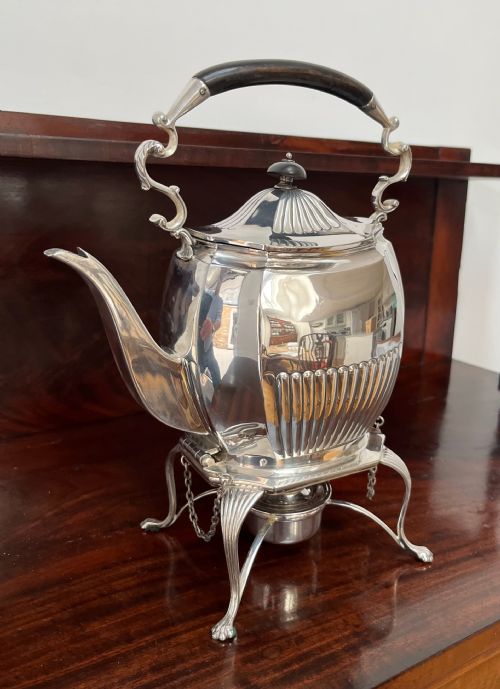
The search phrase edwardian spirit burner brings up warming equipment designed to keep water hot or food warm at the table. These pieces include spirit kettles, chafing heat dishes, and egg warmers arranged on stands above small burners.
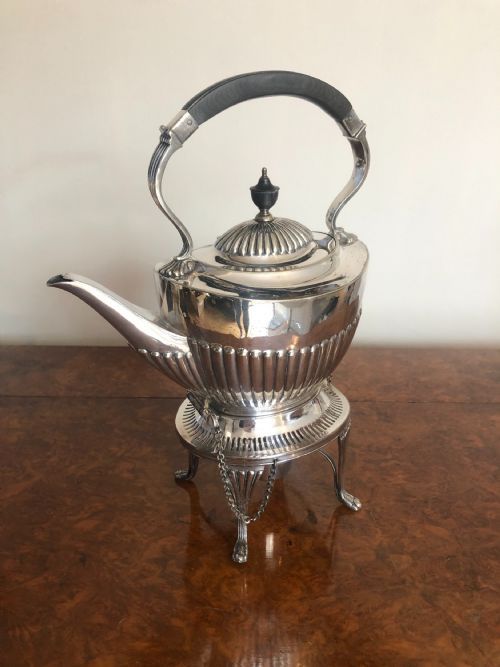
Most examples found on this page date from the Edwardian era, alongside pieces from the Victorian, Art Deco, and Arts and Crafts periods. The silver plated kettle on a stand represents the form most frequently encountered in these listings.
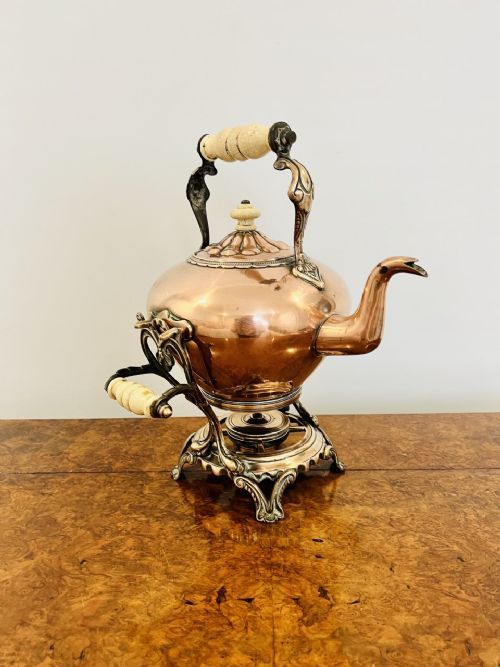
Makers often paired the burner with a matching frame or stand, sometimes incorporating wood, bone, or ebony handles. Buyers also encounter copper and brass constructions alongside the dominant silver plated metalware.
Materials and construction
Metalwork dominates the construction of these pieces, utilising silver plate, electroplated nickel silver, brass, and copper. Artisans shaped these metals into stands, vessels, and hanging kettles.
Insulating elements appear in handles and knobs using materials like bone, ebony, and turned wood to prevent heat transfer. Wrought iron and ceramic components also feature in specific serving dishes and food warmers.
Edwardian Spirit Burner Retail Price Guide 2026
Typical asking prices for edwardian spirit burner among the pieces listed under this phrase on Sellingantiques today, from the lower quarter to the upper quarter. They describe what is for sale here now, not the wider market.
Object forms grouped under this search range from standard tea kettles and food warmers to hanging copper vessels and table lighters.
Assessing quality and craftsmanship
Quality separates through the weight of the metal, the balance of the stand, and the integrity of the original joints and fittings. Superior examples retain matching burners and stands designed specifically for the vessel they support.
The refinement of the surface finish, whether chased brass, hammered copper, or heavy silver plating, distinguishes better pieces. Details in handle insulation and the retention of original components mark the higher tier of these items.
Mappin and Webb·Fenton Brothers
The Edwardian Spirit Burner Glossary
- Spirit kettle
- A water vessel mounted on a dedicated metal stand above a small alcohol burner. It allowed hosts to maintain hot water for tea service away from the kitchen.
- Silver plate
- A thin layer of silver fused to a base metal such as copper or nickel silver. This technique provided the appearance of solid silver at a lower cost.
- Electroplated nickel silver
- A base alloy of copper, nickel, and zinc coated with silver using an electrical current. It formed a durable foundation for many Edwardian teaware pieces.
- Arts and Crafts
- A design movement emphasising handcraftsmanship and simple forms over mass production. Pieces from this style often feature hammered copper or brass surfaces.
- Chafing heat dish
- A tabletop vessel used for keeping food warm using a direct flame beneath the serving pan. They frequently appear alongside standard spirit kettles in Edwardian dining settings.
Edwardian Spirit Burner: Frequently Asked Questions
What is an Edwardian spirit burner used for?
These burners provided portable heat to keep water boiling for tea or to maintain the temperature of food dishes at the dining table.
The small flame beneath the stand allowed hosts to serve guests without returning constantly to the kitchen.
How do I clean a silver plated spirit kettle?
Use a soft cloth and a gentle silver polish formulated for plated metalware to preserve the surface.
Avoid harsh abrasives that might wear through the thin silver layer down to the base metal underneath.
Are these burners still functional today?
Many of these pieces retain their original burners and stands, though modern users often treat them primarily as decorative items.
If you decide to light the burner, use denatured alcohol and exercise caution around antique materials like wood and ebony.
What materials are most common?
Silver plate over nickel silver or copper is the most frequently encountered material in these listings.
Brass and solid copper also appear regularly, particularly on pieces associated with the Arts and Crafts movement.