

Vintage Smokers Bow
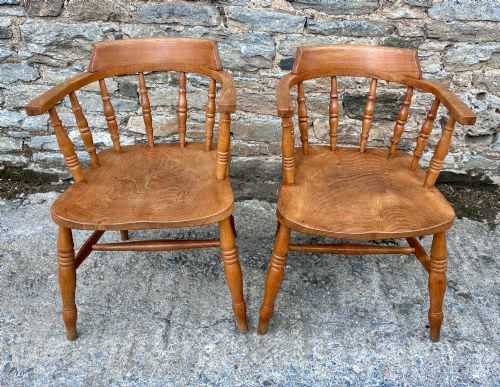
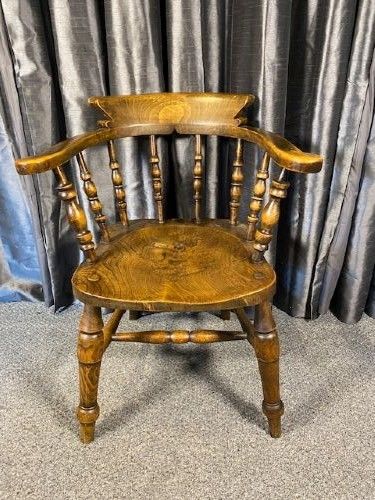
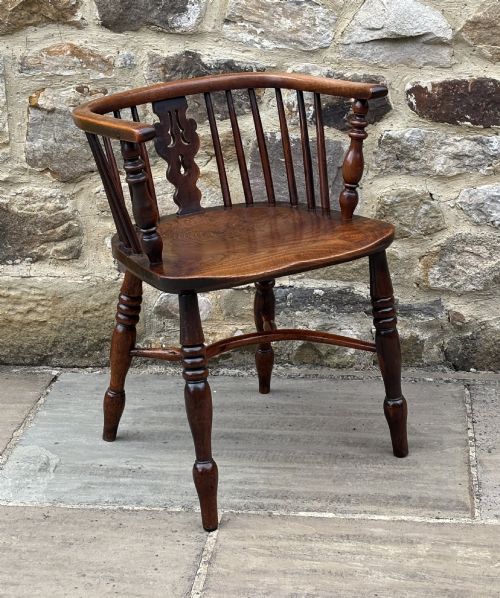
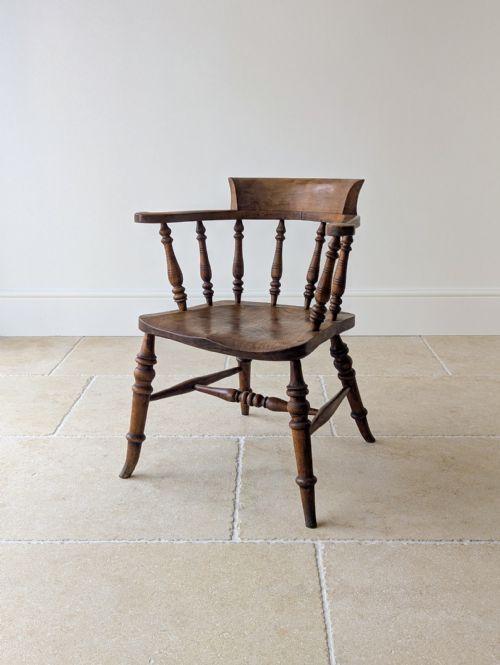
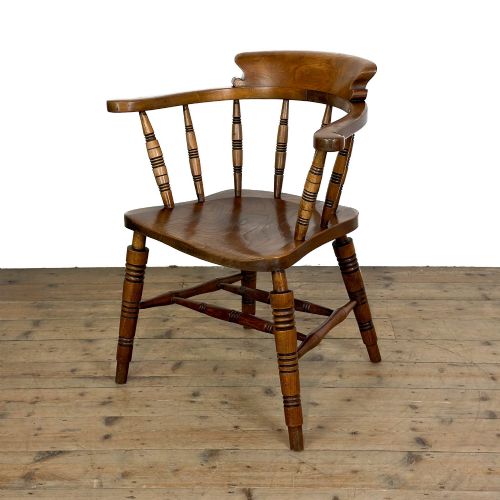
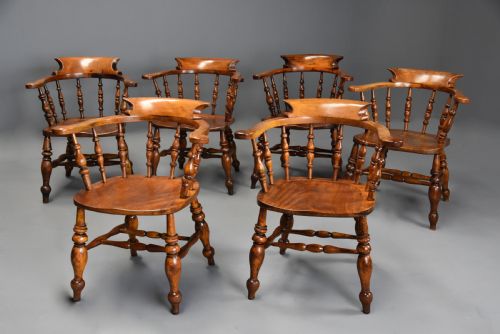
These vintage smokers bow armchairs offer robust country seating, combining low spindle backs and broad elbow rests for everyday comfort.
Vintage Smokers Bow
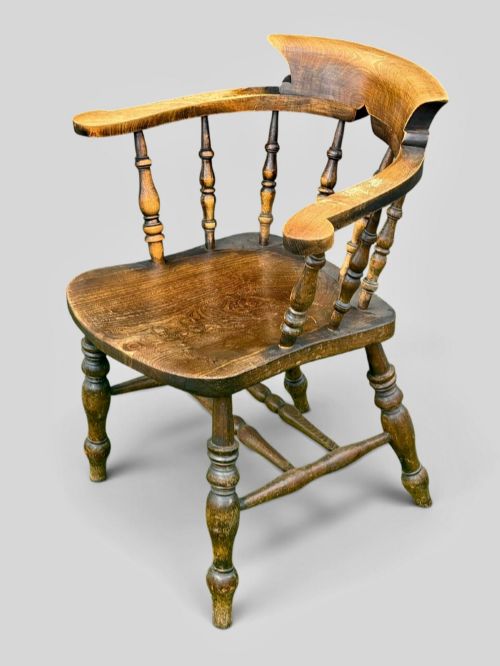
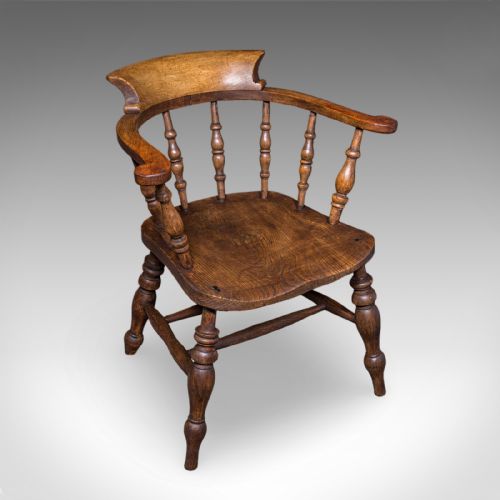
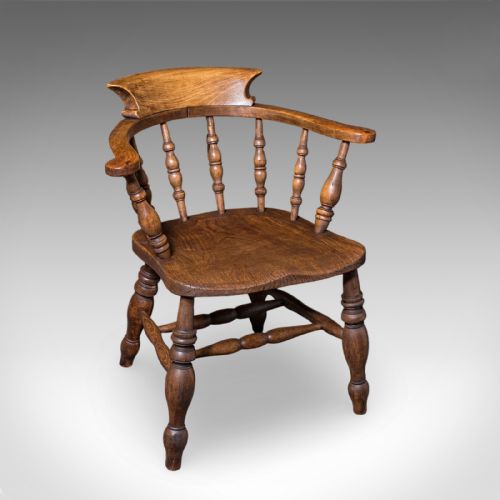
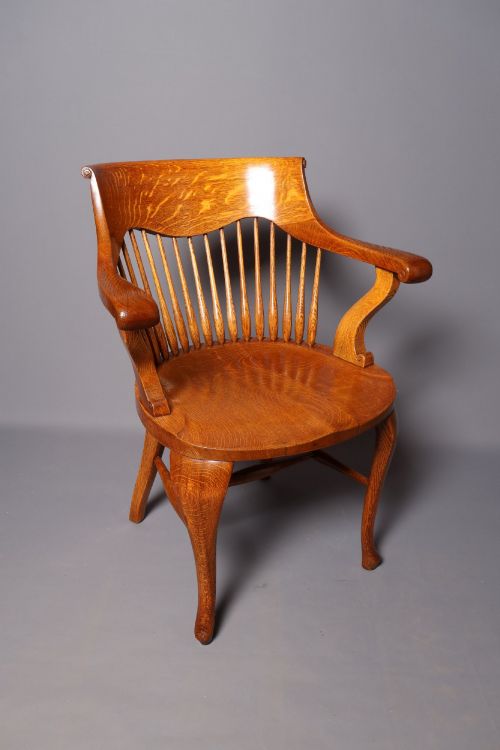
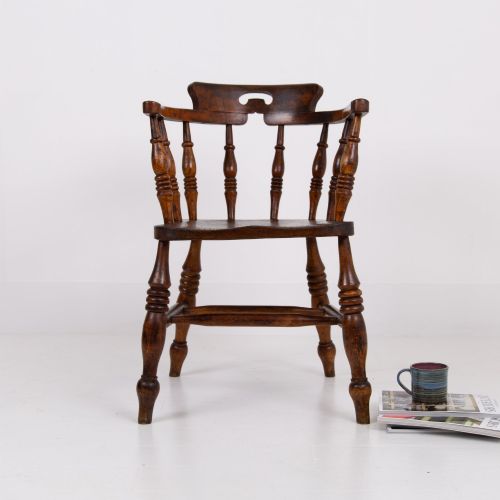
A vintage smokers bow typically appears as a sturdy low-back armchair featuring a rounded wooden backrest supported by turned spindles. These chairs surface frequently from the nineteenth and early twentieth centuries, spanning Victorian and Edwardian periods.
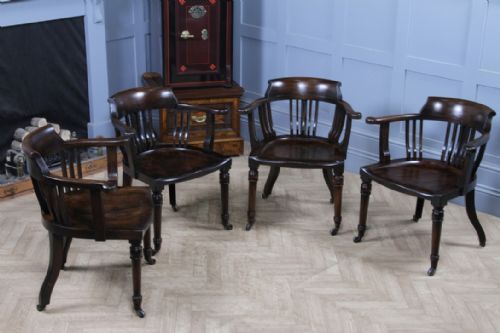
Makers designed these robust elbow seats for country houses, farmhouse kitchens, and provincial studies. The inventory spans straightforward elm and beech kitchen seating alongside polished mahogany and oak desk armchairs.
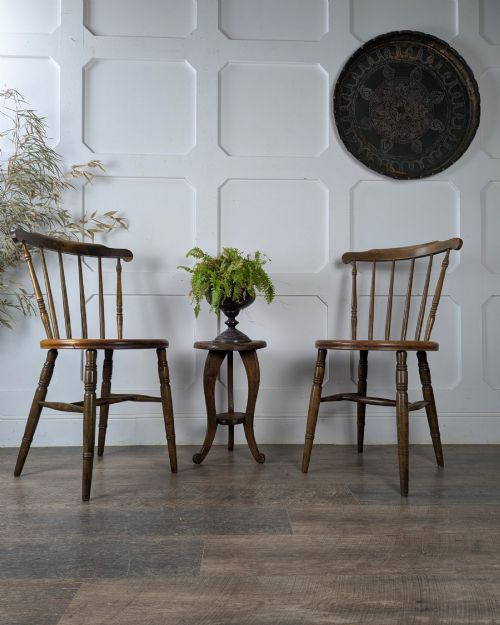
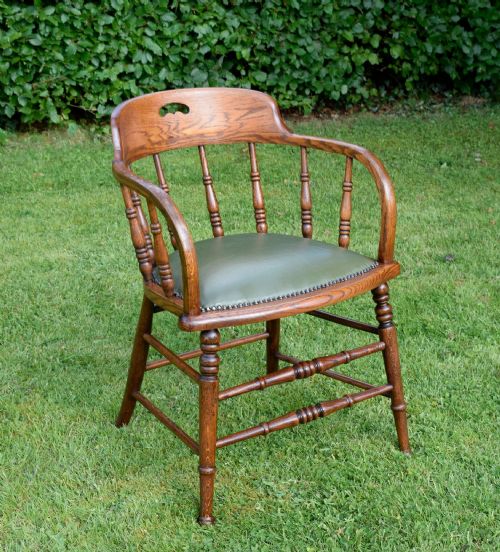
Design variations include low back Windsor forms, captain chairs with leather upholstered pads, and occasional rocking chair adaptations. Most examples hail from English provincial workshops following traditional regional furniture patterns.
Materials and construction
Craftsmen built these chairs using solid native timbers, pairing durable elm seats with bent beech or ash for the continuous bow backs. Oak and mahogany appear on later desk versions intended for formal office environments.
Joinery relied on traditional Windsor techniques, wedging turned spindles and legs directly into thick, saddled wooden seats. Steam-bending shaped the characteristic continuous arm rails without weakening the timber grain.
Some chairs retain stubborn pipe-smoke aromas trapped in the nineteenth-century grain, preserving centuries of quiet fireside contemplation.
Judging quality and character
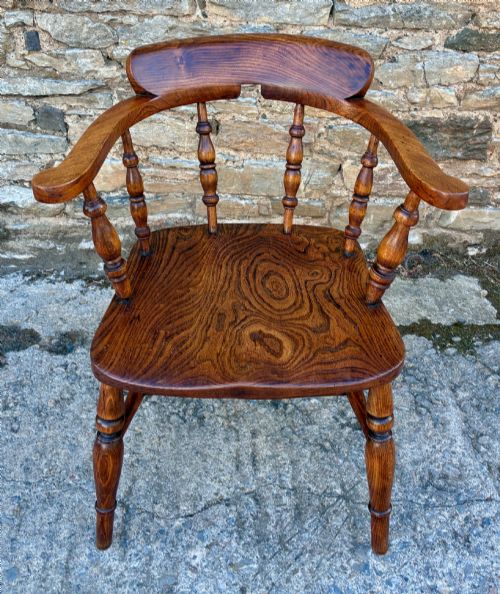
Quality rests in the depth of the timber figuring on the saddled seat and the crispness of the spindle turnings. Superior examples maintain balanced proportions without heavy repairs to the arms or leg joints.
Patina dictates visual appeal, showing decades of honest friction and polishing across the wooden surfaces. Lesser pieces suffer from heavy sanding that flattens the original tool marks and softens the moulded edges.
The Vintage Smokers Bow Glossary
- Captain chair
- A heavy wooden elbow chair designed for office or library use. These often feature wider seats and sturdy turned supports.
- Saddled seat
- A wooden seat base scooped out by hand to form a comfortable ergonomic curve. This shaping requires considerable skill with an adze and compass plane.
- Windsor
- A chair built with stick construction where legs and back spindles are fitted into a solid wooden seat. Regional variations include low backs and comb backs.
- Spindle
- A slender, turned wooden rod used vertically to support the back rail. These components were shaped on a lathe by provincial turners.
Vintage Smokers Bow: Frequently Asked Questions
What is a smokers bow chair?
A smokers bow is a low-backed wooden armchair featuring a continuous curved arm rail supported by turned wooden spindles. Provincial makers designed them as sturdy seating for parlours, smoking rooms, and farmhouses.
They bridge the gap between traditional Windsor chairs and standard office seating. The low profile allowed occupants to sit comfortably near a fireplace or desk.
How do I date a smokers bow?
Dating relies on examining timber choices, turning styles, and construction wear. Nineteenth-century examples often combine elm seats with ash or beech spindles, showing deep surface patina.
Edwardian and later versions frequently employ oak or mahogany with machine-finished turnings. Comparing the construction details against documented period forms helps narrow the decade of origin.
Are these chairs comfortable for a desk?
Many examples function well at a desk due to their supportive elbow rests and wide seats. Victorian and Edwardian variations were frequently built specifically for office and library use.
Some buyers add a loose leather or cloth squab pad for extra cushioning during long working hours. The curved backrest naturally supports the lower back.
What wood were they made from?
Traditional country examples combine multiple native timbers to utilise the best properties of each. Elm provided a tough, splinter-resistant seat, while beech and ash offered flexible strength for steam-bent bows.
Later urban desk versions occasionally turned to imported mahogany or quarter-sawn oak. This shift reflected changing domestic tastes during the Edwardian era.