
Elm Smokers Chair
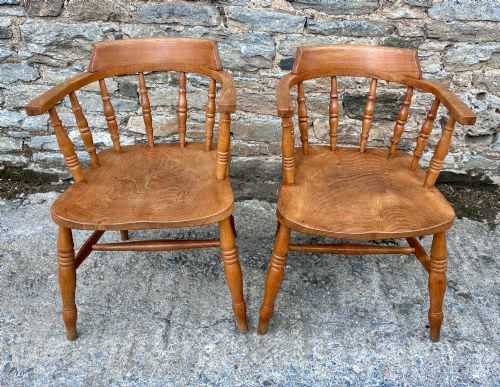
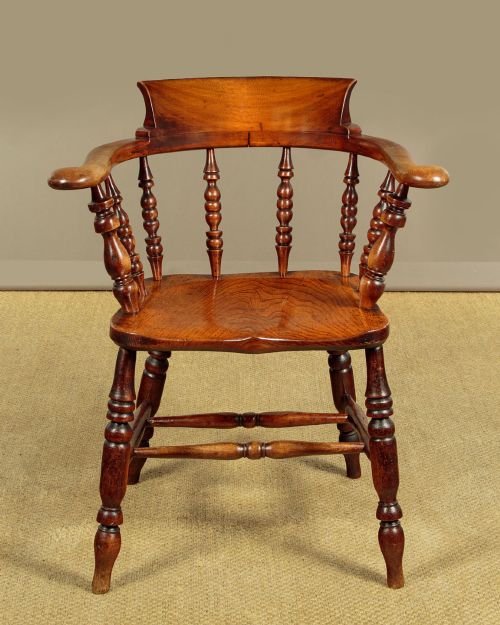
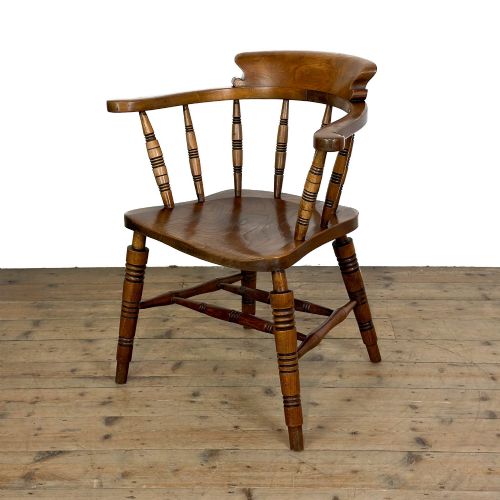
When you examine an elm smokers chair, you see a robust English country armchair built for everyday comfort during the Victorian and Edwardian eras.
Elm Smokers Chair
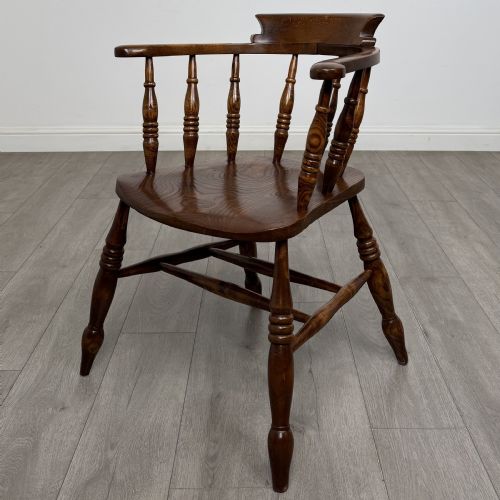
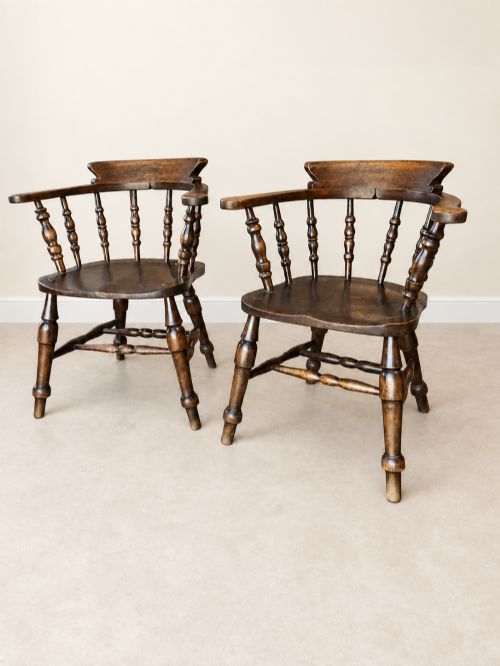
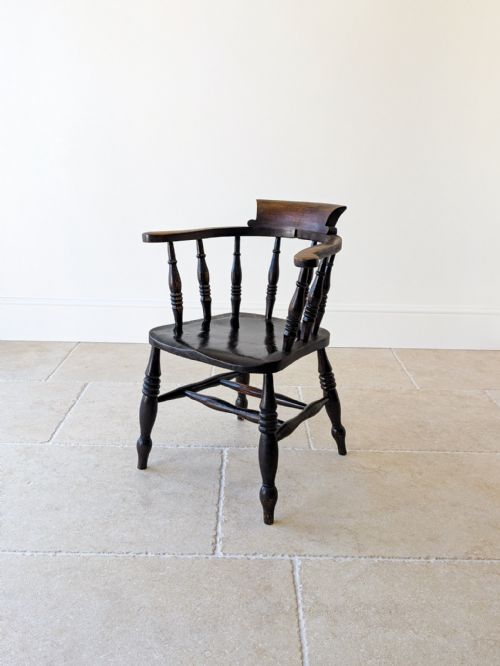
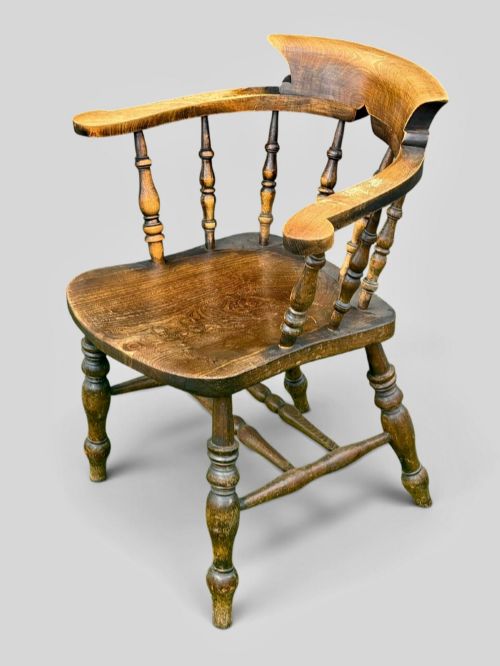
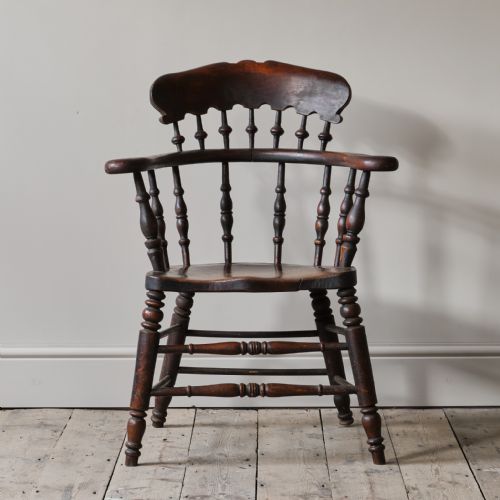
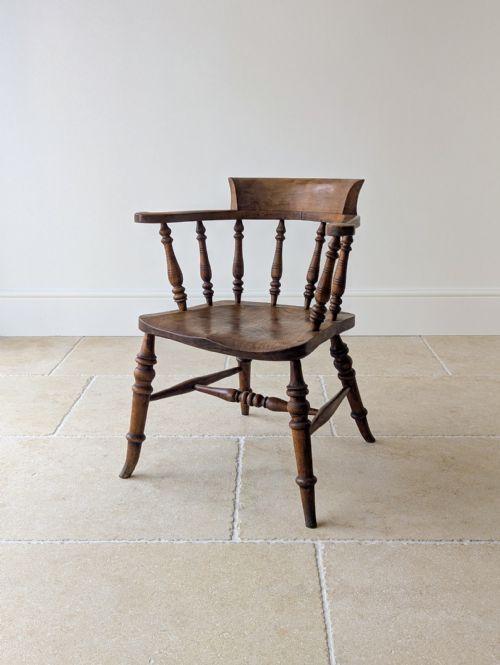
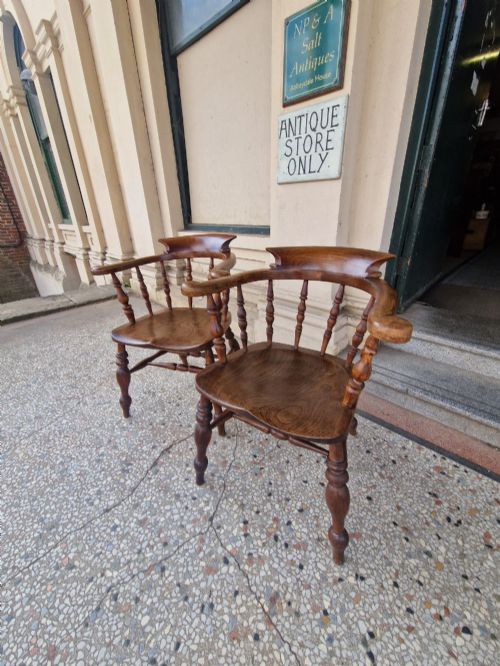
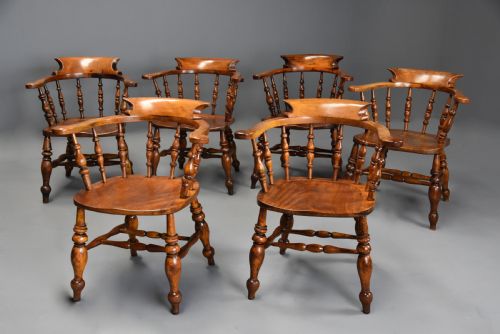
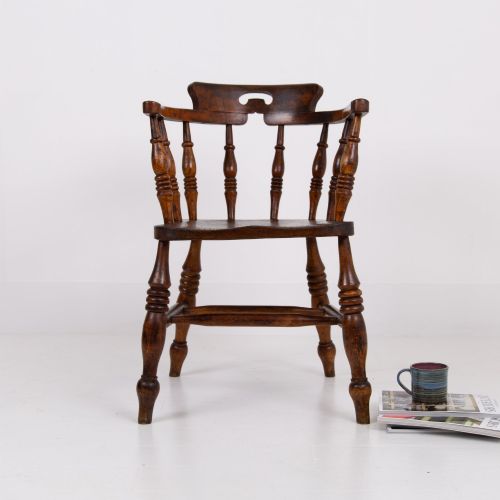
An elm smokers chair is a low-backed country armchair, frequently referenced as a smokers bow or captain's chair, designed with a continuous curved arm rail supported by turned spindles. These seating forms appear primarily across Victorian, Edwardian, and nineteenth century listings, alongside occasional eighteenth century examples.
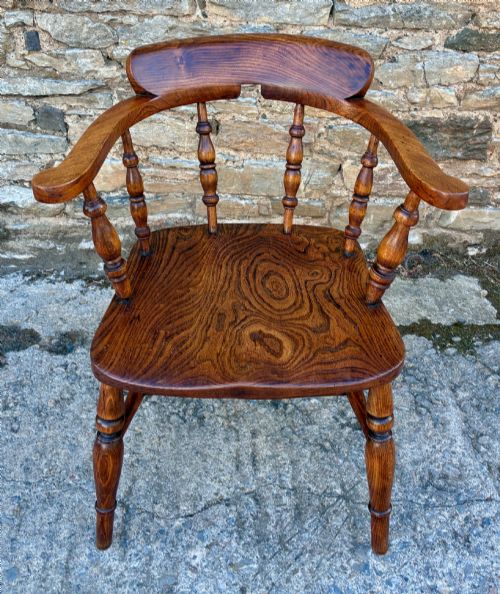
The construction typically combines a solid, saddle-shaped elm seat with turned beech, ash, or fruitwood components for the bows, legs, and stretchers. You encounter single armchairs, pairs, and matched sets utilised around farmhouse dining tables or office desks.
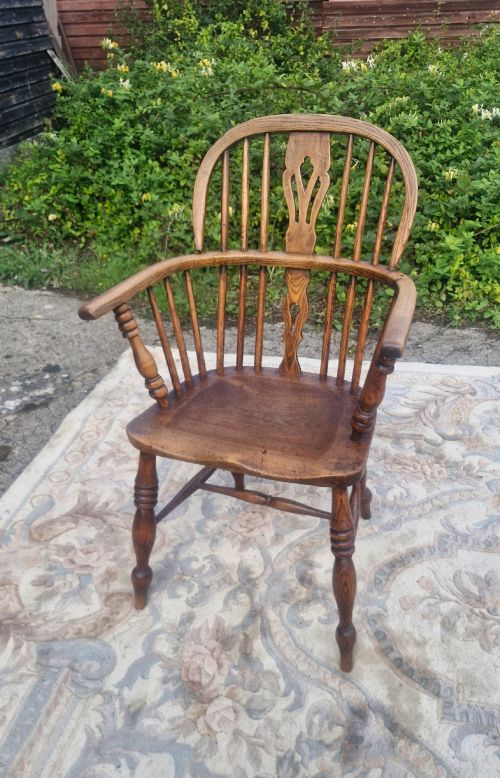
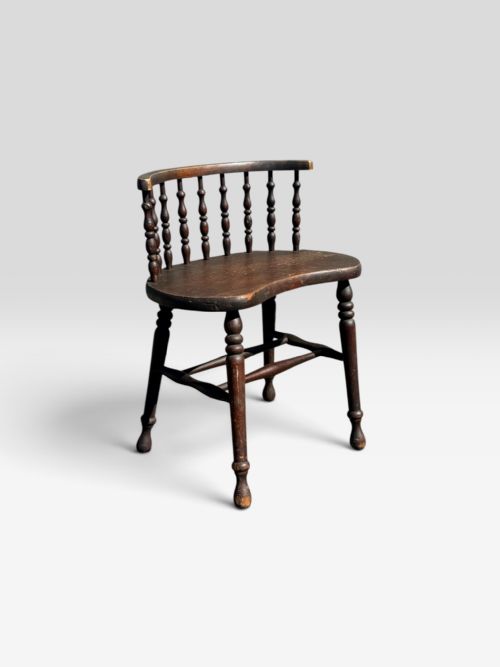
Regional variations span Nottinghamshire low-back Windsors to High Wycombe productions, uniting rustic vernacular tradition with sturdy domestic utility.
How they were made
The characteristic seat is carved from a thick plank of native elm, chosen for its interlocking grain that resists splitting when shaped into a saddle depression. Turned spindles and legs utilise resilient timbers such as beech, ash, and fruitwood, secured into bored seats using wedged tenon joints.
Steam bending transforms straight lengths of timber into the characteristic continuous elbow bow that defines the form. Traditional Windsor framing methods rely on under-stretchers, including H-stretchers and double-H stretchers, to lock the legs into a rigid chassis.
Several heavy-duty models boast oversized arms specifically built to accommodate nineteenth century elbows.
What varies in quality
Quality rests in the sculptural depth of the elm seat and the generosity of proportions, where thick timber planks and deep saddle depressions separate substantial farmhouse examples from lighter variants. The elegance of the steam-bent bow and the crispness of the spindle turnings dictate the refinement of the piece.
Material selection elevates certain examples, particularly those incorporating decorative yew wood or striking grain figures alongside the standard elm and beech combinations.
Glenister High Wycombe
The Elm Smokers Chair Glossary
- Smoker's bow
- A low-backed Windsor armchair featuring a continuous curved wooden rail serving as both backrest and arms. This form gained popularity in domestic, commercial, and tavern settings throughout the nineteenth century.
- Windsor chair
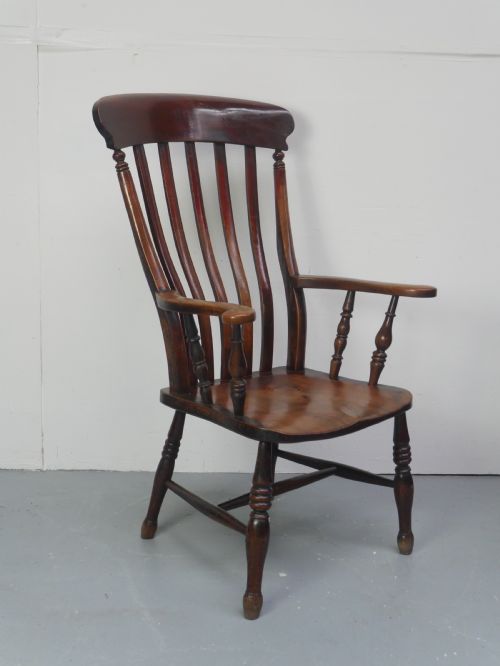
- A chair constructed with a solid wooden seat into which the legs and back spindles are directly inserted. Regional variations employ different back designs, arm configurations, and under-stretcher bracing.
- Captains chair
- A robust armchair with a low, rounded back designed to fit beneath a desk or table. These pieces frequently share identical construction methods with standard smoker's bows.
- Stretcher
- A horizontal wooden brace connecting the legs of a chair to provide structural rigidity. Common configurations include simple H-stretchers and double-H arrangements.
- Saddle seat
- A wooden chair seat hollowed out into a concave, ergonomic shape resembling a riding saddle. This technique enhances comfort while accommodating the natural movement of timber.
Elm Smokers Chair: Frequently Asked Questions
What is a smokers bow chair?
A smokers bow is a low-backed Windsor armchair featuring a continuous curved arm rail and turned spindles.
These chairs served as sturdy seating in nineteenth century farmhouses, offices, and country homes.
How do I date an elm chair?
Dating relies on construction methods, timber combinations, and design characteristics recorded across the Victorian and Georgian periods.
Earlier examples often display deeper seat shaping and specific regional Windsor framing traits.
Where were these chairs used?
They functioned as versatile seating around farmhouse dining tables, study desks, and commercial interiors.
Their compact height and durable timber frames suited high-traffic domestic environments.
Why use elm for seats?
Elm possesses a twisted, interlocking grain that prevents it from splitting easily under pressure.
This structural resilience made the timber ideal for thick, concave saddle seats that endure decades of daily use.