


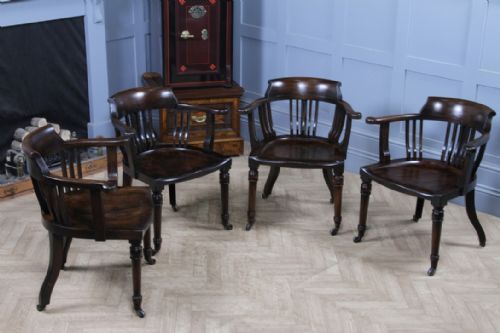
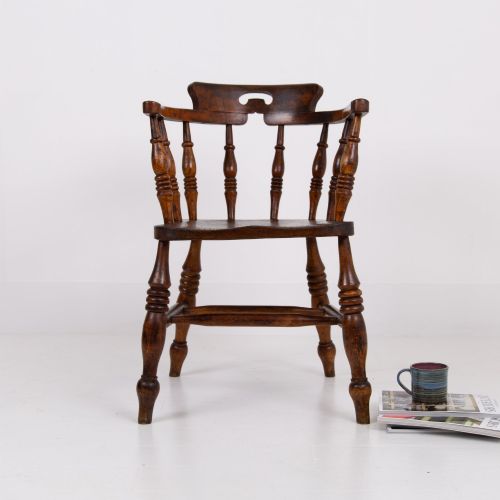
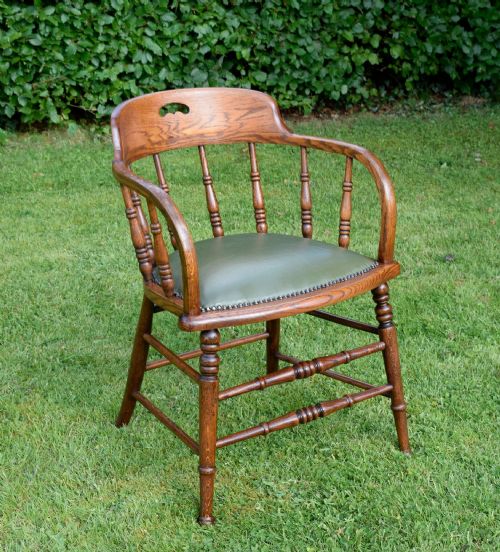
Vintage Smokers Armchair
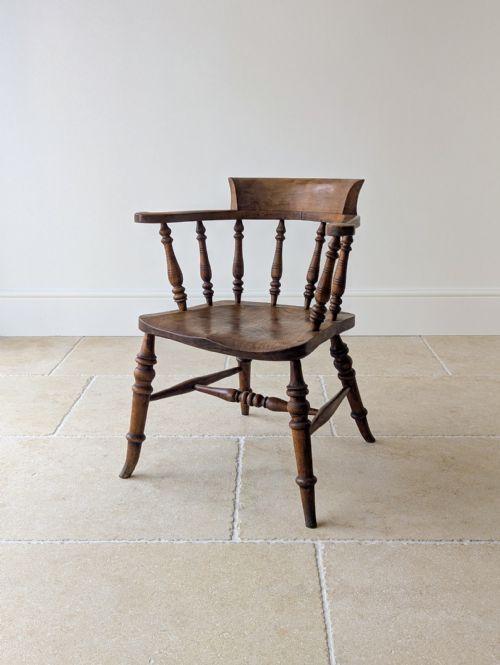
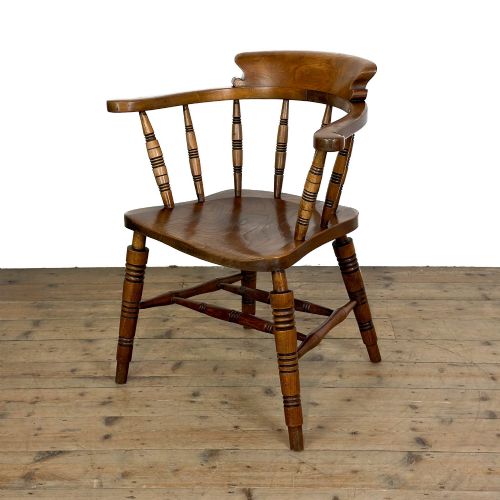
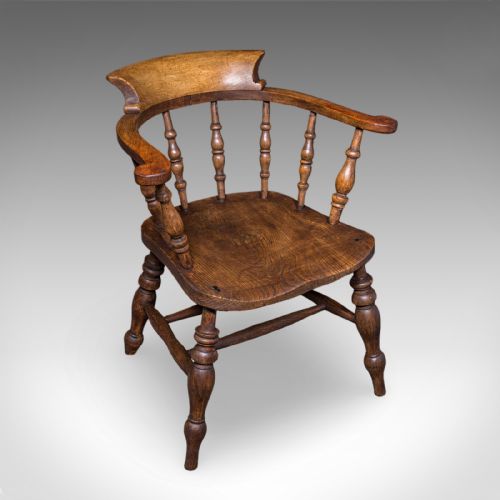
A vintage smokers armchair is a sturdy provincial seating form built for comfort, and these timber elbow chairs bring dependable utility to modern rooms.
Vintage Smokers Armchair
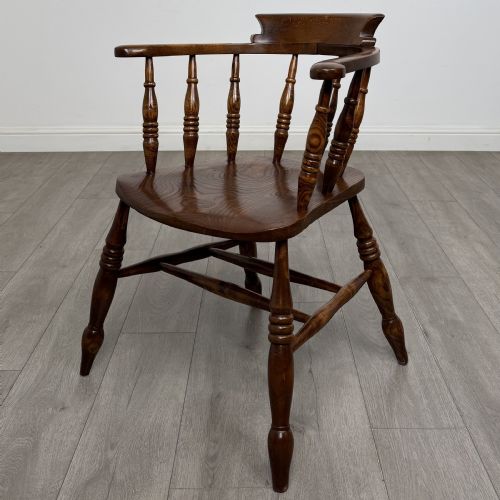
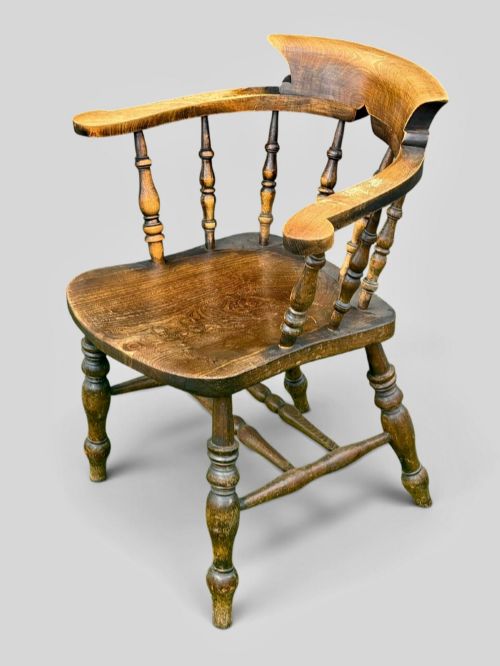
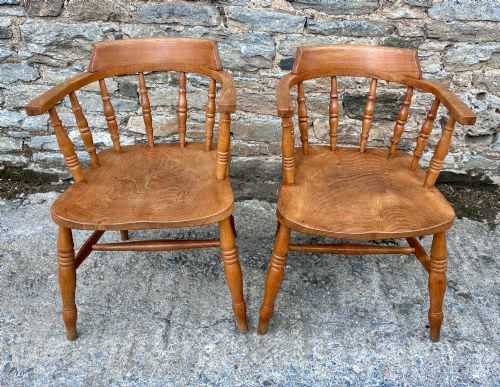
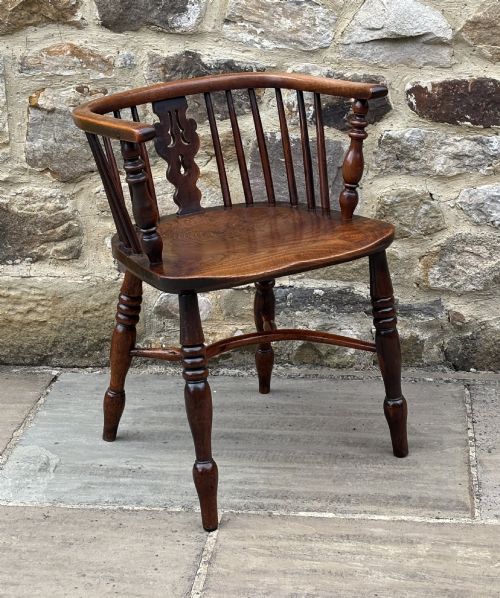
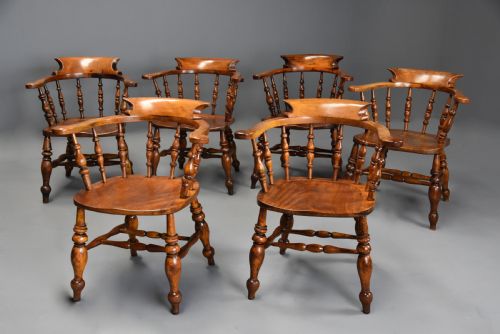
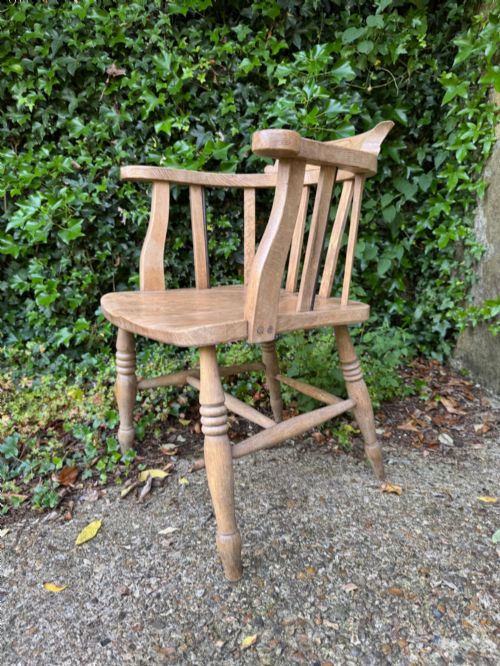
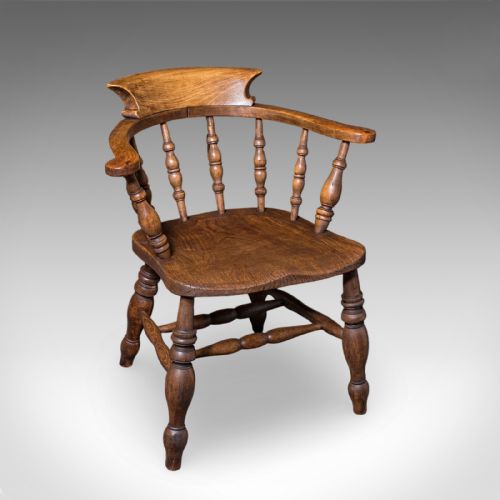
A vintage smokers armchair, often styled as a smoker's bow, captain's chair, or low back Windsor, provides a wide, welcoming elbow seat rooted in nineteenth and early twentieth century traditions. These robust armchairs emerge from English provincial workshops, country houses, and farmhouses, designed for daily use at desks, in offices, or around kitchen tables.
Most examples encountered on this page date from the Victorian and Edwardian eras, spanning the mid-nineteenth century up to the 1920s. Buyers will frequently find regional timber constructions that combine deep seats with spindle backs, serving as versatile desk chairs or low club seating.
How they were made
These armchairs rely on traditional bodger and vernacular woodworking techniques, pairing steam-bent back rails with turned spindles and solid timber seats. Makers selected tough, home-grown woods like elm for the saddles, combined with beech, ash, or oak for the structural frames and legs.
Joinery techniques prioritize durability, utilising through-wedged tenons and saddle-shaped seats carved from single planks of timber. Metal fasteners appear sparingly, letting the natural resilience of mixed hardwoods support the continuous weight of the sitter.
Vintage Smokers Armchair Retail Price Guide 2026
Typical asking prices for vintage smokers armchair among the pieces listed under this phrase on Sellingantiques today, from the lower quarter to the upper quarter. They describe what is for sale here now, not the wider market.
Many of these sturdy armchairs survived decades of intense study and pipe smoking without losing their balance.
What varies in quality
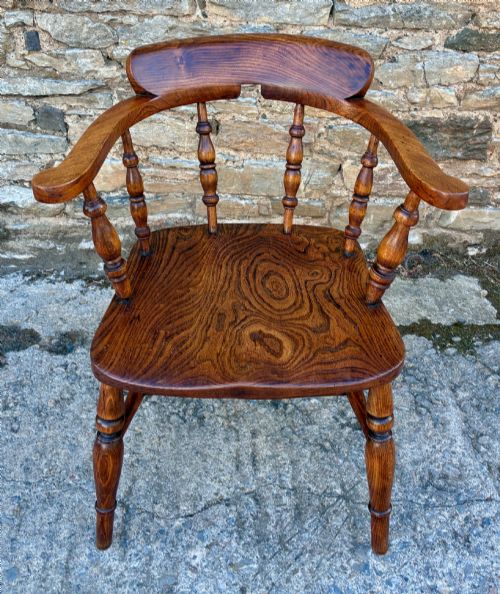
Quality rests in the grain and figure of the primary woods, particularly the depth of figuring in an elm seat saddle compared to plainer utility timber. The crispness of the spindle turnings and the balance of the steam-bent horseshoe arm bow further separate standard utility chairs from finer provincial examples.
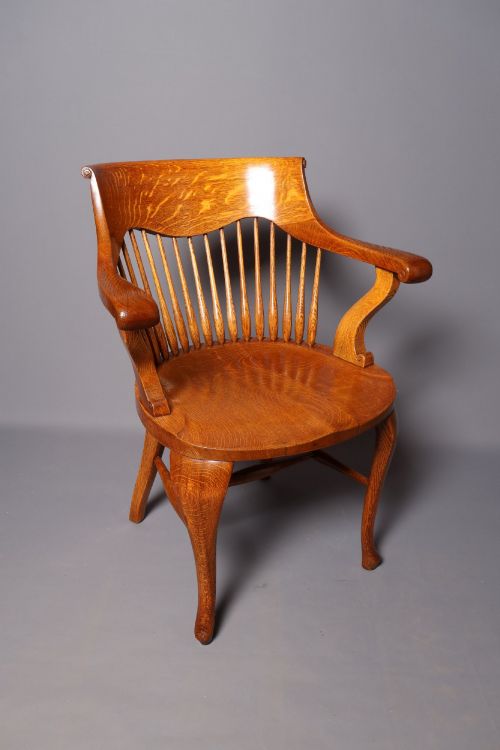
Proportion and structural integrity dictate the grade of each piece, distinguishing comfortable, well-balanced country house seating from heavier or clumsily proportioned office variants. Original patination and untouched surface finishes elevate the standing of these functional armchairs.
The Vintage Smokers Armchair Glossary
- Smoker's bow
- A low-backed wooden armchair with a continuous curved arm rail, popular in nineteenth-century country houses and rural pubs.
- Captain's chair
- A sturdy timber elbow chair featuring a rounded low back supported by vertical spindles above a saddle seat.
- Windsor chair
- A traditional chair construction method where legs and back spindles are wedged directly into a solid wooden seat.
- Spindle
- A slender, turned wooden rod used vertically to form the supportive backrest or comb of an armchair.
- Saddle seat
- A solid wooden seat carved into a scooped, contoured shape designed to improve sitting comfort.
Vintage Smokers Armchair: Frequently Asked Questions
What is a smokers armchair?
A smokers armchair is a low-backed wooden seating form featuring a continuous curved arm rail above turned spindles and a solid timber seat.
Originally built for nineteenth-century studies, offices, and country homes, these chairs provide sturdy support and generous proportions for daily tasks.
How do I use one at a desk?
These timber elbow chairs function well as desk or office seating thanks to their wide seats and supportive low arm rails.
Their sturdy provincial construction pairs naturally with both traditional writing tables and modern workspaces.
How do I date an antique armchair?
Dating relies on timber selection, tool marks, construction methods, and the stylistic turning details of the spindle backrests.
Victorian and Edwardian examples show distinct turning profiles and joinery techniques that separate mid-nineteenth-century pieces from early twentieth-century editions.
What woods were used?
Makers combined multiple domestic hardwoods to optimize strength and comfort across different parts of the chair.
Elm frequently forms the scooped seat saddles, while beech, ash, and oak provide sturdy legs, spindles, and curved arm rails.