


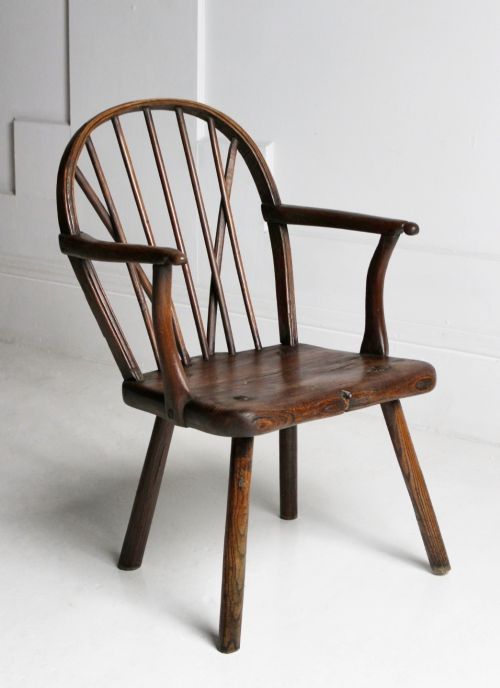

Dark Oak Elbow Chairs
Dark oak elbow chairs bring substance to a room, offering sturdy frames and deep timber tones gathered from centuries of British country houses.
Dark Oak Elbow Chairs
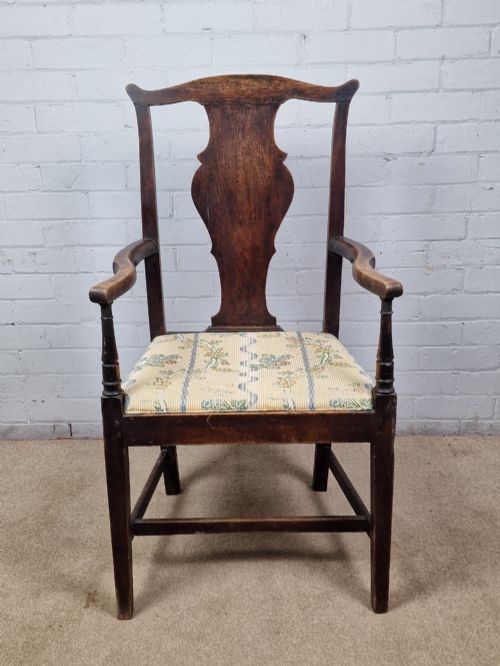
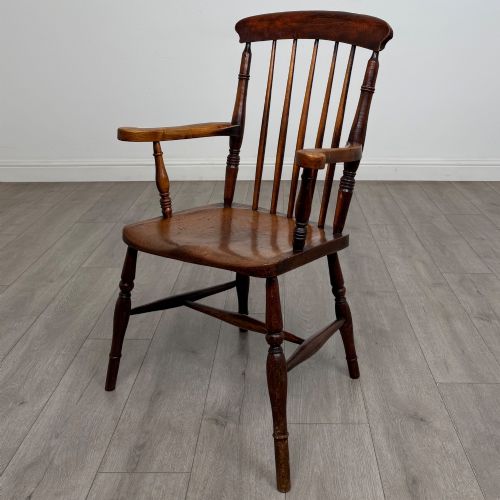
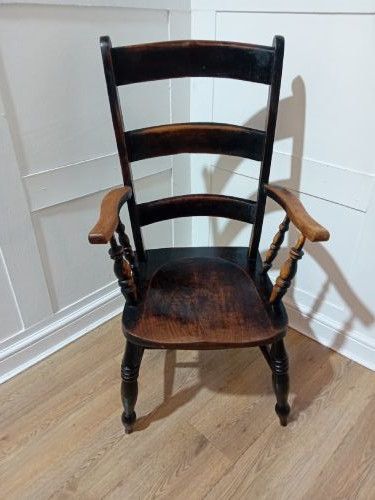
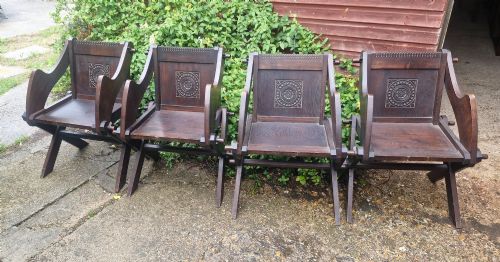
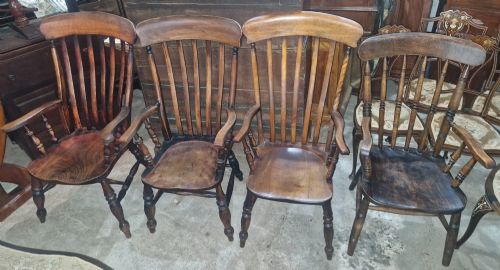
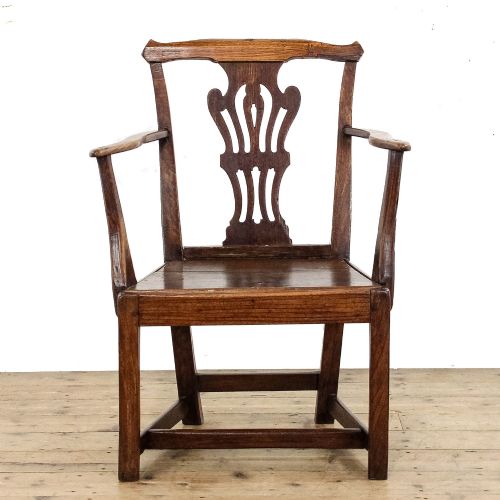
Dark oak elbow chairs encompass a broad sweep of vernacular seating, ranging from substantial 17th century master armchairs to Georgian Windsor designs and Victorian farmhouse seating. When searching for dark oak elbow chairs, buyers encounter sturdy seating built for heavy daily use in domestic and provincial settings.
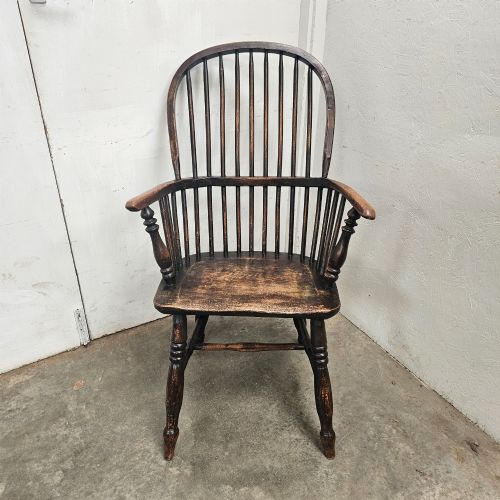
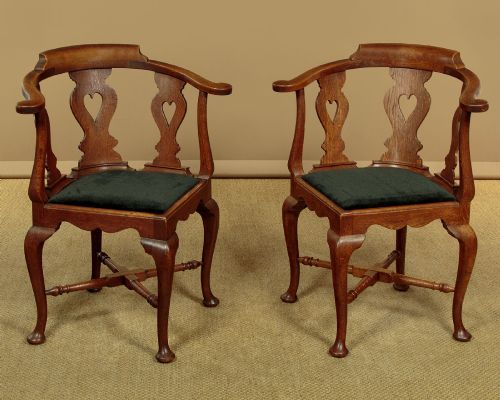
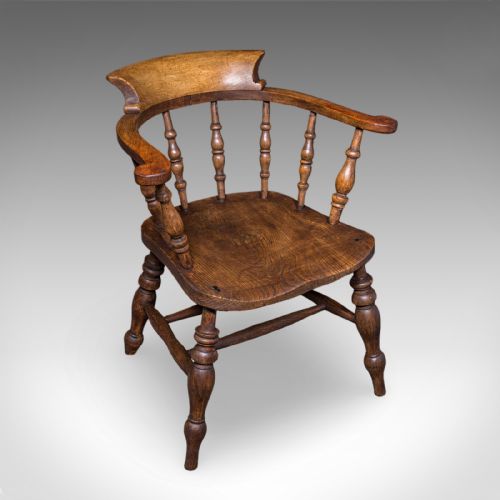
The versions most common on this page span the 19th century and the Victorian period, alongside earlier Georgian and 17th century survivals. These pieces often take the form of Windsor chairs, stick backs, smokers bows, and occasional corner chairs intended for parlours, studies, and farmhouse kitchens.
Regional variations appear across England and Scotland, including Thames Valley Oxford chairs and vernacular spindlebacks. Makers utilised local timber traditions, pairing oak frames with elm, ash, and beech components to create functional seating with distinctive regional profiles.
Judging quality and character
The distinction between ordinary utility seating and finer examples rests in the proportion of the timber, the crispness of any carved decoration, and the integrity of the original construction. Pieces retain greater appeal when historical repairs remain minimal and sympathetic to the original timber.
Surface patination plays a central role in character, distinguishing chairs that have aged naturally through generations from those stripped or heavily refinished. Original rush or leather seating surfaces also influence the desirability of the piece.
Structural harmony between the arms, legs, and back spindles indicates skilled provincial craftsmanship, whereas awkward proportions or mismatched replacement parts diminish the historical cohesion of the chair.
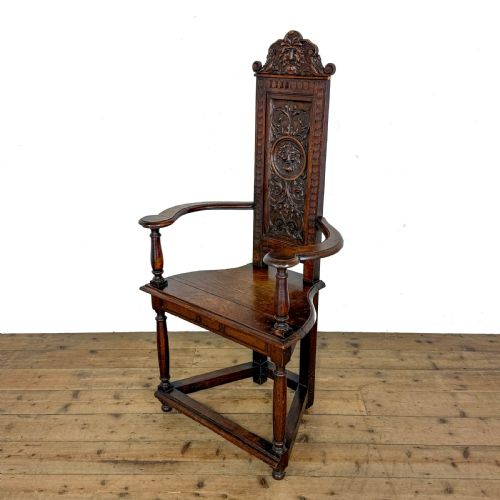
Several examples include sturdy master armchairs designed large enough to accommodate heavy 17th century waistcoats without catching the elbows.
Liberty & Co
The Dark Oak Elbow Chairs Glossary
- Windsor chair
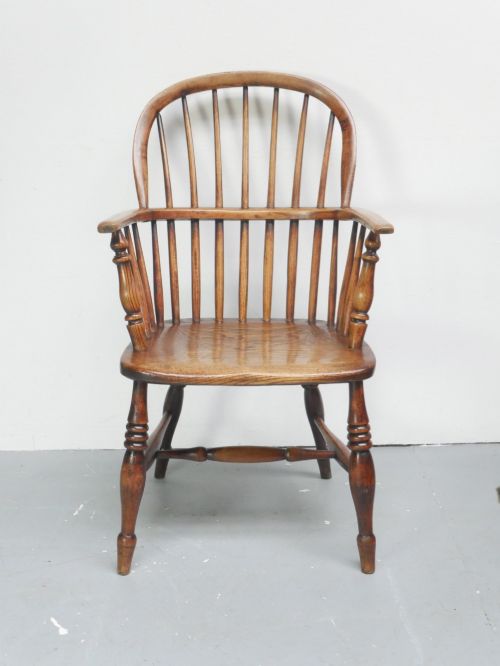
- A wooden chair featuring a solid saddle-shaped seat into which the back legs and spindle back are wedged directly. These chairs often incorporate steam-bent armbows.
- Smoker's bow
- A low-backed Windsor elbow chair designed for domestic comfort, typically featuring a rounded continuous arm rail supported by turned spindles.
- Turner's chair
- A heavy armchair constructed from triangular or square frames with complex turned wooden members, often associated with 17th century traditions.
- Corner chair
- An armchair designed to fit into room angles, featuring a continuous semi-circular arm rail supported by three or four legs with a central back diagonal.
- Rush seat
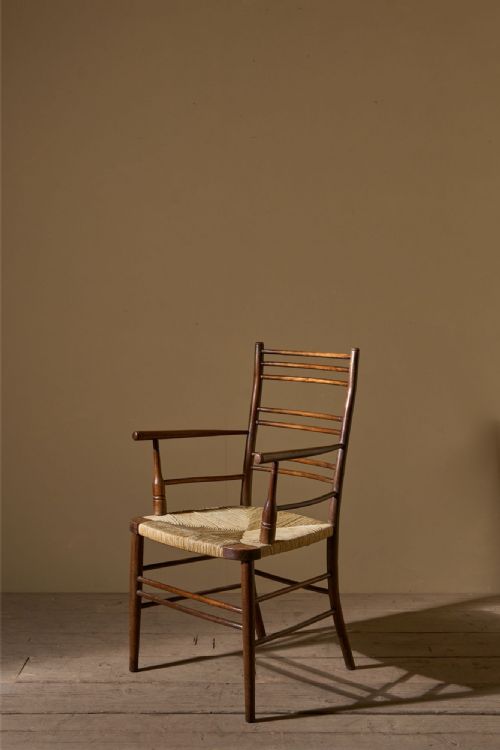
- A seating surface woven from dried marsh rushes, commonly utilised in vernacular and Arts and Crafts chairs for flexibility and texture.
- Stick back
- A chair construction method where turned wooden rods form the back support, fitting directly into the seat board without heavy steam bending.
Dark Oak Elbow Chairs: Frequently Asked Questions
How do I care for an antique oak chair?
Feed the dry timber occasionally with a traditional beeswax polish, applying it sparingly with a soft cloth to preserve the natural grain and deep finish.
Keep these chairs away from direct heat sources and radiators to prevent the solid oak panels and steam-bent joints from splitting.
Were these chairs used at dining tables?
Many elbow chairs served as carvers positioned at the heads of dining tables, while others functioned as occasional or desk seating in parlours and studies.
Heavier Windsor and vernacular armchairs were equally suited to farmhouse kitchens and smoking rooms where robust daily seating was required.
How can I tell a Victorian chair from a Georgian one?
Georgian examples often display lighter proportions and restrained classical lines, whereas Victorian pieces frequently reflect heavier revival styles or industrial production methods.
Tool marks, timber shrinkage, and the type of secondary wood used underneath can also help narrow down the manufacturing decade.
What is a Thames Valley Oxford chair?
This specific regional chair type originates from the Thames Valley area around Oxford, known for distinctive turned components and high-quality elm and ash construction.
They represent a refined subset of English country Windsor seating produced by skilled provincial joiners during the 19th century.