



Green Floral Tapestry Armchairs
Green floral tapestry armchairs bring warmth and rich texture into a room, combining supportive seating with traditional woven textile designs.
Green Floral Tapestry Armchairs
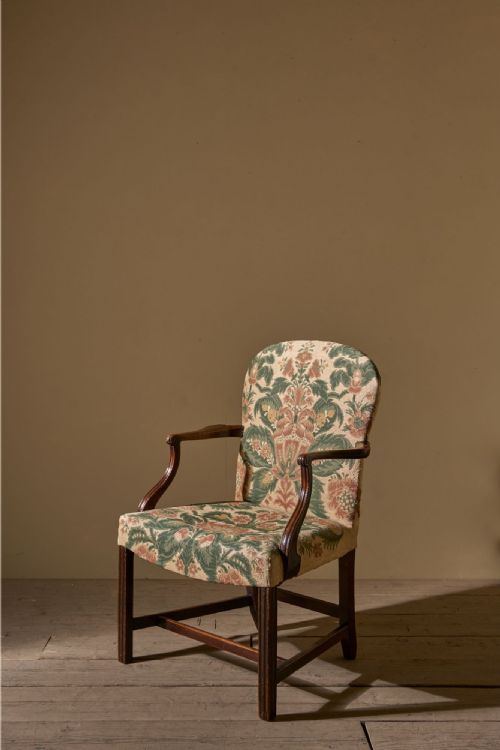
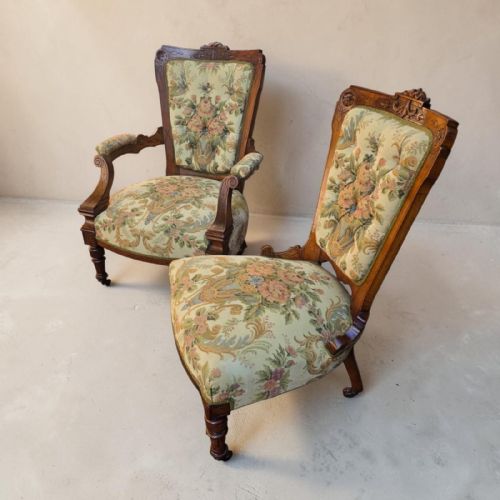
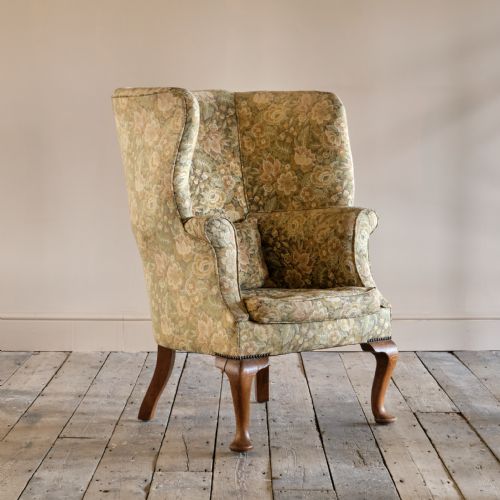
Green floral tapestry armchairs encompass a broad span of periods, ranging from 18th century examples to pieces from the Georgian, Victorian, Edwardian, and early 20th century eras. Buyers searching for green floral tapestry armchairs encounter various formats, including wing armchairs, nursing chairs, fireside chairs, salon chairs, and desk chairs.
Stylistic influences on this page stretch from Queen Anne Revival and Georgian to Victorian Rococo Revival, Jacobean Revival, and French Louis XVI Revival. These diverse revivals demonstrate how later makers drew on historical forms while retaining comfortable padded seats and decorative woven covers.
The most frequent variations on this page include walnut and mahogany frames alongside oak and general hardwood structures. Forms span from substantial wingback fireside chairs to lighter salon pairs and dedicated desk seating.
Materials and construction
Frames rely on sturdy timbers such as mahogany, walnut, oak, and hardwood, providing the structural skeleton for these seating pieces. Carved wooden details frequently appear on Victorian and French revival models.
Upholstery utilises woven tapestry fabric featuring green floral patterns, stretched over internal padding and secured to the wooden frames. Additional elements such as brass tacks or ceramic castors occasionally complete the construction.
Green Floral Tapestry Armchairs Retail Price Guide 2026
Typical asking prices for green floral tapestry armchairs among the pieces listed under this phrase on Sellingantiques today, from the lower quarter to the upper quarter. They describe what is for sale here now, not the wider market.
Listings span centuries of cabinetmaking, featuring mahogany, walnut, oak, and ceramic components across Victorian, Georgian, and Edwardian periods.
Assessing quality and finish
Quality differentiates itself through the crispness of timber carving on frames made from walnut or mahogany compared to simpler hardwood structures. Finer examples display balanced proportions in revival styles like Queen Anne or French Louis XVI.
The tightness and complexity of the woven tapestry fabric indicate the level of craftsmanship invested in the upholstery. Substantial frames with detailed structural joinery command greater appreciation than plain utilitarian variants.
The Green Floral Tapestry Armchairs Glossary
- Tapestry fabric
- A heavy woven textile featuring patterned designs, used here to cover armchair seats and backs. This material provides both durability and decorative floral imagery.
- Wingback
- An armchair style featuring protective side panels attached to the arms and rising to the back. This design originally shielded occupants from draughts by firesides.
- Revival style
- A design movement looking back to historical periods such as Queen Anne, Georgian, or Louis XVI. Makers utilised these earlier vocabularies to create period-appropriate seating.
- Salon chair
- A lighter decorative seat intended for drawing rooms or parlours rather than heavy daily lounging. These often feature exposed wooden frames and carved walnut structures.
Green Floral Tapestry Armchairs: Frequently Asked Questions
How do I clean tapestry upholstery?
Tapestry fabric requires gentle surface cleaning to protect the woven threads and green floral patterns. Professional textile cleaning is generally recommended to preserve the integrity of older fibres.
Regular light vacuuming with a soft brush attachment helps prevent dust accumulation between the woven strands without straining the fabric.
Are these chairs suitable for daily use?
Many of these armchairs are structurally robust enough for regular seating, particularly sturdy mahogany, oak, or hardwood frames. Their padded designs offer substantial physical support for everyday living spaces.
Lighter salon or nursing chairs from the Victorian period are better suited for occasional sitting rather than heavy lounging.
How do I identify a revival style?
Revival styles mimic the aesthetic hallmarks of earlier eras, such as Queen Anne cabriole legs or French Louis XVI carved details. Makers produced these pieces during later periods like the Victorian and Edwardian epochs.
Examining the wood species, construction methods, and secondary timbers helps differentiate the actual date of manufacture from the historical style being emulated.