




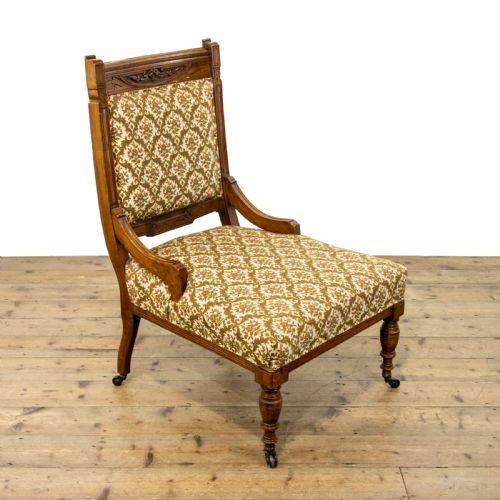


Tapestry Oak Armchairs
Tapestry oak armchairs combine sturdy timber framing with rich textile panels to anchor a room with period character.
Tapestry Oak Armchairs
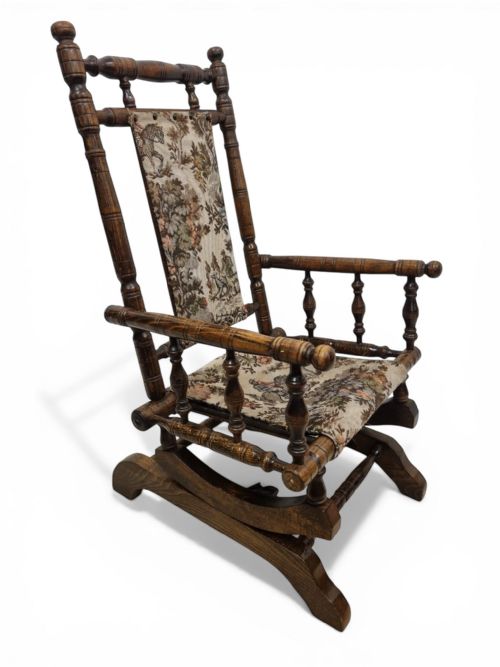
When you search for tapestry oak armchairs, you encounter heavy seating forms produced across several centuries, with particular concentrations from the nineteenth century alongside revival periods. These pieces pair solid oak frames with fabric or tapestry upholstery, ranging from substantial library seats to smaller corner designs and children's rockers.
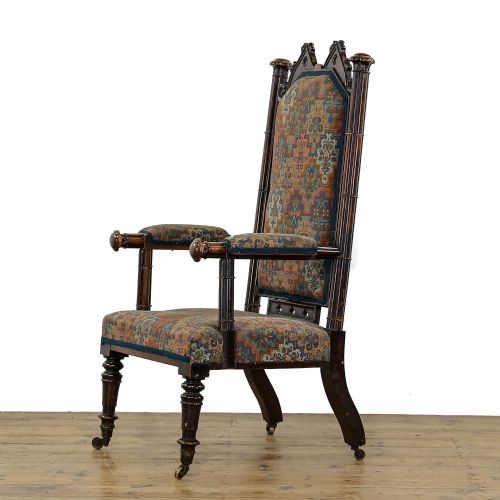
The versions most commonly met on this page span the Victorian era, Edwardian period, and early twentieth century, alongside earlier eighteenth-century examples. Forms vary from straightforward vernacular seating to elaborate revival styles that draw upon Jacobean, Gothic, and Renaissance idioms.
Makers and craftsmen utilised heavy timbers combined with woven textiles to create functional seating that doubled as decorative focal points. The survival of these pieces demonstrates the enduring appeal of sturdy wooden frames paired with patterned textile panels.
How they were made
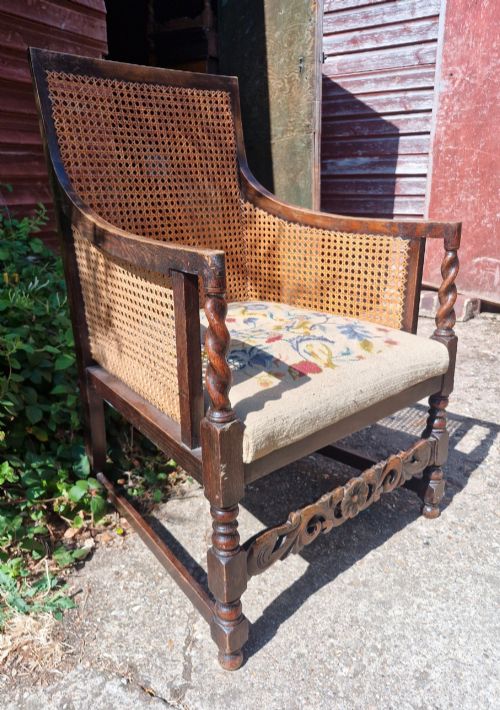
Construction relies upon solid oak for the primary structural framework, often shaped through turning, carving, or joinery techniques appropriate to the period. Elements such as bobbin turning and carved details appear across various pieces to ornament the wooden skeleton.
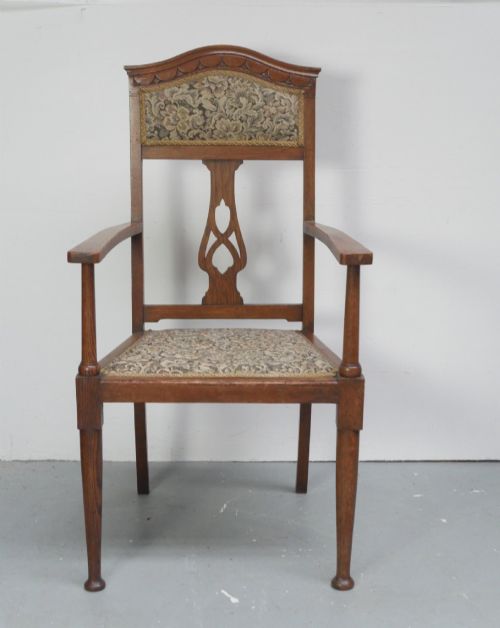
Upholstery incorporates fabric or tapestry panels secured to the wooden frame, sometimes accented with brass fittings or metal elements. The textile components are integrated into the backrests and seats, complementing the dense grain and dark tones of the oak timber.
The furniture forms span standard armchairs, rocking chairs, hall chairs, children's chairs, and corner chairs.
What varies in quality
Quality in these armchairs depends upon the crispness of the timber carving and the structural integrity of the oak frame. Superior examples display thoughtful joinery and harmonious proportions between the heavy wooden components and the upholstered sections.
The character of the textile panels and the refinement of secondary materials, such as brass accents or cane work, further differentiate the pieces. Original upholstery elements and well-executed period revivals command attention through their adherence to historical design principles.
The Tapestry Oak Armchairs Glossary
- Oak
- A dense, durable hardwood utilised for centuries in furniture construction, known for its prominent grain and strength. It forms the primary structural material for the frames of these armchairs.
- Tapestry fabric
- A heavy, hand-woven or machine-woven textile featuring pictorial or geometric designs. It is applied to the backrests and seats of chairs to provide decorative texture.
- Jacobean Revival
- A nineteenth-century style that imitates the robust, heavily carved furniture of the early seventeenth century. Pieces in this style often feature dark oak and geometric ornamentation.
- Gothic Revival
- An architectural and decorative movement that borrows pointed arches, tracery, and solemn motifs from medieval design. This aesthetic appears frequently in nineteenth-century chair frames.
- Bergere
- An enclosed upholstered armchair with a wooden frame where the sides are often filled with cane or upholstery. It offers a distinct silhouette compared to standard open-arm chairs.
Tapestry Oak Armchairs: Frequently Asked Questions
Are tapestry oak armchairs comfortable?
These chairs were built for upright seating rather than deep lounging, reflecting the domestic habits of earlier centuries. Their supportive wooden backs and padded seats provide a firm, upright posture.
Comfort levels vary depending on the specific era and upholstery depth of each individual chair. Many examples serve well as occasional seating in studies or living rooms.
Where should I place these chairs?
Their substantial wooden frames and patterned textiles make them strong focal points in traditional or eclectic interiors. A hallway, library, or corner space often accommodates their proportions effectively.
They pair well with neutral walls and other wooden furniture to let the oak grain stand out. Avoid placing them in direct sunlight to protect the textile panels from fading.
What is the difference between revival styles?
Revival styles draw inspiration from distinct historical eras, such as the seventeenth-century Jacobean period or medieval Gothic architecture. Jacobean pieces emphasise dark, turned wood and geometric panels, while Gothic pieces utilise pointed arches and tracery.
Recognising these decorative motifs helps identify the specific aesthetic movement influencing the maker. Each revival brings a different visual weight and character to the chair design.