


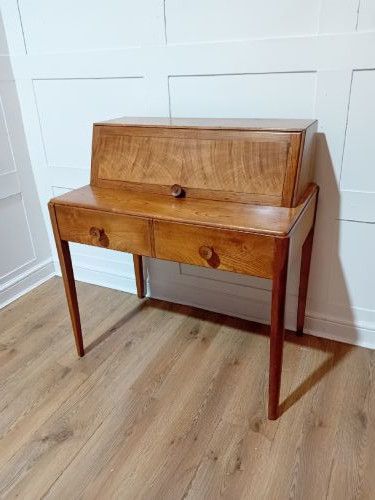
Vintage Slant Front Secretary
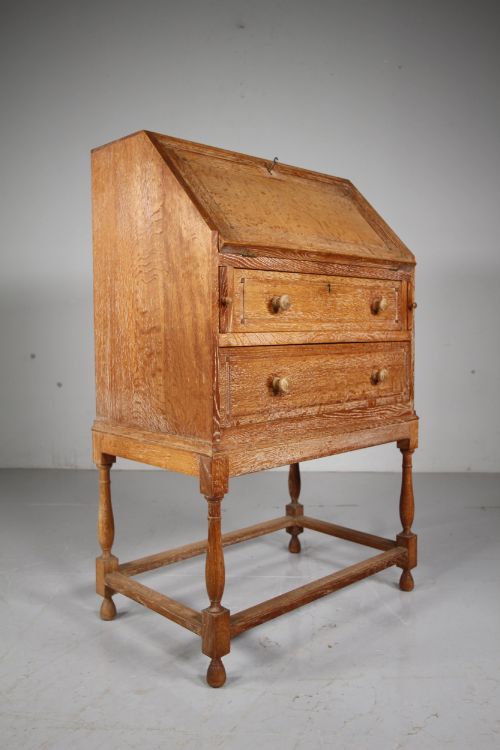
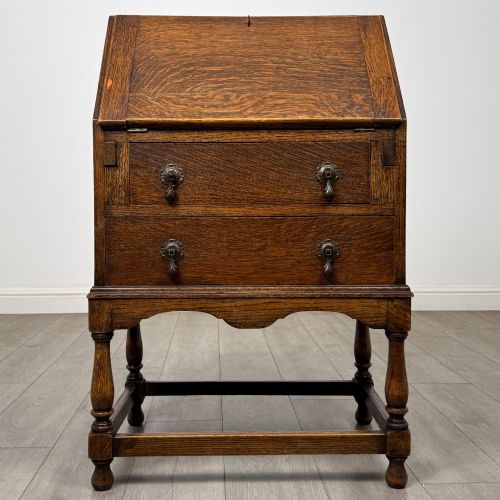
A vintage slant front secretary offers a hinged writing flap that opens to reveal fitted drawers and pigeonholes for correspondence.
Vintage Slant Front Secretary
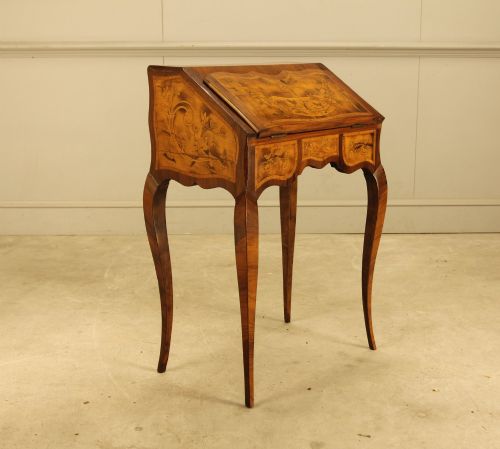
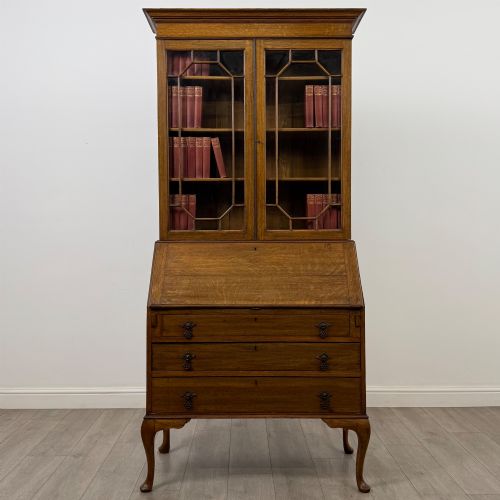
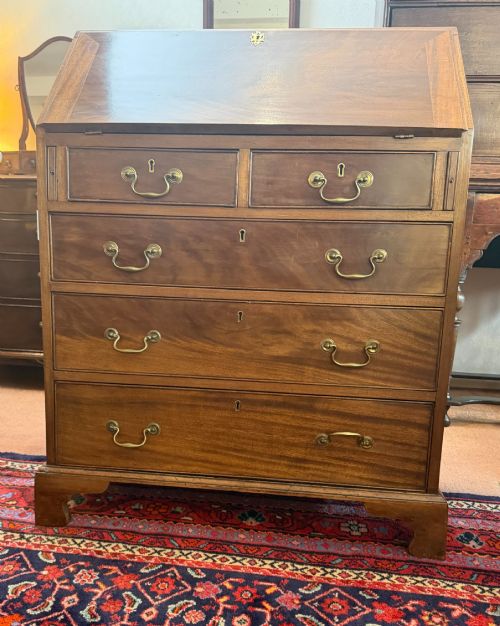
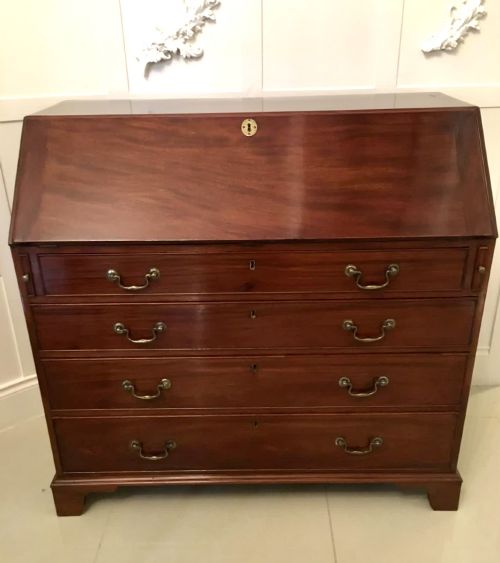
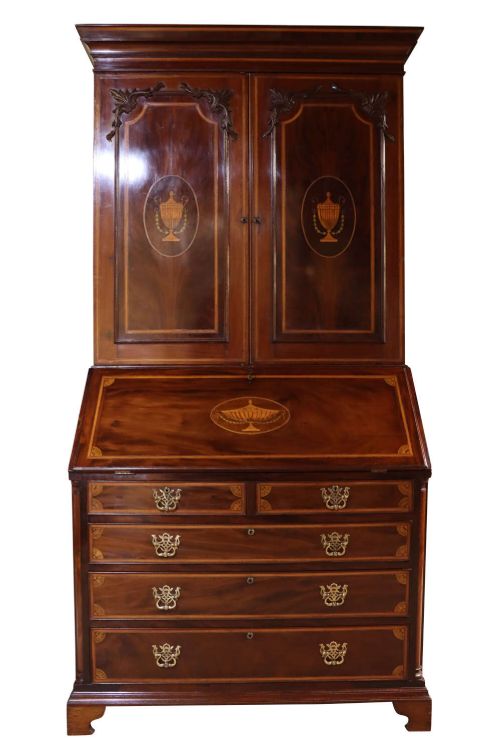
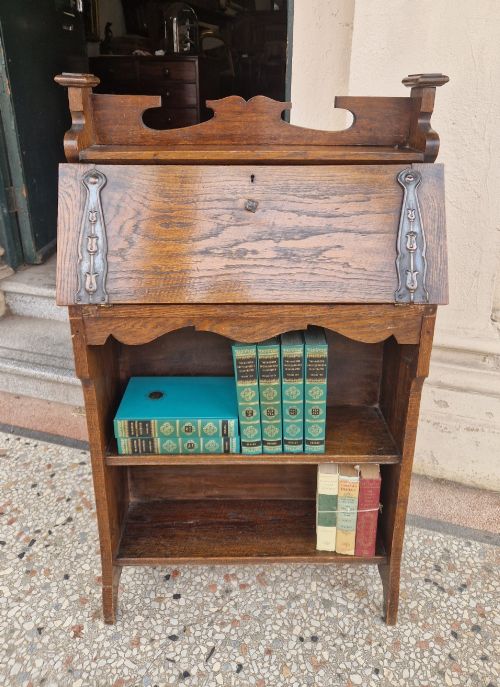
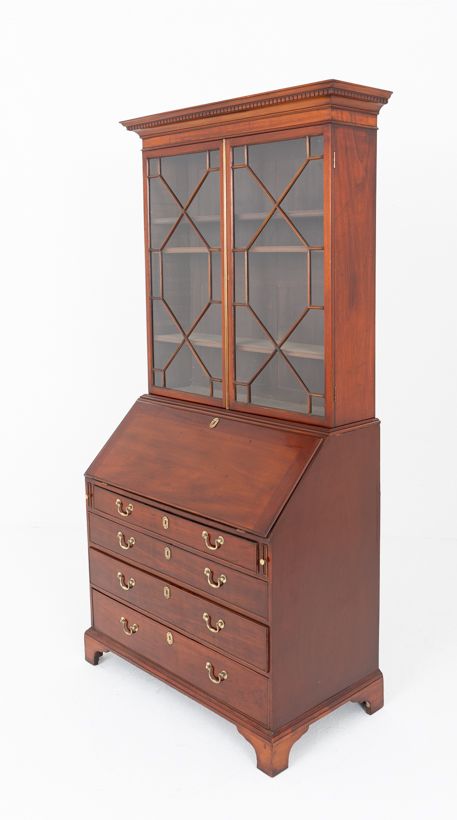
A vintage slant front secretary, known locally as a bureau or bureau bookcase, combines a sloping writing surface with concealed internal compartments. You encounter these pieces most frequently in Edwardian oak and Georgian mahogany iterations across the current selection.
The inventory spans multiple centuries, incorporating 18th century cabinet work alongside 19th century reproductions and 1930s interpretations. Desks and tall bureau bookcases dominate the available forms, ranging from compact golden oak models to glazed upper display units.
Judging the Standard
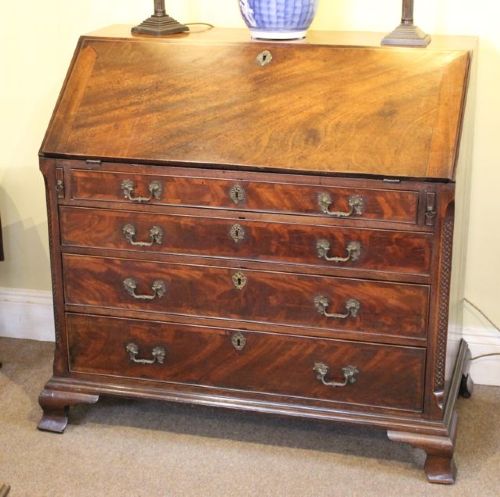
The degree of refinement in timber selection and secondary wood usage distinguishes finer examples from simpler commercial output. Well-figured burr walnut and carefully matched flame mahogany denote superior workshop origins.
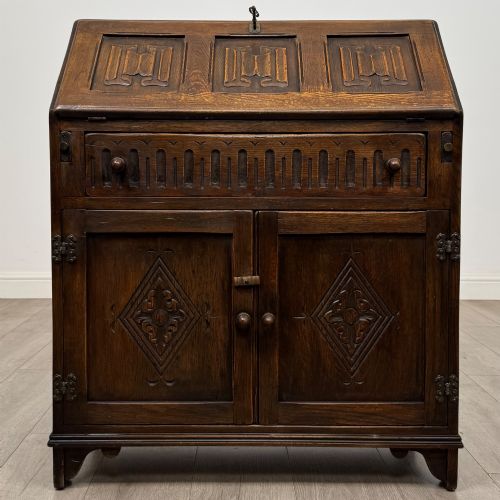
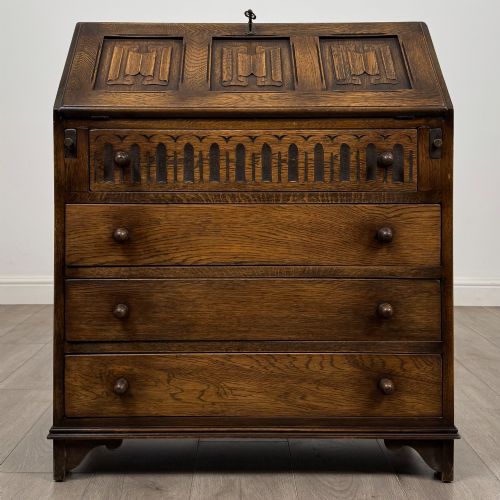
Internal joinery and the execution of carved elements, such as linenfold panels or period revival motifs, reveal the competence of the maker. Original brassware and intact interior compartments contribute further to the standing of any given piece.
Secret compartments hidden behind sliding pigeonholes offered historical owners a private spot for love letters.
Heals of London·Arthur Basil Reynolds·Larkin
The Vintage Slant Front Secretary Glossary
- Fall front
- The hinged writing flap that drops down to form a horizontal desk surface. It conceals the internal pigeonholes and small drawers when closed.
- Bureau bookcase
- A dual-purpose piece featuring a writing desk base beneath an upper section enclosed by doors, often glazed for the display of books.
- Linenfold
- A carved wooden panel motif resembling folded fabric, characteristic of specific oak pieces produced during the Edwardian period and revival styles.
- Pigeonhole
- A small compartment within the desk interior designed for sorting letters and documents.
- Escutcheon
- A protective plate surrounding the keyhole of a drawer or fall front, typically cast in brass.
Vintage Slant Front Secretary: Frequently Asked Questions
What is a vintage slant front secretary?
A vintage slant front secretary is a writing desk featuring an angled hinged flap that pulls down to create a flat work surface. Inside, it contains small drawers and compartments for stationery.
These items encompass both standalone desks and tall bureau bookcases with upper shelving units. They derive from periods spanning the 18th century to the 1930s.
How were these desks used?
Owners utilised the sloping fall front for handwriting letters, keeping ledgers, and storing private documents securely behind locked doors.
The upper shelving on bureau bookcase variants served to house library collections and display decorative objects in formal rooms.
How do I identify an 18th century piece?
Eighteenth century examples typically employ solid mahogany or oak with hand-cut dovetail joints in the drawer construction. The internal layout often incorporates secret compartments and shaped pigeonholes.
Later reproductions and revival pieces from the Edwardian era or the 1920s may replicate these forms but feature machine-sawn timber and differing secondary woods.
How do I style a bureau at home?
A bureau fits well in a living room, study, or bedroom where the fall front can remain closed to conceal writing materials when not in use. Leaving the flap open allows you to display books or small objects inside the pigeonholes.
Pairing the desk with a traditional wooden chair or small armchair maintains the historical aesthetic of the room.