


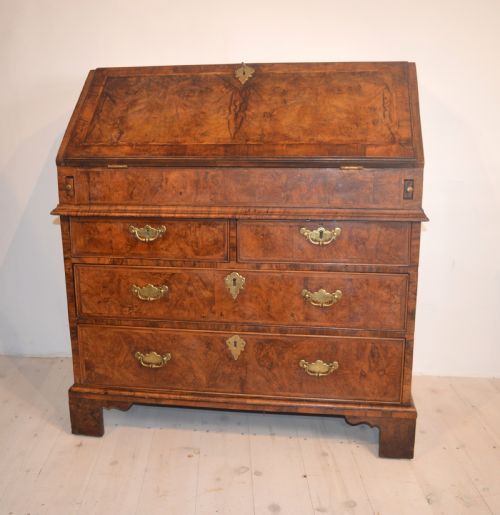

Decorative Walnut Desk
A decorative walnut desk brings warmth and distinct grain to a room, offering a functional writing surface rooted in centuries of cabinetmaking.
Decorative Walnut Desk
A decorative walnut desk is a dedicated writing place fashioned from warm timber, spanning periods from the seventeenth century through to the twentieth century. These pieces appear in various forms, including writing slopes, bureau desks, and refined ladies writing tables.
The most common examples encountered on this page stem from the Victorian era, particularly incorporating burr walnut veneers and marquetry details. Alongside these writing tables, buyers will find related walnut desk accessories and writing boxes sharing the same rich timber vocabulary.
Origins stretch from English workshops to French revival and continental centres, demonstrating diverse regional interpretations of walnut furniture. Pieces range from modest seventeenth-century table cabinets to elaborate nineteenth-century bureau formats designed for formal parlours.
Materials and construction methods
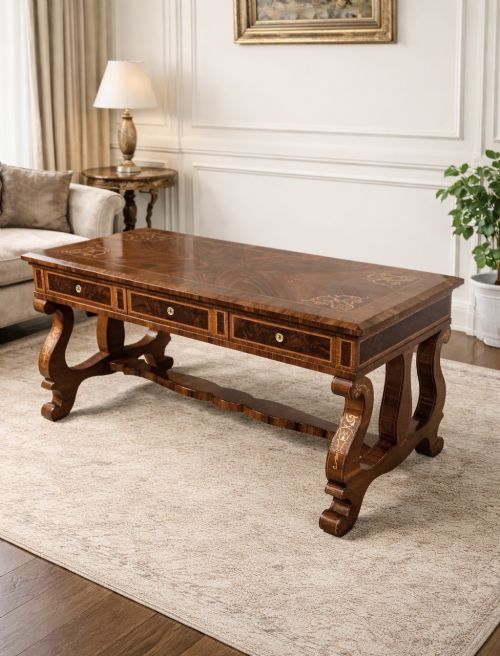
Cabinetmakers utilised solid walnut and decorative burr walnut veneers applied to secondary woods like oak, creating rich patterning across flat surfaces. These timber foundations frequently received detailed marquetry inlay using boxwood and fruitwoods to form geometric or floral motifs.
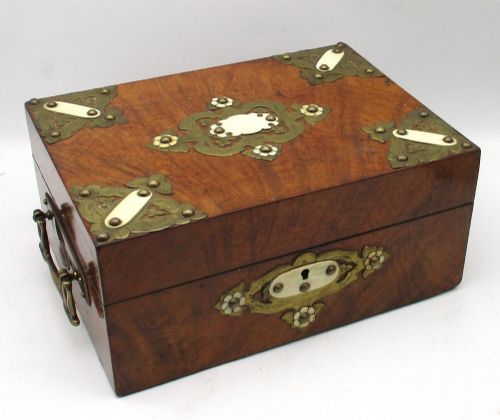
Metal mounts in brass, alongside glass and marble elements, were integrated into many nineteenth-century pieces to accent the woodwork. Specialised techniques such as oyster veneering and hand painting further distinguish the surface finish on select tables and boxes.
Materials appearing alongside walnut include brass, glass, boxwood, marble, and fabric used for interior linings.
Assessing quality in walnut writing furniture
Quality rests upon the selection and matching of the walnut grain, where symmetrical burr patterns and crisp marquetry demonstrate superior workmanship. The depth of hand carving and the integration of brass mounts or porcelain plaques further separate standard items from finer examples.
Structural integrity of the writing surface and the preservation of original interior fittings dictate the desirability of each desk. Consistency in the timber's aged patina reveals whether a piece retains its original finish or has suffered heavy restoration.
Luigi Frullini
The Decorative Walnut Desk Glossary
- Marquetry
- The art of applying small pieces of veneer to a structure to form decorative patterns or pictures. Craftsmen utilised contrasting woods like boxwood within these designs.
- Writing slope
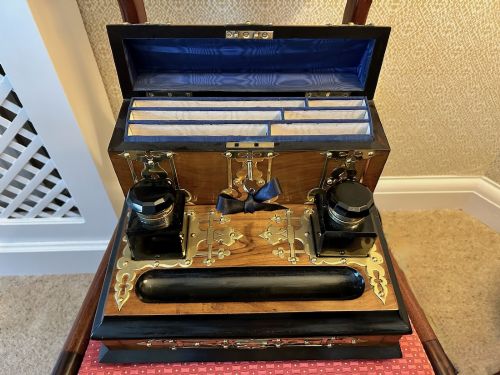
- A portable box with a slanted lid that opens to reveal a velvet or leather-lined surface for writing letters. Many incorporate internal compartments for ink and pens.
- Secretaire-à-abattant
- A tall writing cabinet featuring a drop-down front panel that conceals a fitted interior of small drawers and pigeonholes. This French form often displays elaborate mounts.
- Oyster veneering
- A technique involving cross-cutting branch wood into small circular or oval discs to create an oyster-shell pattern across a tabletop. This method appears on seventeenth and eighteenth-century pieces.
Decorative Walnut Desk: Frequently Asked Questions
How do I date a walnut desk?
Dating relies on examining the construction methods, hardware, and secondary woods used inside the drawers and carcass. Earlier pieces from the seventeenth and eighteenth centuries show distinct dovetailing and timber preparation compared to Victorian examples.
Stylistic markers like French revival mounts or Arts and Crafts simplicity also help narrow down the decade of production. Comparing the specific walnut grain and veneer thickness provides further clues to the manufacturing period.
Where should I place a walnut desk?
These desks suit studies, living rooms, or bedrooms where the warm timber tones complement traditional and eclectic interiors alike. Position them away from direct sunlight and heat sources to protect the natural walnut veneer from drying out.
Smaller forms like writing slopes and table boxes sit comfortably on top of other surfaces if floor space is limited. Larger bureau tables require clearance for chairs and proper lighting for practical writing use.
How do I care for walnut veneer?
Maintain walnut furniture by dusting regularly with a soft, dry cloth and avoiding silicone-based polishes that build up over time. Natural beeswax applied sparingly helps nourish the timber and preserve the aged lustre of the surface.
Keep indoor humidity stable to prevent the underlying wood from expanding and causing the delicate veneer to lift or crack. Promptly wipe away any moisture to protect the polished finish.
What is a bonheur du jour?
A bonheur du jour is a light nineteenth-century ladies writing desk featuring a small cabinet or set of shelves superstructure upon the main writing surface. Originating in France, these decorative tables served as elegant spaces for correspondence and storing small keepsakes.
They frequently showcase fine burr walnut veneers, brass mounts, and inlaid details tailored for feminine reception rooms. The compact proportions made them popular additions to Victorian boudoirs.