



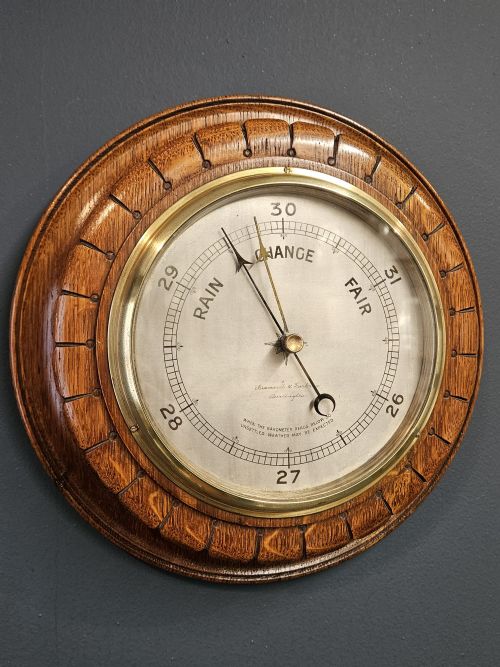


Vintage Silvered Dial Barometer
A vintage silvered dial barometer measures atmospheric pressure with precision and brings period mechanics into a room.
Vintage Silvered Dial Barometer
A vintage silvered dial barometer serves both a practical and decorative purpose in domestic interiors. When exploring this selection, buyers encounter instruments designed to track weather changes through traditional mercury columns or aneroid mechanisms. These pieces range from upright stick barometers to circular wheel designs housed in rich timber frames.
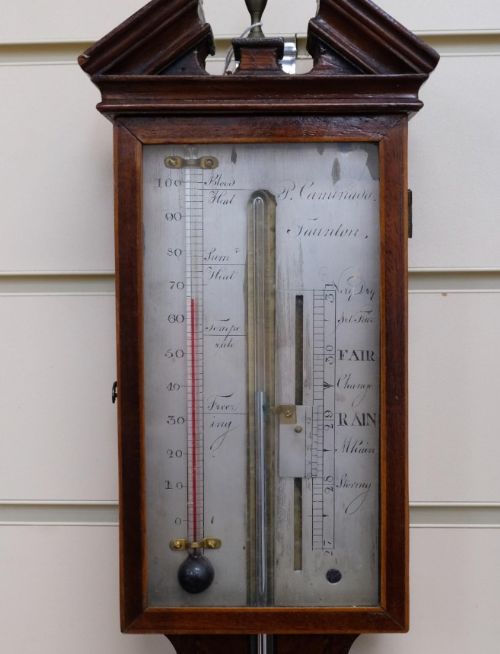
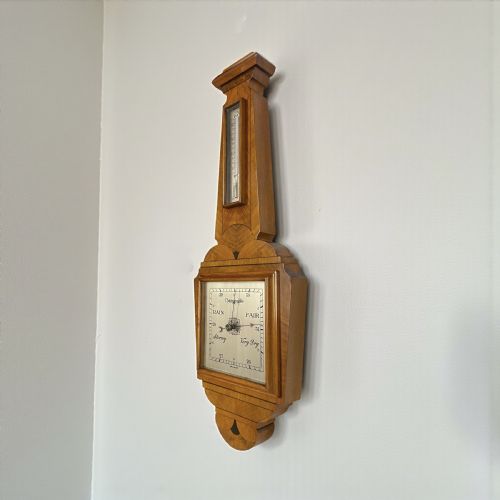
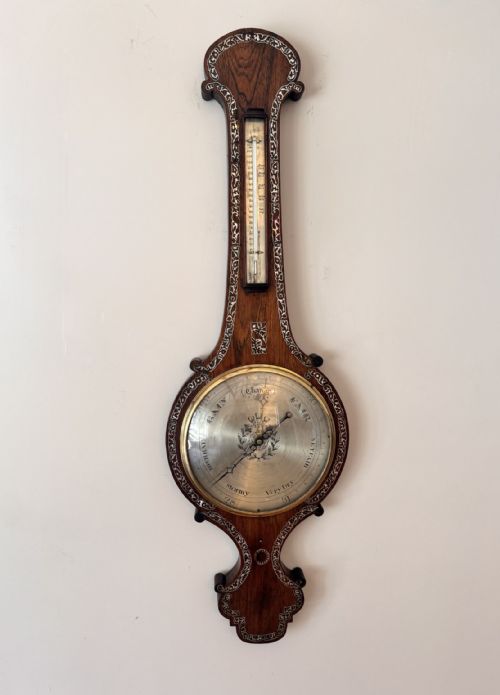
The most common versions appearing here are mahogany and rosewood wheel barometers alongside traditional stick formats. Dating principally from the Georgian, Regency, and Victorian eras, these instruments often feature engraved metallic faces paired with glass viewing panels and brass bezels. Makers from regional towns as well as capital cities stamped their names directly onto the metal plates.
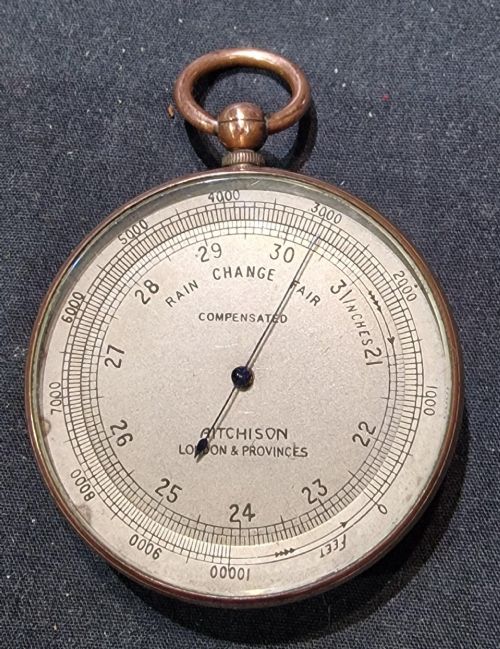
Beyond standard wall-hanging instruments, the category extends to specialised pocket barometers, desk compendiums, and travelling pieces. Oak and ebonised stands also appear, reflecting the diverse ways makers packaged scientific instruments for nineteenth and twentieth-century homes. Each format offers a distinct silhouette while retaining the characteristic metallic face.
Materials and construction
Craftsmen built the housings of these instruments primarily from dense hardwoods like mahogany, rosewood, and oak, occasionally incorporating intricate mother-of-pearl inlay or birds-eye figuring. The structural timber frames protected the delicate internal tubes and linkages required to register barometric pressure accurately. Cabinetmakers shaped these woods into graceful bow fronts, banjo profiles, and robust desk stands.
The functional face of each instrument relies on silvered brass or metal, engraved with legible scales, weather descriptors, and maker inscriptions. Protective glass fronts shield these delicate dials from dust and damage while allowing a clear view of the indicator needles and mercury tubes. Brass bezels, fixings, and occasional gilt bronze mounts complete the assembly, combining utilitarian science with decorative arts.
Several wandering makers walked straight from foreign valleys into British provincial towns to measure the weather for us.
Separating the ordinary from the exceptional
Quality in these instruments rests on the crispness of the engraved silvered dial and the fidelity of the maker's signature. Finer examples display deeply cut numerals and precise lettering rather than simple printed markings, indicating the hand of a skilled engraver. The quality of the timber case, from figured rosewood veneers to careful edge moulding, further elevates an individual piece.
P. Caminada Taunton·Short & Mason London·Bramwell & Harbron·Ganthony of London·Molton of Norwich·Fagioli of Clerkenwell·H Marks Bloomsbury·Sandrino of Liverpool·Hayward of Ashford·James Murray·Pillischer London·Bianchi Ipswich·A. Rivolta·Bassi·Malacrida of Dublin·George Dollond
The Vintage Silvered Dial Barometer Glossary
- Barometer
- An instrument used to measure atmospheric pressure in order to forecast weather conditions. Traditional domestic versions rely on rising and falling mercury columns or expanding metal chambers.
- Silvered dial
- A metallic face treated to achieve a frosted, silvery finish before being engraved with numbers and weather notes. This technique provides high contrast for readability and a distinct reflective sheen.
- Stick barometer
- A vertical instrument design that houses the barometric tube directly within a long, narrow wooden trunk. This form allows a direct view of the mercury column without amplifying wheels.
- Wheel barometer
- A circular instrument type, often called a banjo barometer, that uses a pulley and weight system to translate mercury movement into the rotation of a visible pointer.
- Aneroid barometer
- A mechanical weather indicator that measures pressure using a flexible sealed metal box rather than liquid mercury. This design allowed barometers to become more compact and portable.
- Desk compendium
- A multi-instrument desktop piece combining a barometer with clocks, thermometers, or compasses. These heavier items were designed for stationary use in studies and offices.
Vintage Silvered Dial Barometer: Frequently Asked Questions
How do I read a vintage barometer?
Read the main pointer against the engraved numbers on the silvered dial to check current atmospheric pressure. Many instruments include a secondary manual hand that you align over the main needle to track whether pressure rises or falls over the course of the day.
Weather descriptors written around the dial, such as rain, change, or fair, offer a general guide to upcoming conditions based on those movements. Comparing the primary needle to the set hand provides the clearest indication of short-term weather shifts.
Where should I hang a stick barometer?
Mount your stick barometer on an interior wall away from direct sunlight, radiators, and heavy draughts. Sudden temperature fluctuations can affect the wood housing and the internal mechanics of the instrument.
Choose a stable partition at a comfortable eye level where you can easily read the silvered dial and observe the mercury column. Ensure the wall surface provides firm support for the hanging bracket.
What is the difference between stick and wheel barometers?
Stick barometers display the mercury column vertically within a long wooden trunk, offering a direct view of the fluid height. They represent an earlier, scientifically straightforward approach to pressure measurement.
Wheel barometers translate that same vertical movement through a pulley thread into the sweeping motion of a dial hand. Housed in broader banjo-shaped frames, wheel versions provide a much larger face for easier reading from across a room.