


Vintage Silver Serving Set
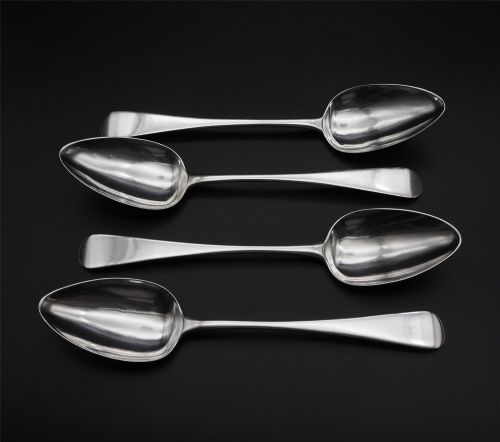
A vintage silver serving set brings proper weight and shine to the table, handling everything from carved fish to fruit and berries.
Vintage Silver Serving Set
A vintage silver serving set comprises specialised utensils and fitted dishes designed to pass food around the table with grace. The pieces span periods from the Georgian era through to the Art Deco movement, capturing changing tastes in domestic dining.
Salad servers, fish sets, and berry spoons dominate the selections, alongside canteens and fitted boxes lined in velvet or silk. Sterling silver and silver plate appear frequently, often paired with organic materials for handles.
Victorian and Edwardian examples occur most often among these listings, offering ornate engraving and sturdy construction. Buyers encounter both solid sterling pieces bearing town marks and durable silver-plated alternatives.
Materials and Technique
Silversmiths shaped sterling silver and silver plate into complex forms using hammering, casting, and piercing techniques. Blades and bowls frequently feature detailed hand engraving, showing floral motifs, hunting scenes, or scrolling foliage.
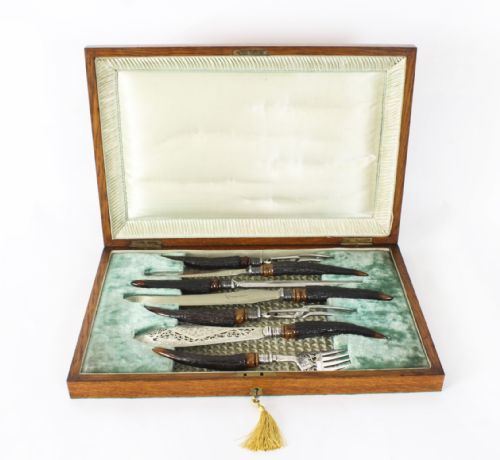
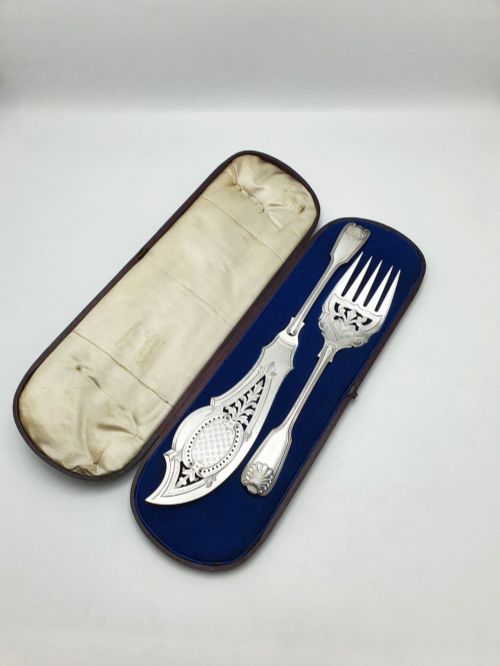
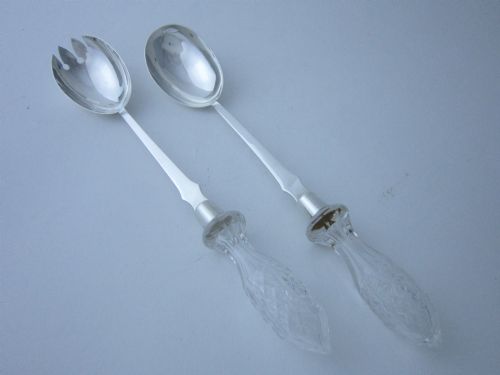
Handles introduce contrasting textures, utilising antler horn, carved bone, polished wood, and crystal alongside metal. Fitted presentation cases rely on wood carcasses covered in leatherette and lined with silk or velvet to protect the contents.
Several sets feature genuine antler horn handles, bringing a touch of the Victorian hunting lodge straight to the dining table.
Markers of Distinction
The depth and clarity of the engraved decoration separate standard production from superior work. Crisp floral motifs or animal scenes executed by skilled hands retain their definition after decades of use.
The integrity of the connection between handle and blade determines structural excellence. Fine sets maintain a rigid fit without wobble, whether the handle is carved horn, dense oak, or solid silver.
Hukin and Heath·Walker and Hall·Frank Butler
The Vintage Silver Serving Set Glossary
- Silver Plate
- A base metal, such as nickel silver or copper, coated with a layer of pure silver. This technique offered an accessible alternative to solid sterling for large dining services.
- Rat Tail
- A prominent tongue-shaped ridge running down the back of a spoon bowl where it joins the stem. It reinforces the joint for everyday utility.
- Berry Spoon
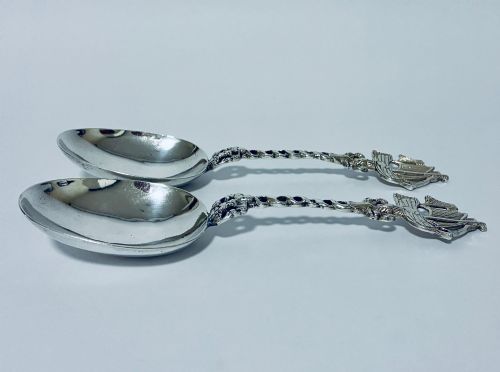
- A large serving spoon, often dating from the Georgian period, featuring fruit repoussé work added later to the bowl. They were intended for serving soft fruits.
- Hallmark
- A series of stamped official marks indicating metal purity, assay office, and date letter. These symbols provide verified historical context for British pieces.
Vintage Silver Serving Set: Frequently Asked Questions
What pieces comprise a typical set?
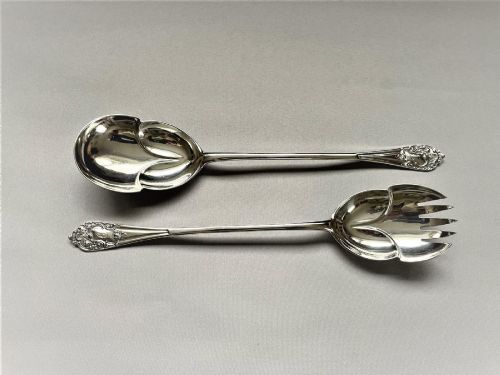
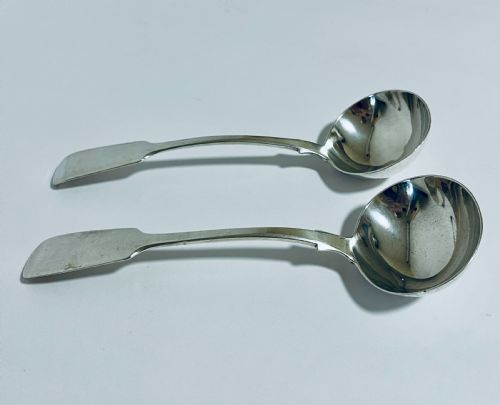
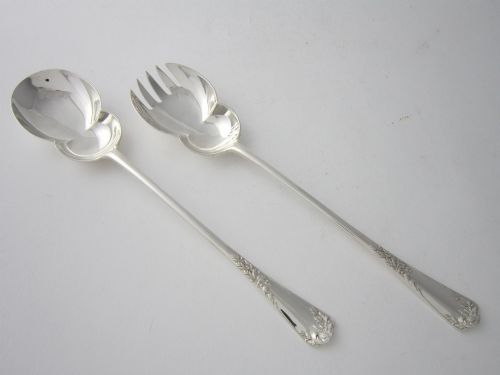
Sets generally include paired implements such as a knife and fork for fish or fruit, or matching salad servers with large bowls. Some larger groupings incorporate ladles, nutcrackers, or grape scissors within fitted presentation boxes.
Buyers also encounter smaller condiment sets containing butter knives, jam spoons, and pickle forks designed for afternoon tea or side dishes.
How do I care for silver plate?
Wash silver-plated utensils by hand in warm soapy water immediately after use, avoiding harsh dishwashing detergents that strip the plating. Dry them thoroughly with a soft cloth to prevent water spots and tarnishing.
Store pieces in tarnish-resistant cloth or fitted wooden boxes lined with silk or velvet. Regular, gentle polishing with a dedicated silver cloth maintains the shine without wearing down the metallic layer.
How are these sets stored?
Many fine sets arrive in their original presentation boxes featuring moulded interiors lined with velvet, satin, or silk. These fitted cases keep individual utensils secure and protect them from atmospheric tarnishing.
Pieces without cases fit neatly into canteen drawers or protective rolls lined with anti-tarnish fabric. Proper separation prevents scratching between blades and handles during storage.