


Vintage Silver Dressing Jar
A vintage silver dressing jar brings refined craft to the dressing table, combining worked metal with glass or crystal.
Vintage Silver Dressing Jar
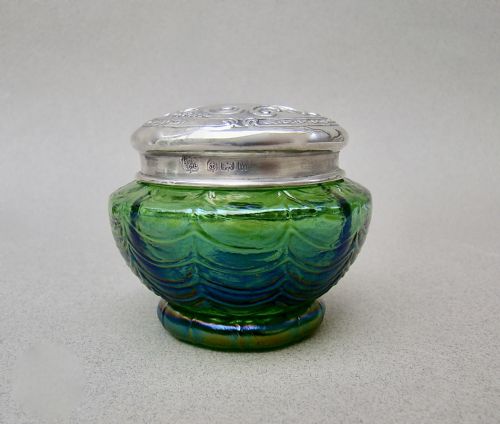
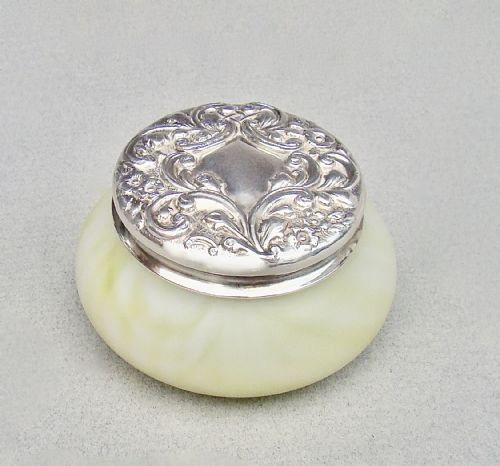
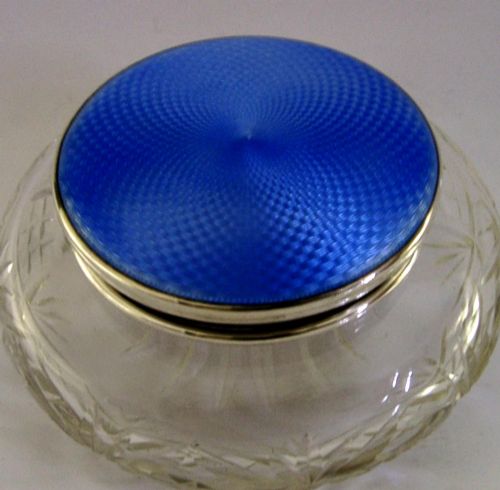
A vintage silver dressing jar comprises a glass, crystal, or occasionally ceramic vessel secured with a fitted metal lid, serving as a container for cosmetics, pins, or fragrance.
The pieces appearing here encompass Edwardian and Victorian examples alongside later Art Deco and mid-century designs, reflecting changing tastes on the vanity table.
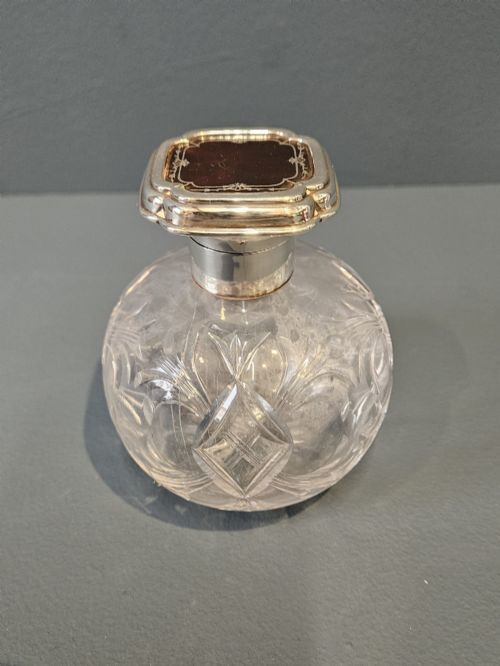
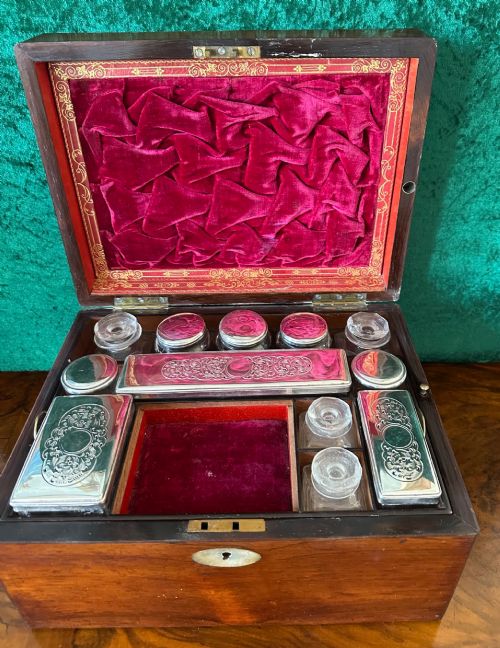
Forms range from small scent bottles and cylindrical vanity jars to heart-shaped trinket boxes and larger dressing table pots.
Materials and construction
Silversmiths formed the lids and mounts from sterling or standard silver, frequently applying hallmarks to record the assay office, year, and maker.
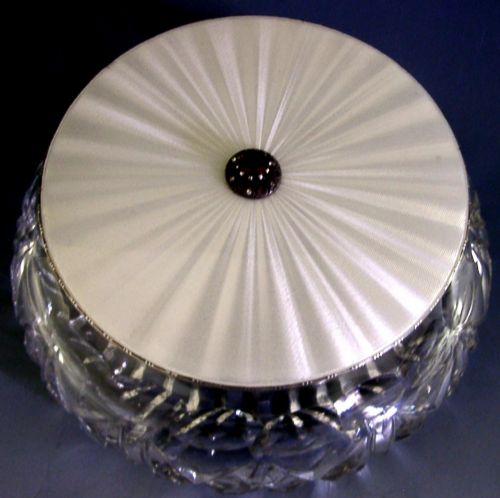
Vessels themselves were shaped from cut glass, cut crystal, or coloured glass such as satin glass, cranberry glass, and Kralik glass.
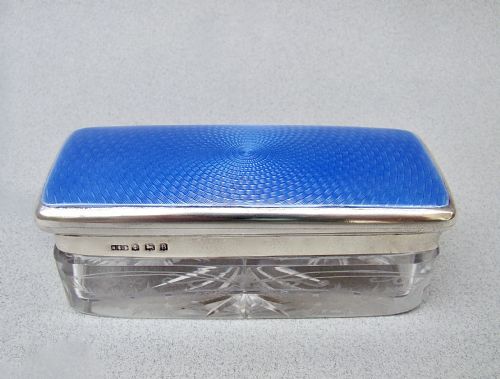
Many decorated pieces integrate additional elements including guilloche enamel, tortoiseshell, or velvet linings within the boxes.
The selection includes pieces spanning the Victorian era through the Edwardian period and into Art Deco designs of the 1920s and 1930s.
Distinguishing quality
Quality rests in the crispness of the glass cutting, the weight and thickness of the silver mounts, and the complexity of supplementary decoration such as hand-applied enamel or worked tortoiseshell.
Pieces bearing clear, legible hallmarks alongside distinguished maker marks demonstrate greater documentary interest than unmarked equivalents.
The structural integrity of the hinge mechanism and the precision of the lid fit dictate the practical refinement of each container.
A. J. Pepper & Co·Henry Clifford Davis·A. Bromet & Co·Henry Perkins·Hasset & Harper·Posen·Barnsley & Co·Adie Brothers Ltd·Goldsmith's and Silversmith's Co
The Vintage Silver Dressing Jar Glossary
- Guilloche enamel
- A decorative technique where an engraved metal surface is covered with translucent enamel, creating geometric patterns underneath the colour.
- Sterling silver
- An alloy consisting of silver and other metals, standardly containing a high purity proportion used for vanity mounts and lids.
- Kralik glass
- Art glass produced by the Kralik glassworks in Bohemia, known for distinctive organic forms and striking colour combinations.
- Cut crystal
- High-clarity glass cut with facets that refract light, frequently utilised for heavy perfume bottles and vanity jars.
- Hallmark
- Official marks stamped onto silver items indicating the standard of purity, the assay office, and the date of manufacture.
Vintage Silver Dressing Jar: Frequently Asked Questions
What were dressing jars used for?
These jars held creams, powders, pins, and personal items on nineteenth and twentieth-century dressing tables. They kept vanity accessories organised and protected.
Many doubled as decorative objects that matched larger matching dressing table sets and travel cases.
How do I date a silver dressing jar?
Dating relies on the hallmarks stamped into the silver mounts, which indicate the specific assay office and year letter. Stylistic indicators like Art Deco geometric lines or Edwardian floral motifs also point to specific decades.
Comparing the cut of the glass and the presence of materials like tortoiseshell or enamel provides further chronological context.
Are the glass components original to the silver?
Most surviving pieces retain their matched glass bases and silver lids, particularly when hallmarked together. The fit of the silver collar around the glass neck generally confirms originality.
Slight manufacturing irregularities in older hand-blown or cut glass often help verify period authenticity.
How should I clean silver and glass jars?
Silver mounts require gentle cleaning with a specialised cloth to avoid touching surrounding enamel, glass, or tortoiseshell panels. Liquid polishes can seep between the silver collar and the glass body, causing damage.
Glass vessels can be washed separately in lukewarm water with mild soap, ensuring the interior lining stays dry if velvet is present.