





Silver Powder Pot
A silver powder pot holds vanity table essentials on a dressing case, combining metalwork with glass or tortoiseshell.
Silver Powder Pot
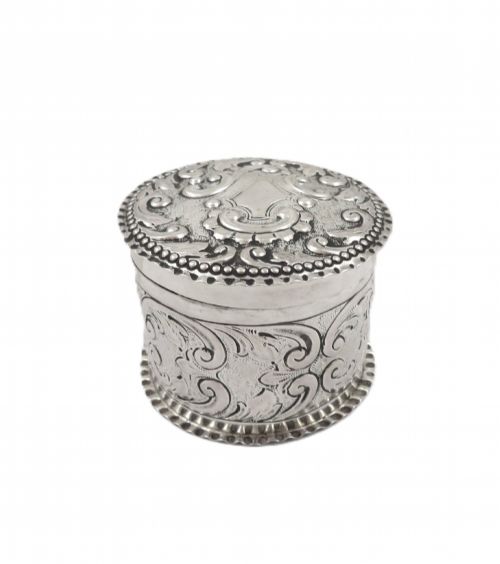
A silver powder pot takes the form of a small lidded vessel designed for cosmetic storage on a dressing table. The pieces found here span from Victorian origins through Edwardian and Art Deco periods, reaching into the mid-twentieth century.
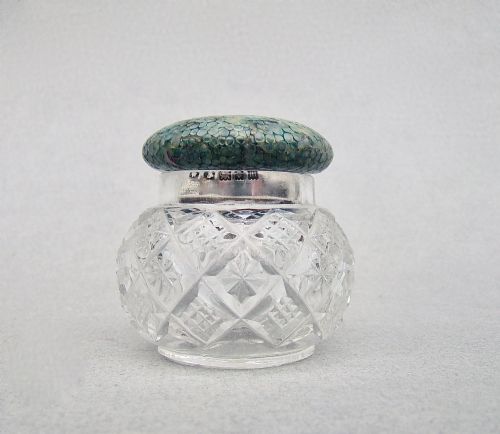
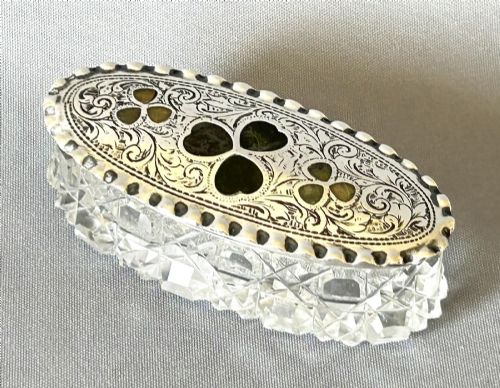
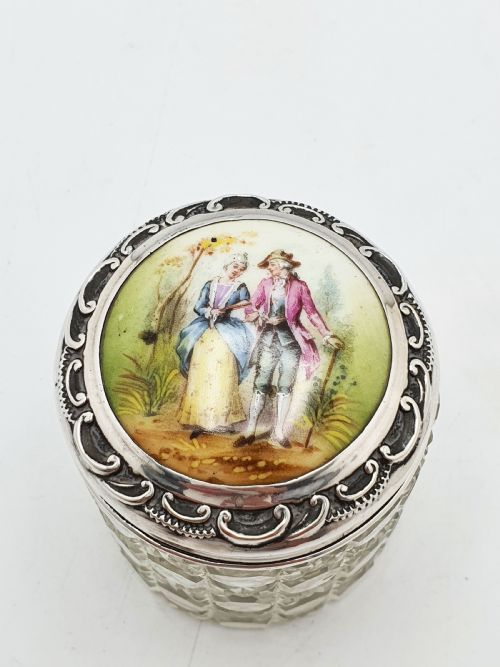
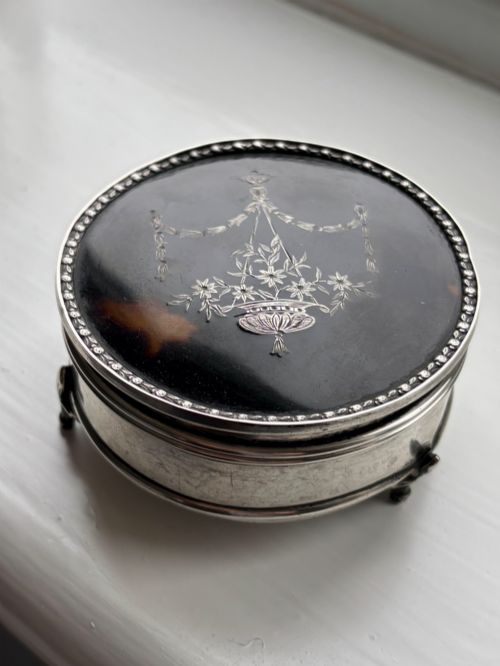
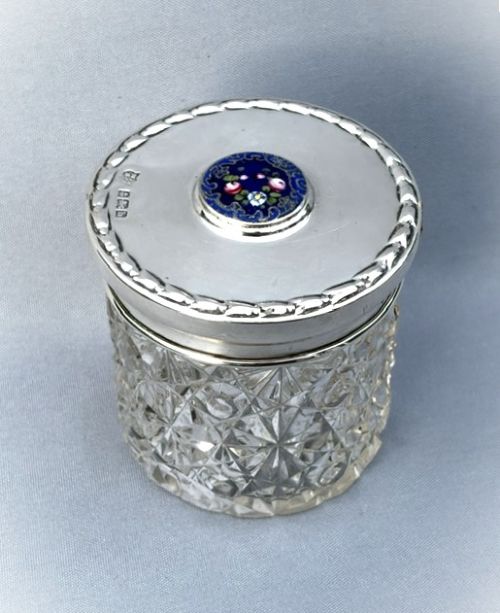
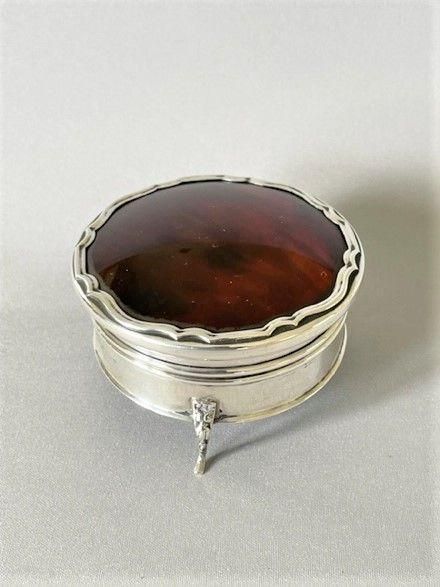
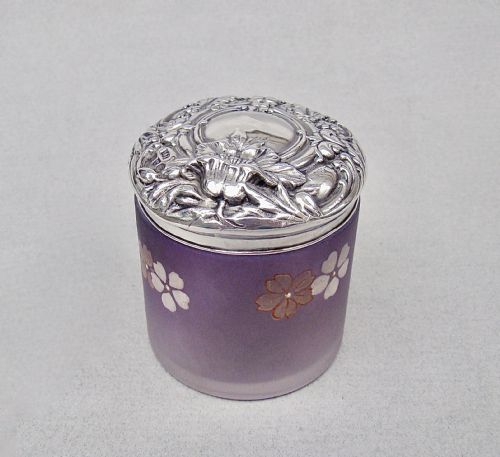
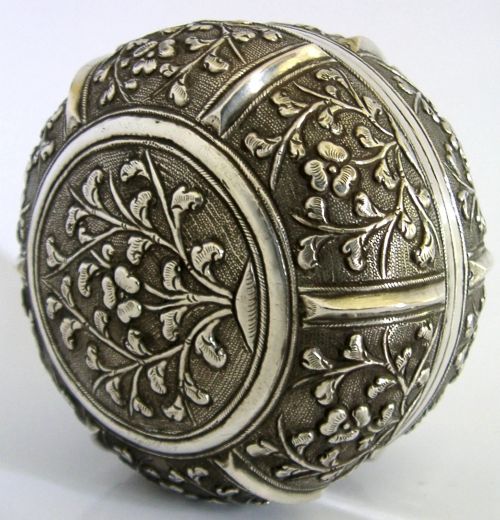
Most examples pair a sterling silver lid with a body formed from cut glass, crystal, or coloured glass. Variants include solid silver boxes from Anglo-Indian and Asian export workshops, alongside pieces incorporating enamel and tortoiseshell.
Collectors encounter dressing table jars, vanity pots, and trinket boxes functioning primarily as powder containers or rouge receptacles. These items reflect the domestic dressing habits of the nineteenth and twentieth centuries.
Materials and Technique
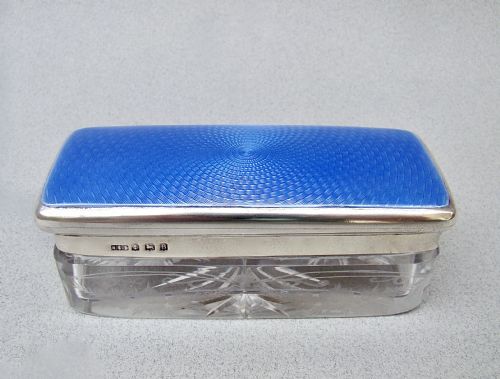
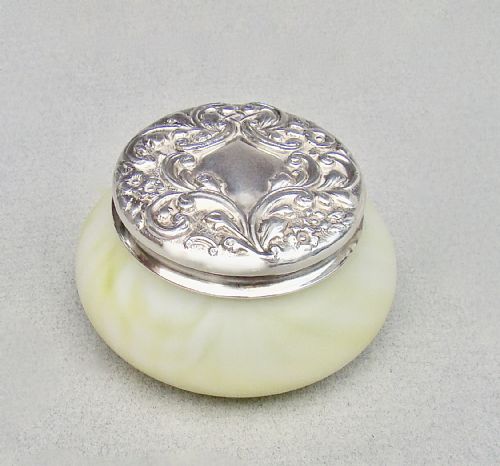
Silversmiths formed the lids and mounts using sterling silver, frequently applying repousse decoration, engine-turning, or guilloche enamel in blue, pink, and other tones. Hallmarks stamped into the metal record the assay office, such as Birmingham or London, alongside the year of production.
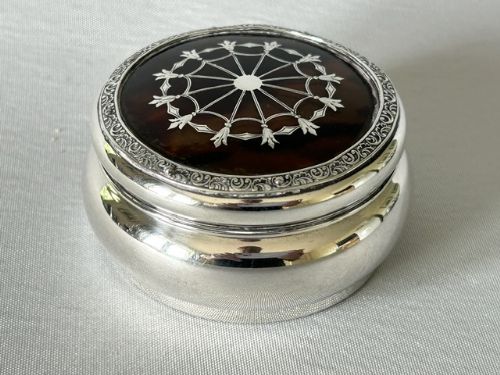
Glass bodies were typically heavy, utilising cut crystal, satin glass, Kralik glass, or overlaid glass to catch the light on a vanity surface. Tortoiseshell and pique work appear inset into silver frames, secured by delicate bezel settings.
Silver Powder Pot Retail Price Guide 2026
Typical asking prices for silver powder pot among the pieces listed under this phrase on Sellingantiques today, from the lower quarter to the upper quarter. They describe what is for sale here now, not the wider market.
Materials recorded across the inventory include sterling silver, cut glass, tortoiseshell, frosted glass, and multicoloured guilloche enamel.
Distinctions in Execution
Quality rests in the crispness of the silversmith's chasing and the depth of the guilloche enamel work on the lid. Superior pieces display intricate hand-engraving and well-fitted hinges or snug push-on covers that align precisely with the collar.
The weight and clarity of the cut glass or crystal base separate standard production from finer output. Finer vessels combine robust sterling mounts with undamaged, heavy glass bodies free from clouding or chips.
A. J. Pepper & Co·Henry Clifford Davis·Goldsmiths and Silversmiths Company·A. Bromet & Co·Ollivant & Botsford·Henry Williamson Ltd·William Comyns·Hasset & Harper
The Silver Powder Pot Glossary
- Guilloche
- An intricate mechanical engraving technique that etches precise geometric patterns beneath translucent enamel. It appears frequently on Art Deco dressing table sets.
- Repousse
- A metalworking method where the silversmith hammers the design from the reverse side to form a raised relief on the surface. This technique creates tactile floral or scroll motifs.
- Pique work
- The insertion of tiny gold or silver pins into tortoiseshell to form delicate decorative patterns. It is often seen on Edwardian vanity items.
- Hallmark
- A series of official marks stamped on precious metals indicating the standard of purity, the assay office, and the date letter. English silver typically bears a lion passant and a leopard head or anchor.
- Cut glass
- Glass shaped by cutting facets and patterns into the surface using a wheel, adding brilliance and weight to the vessel. Many powder pots utilise heavy crystal bases.
Silver Powder Pot: Frequently Asked Questions
What is a silver powder pot?
A silver powder pot is a small lidded container used historically for face powder, tooth powder, or cosmetics on a dressing table.
These vessels combine a hallmarked silver lid with a base made of glass, crystal, enamel, or solid silver.
How do I date a silver powder pot?
Dating relies primarily on the hallmarks stamped onto the silver lid or mount, which indicate the assay office and specific year letter.
Stylistic indicators such as Art Deco geometric enamel or Edwardian repousse work also help narrow down the period of manufacture.
Were these pots used only for powder?
While many served to hold loose cosmetic powder, others functioned as trinket boxes, pill boxes, or rouge pots.
Smaller lidded jars on dressing tables were adapted for various vanity items depending on the owner's needs.
How should I clean a silver powder pot?
Silver components require careful polishing with a non-abrasive cloth to preserve the metal surface and any delicate hallmarks.
Enamel, glass, and tortoiseshell sections should be kept away from harsh liquid immersion to protect adhesives and fragile inlays.