


Vintage Silver Demitasse Spoons
Vintage silver demitasse spoons are small, elegant additions to the after-dinner coffee service, prized by collectors for their intricate enamelling and period styles.
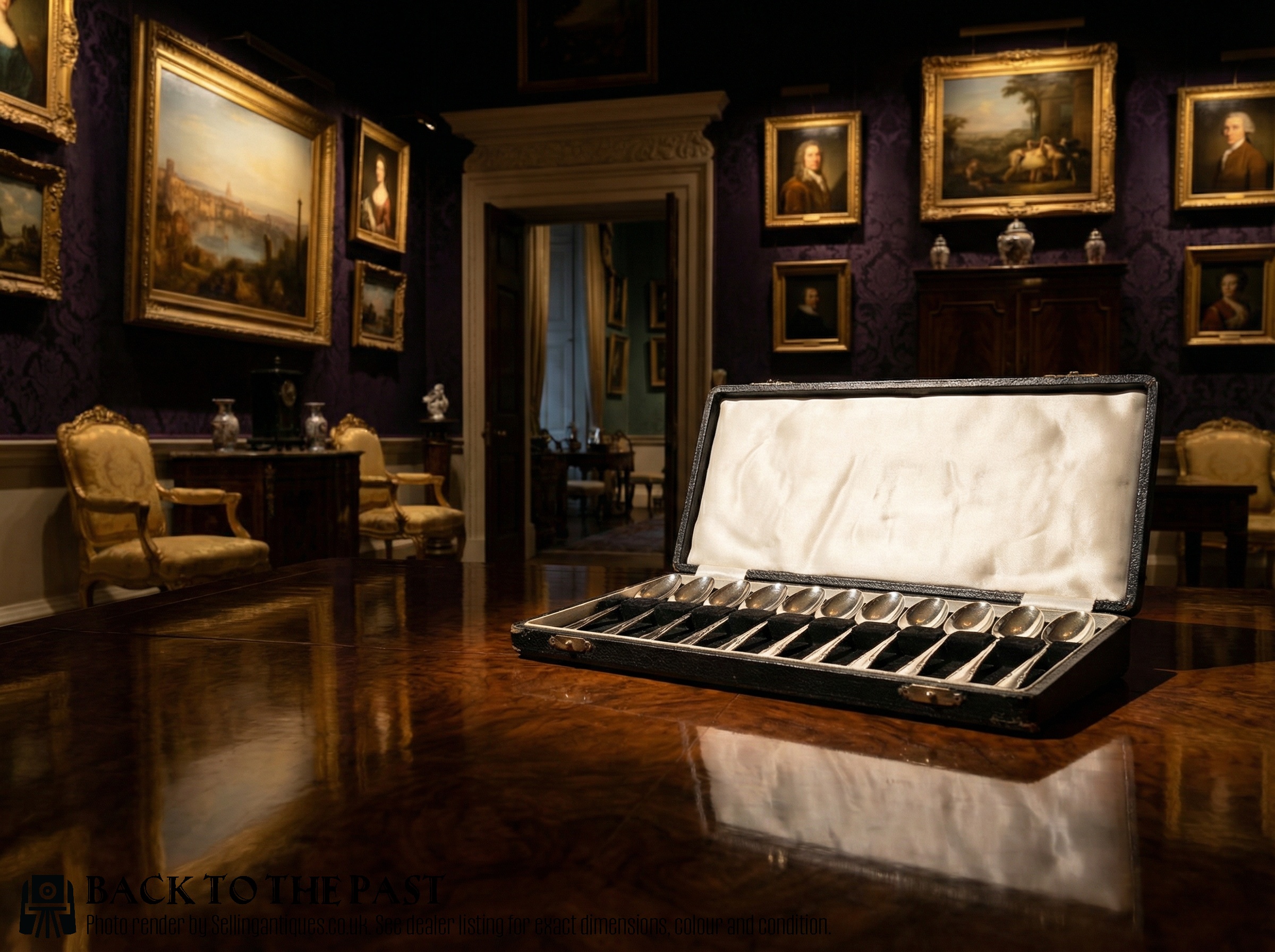
Vintage Silver Demitasse Spoons
Vintage silver demitasse spoons are small implements designed specifically for stirring Turkish coffee or after-dinner espresso. When searching for vintage silver demitasse spoons, buyers encounter cased sets intended for gifting or formal dining, frequently housing six matching items.
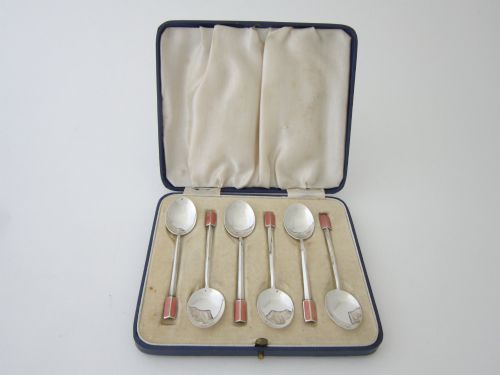
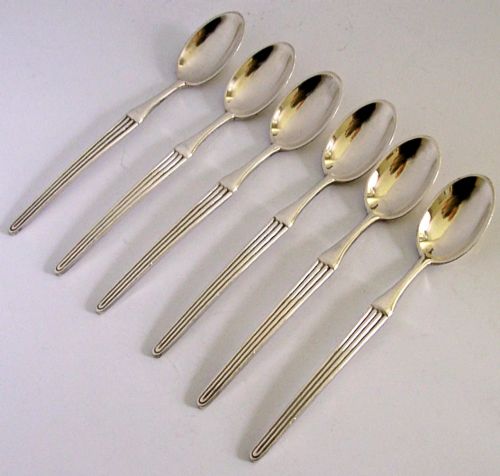
The pieces on this page span several decades, reaching from the Victorian era through the Edwardian period into Art Deco, Mid-Century Modern, and Ottoman designs. Coffee spoons and teaspoons appear alongside fitted cases lined with satin, silk, or velvet.
Makers and retailers range from renowned firms like Liberty & Co and David Andersen to regional silversmiths operating across Britain and Europe. Buyers frequently find them accompanied by matching sugar tongs or ceramic coffee cans and saucers.
How they were made
The majority of these pieces are forged from solid silver, sterling silver, or silver gilt, relying on traditional smithing techniques. Artisans shaped the bowls and stems before applying hallmarks to designate origin, standard, and date.
Enamel work appears frequently, fused onto the metal surface to introduce vibrant colour to the handles or bowls. Many sets are housed in custom-fitted wooden boxes lined with textiles such as silk, velvet, and satin to protect the delicate metalwork.
The documented periods span from Victorian and Ottoman eras through Edwardian, Art Deco, and Mid-Century Modern designs.
What varies in quality
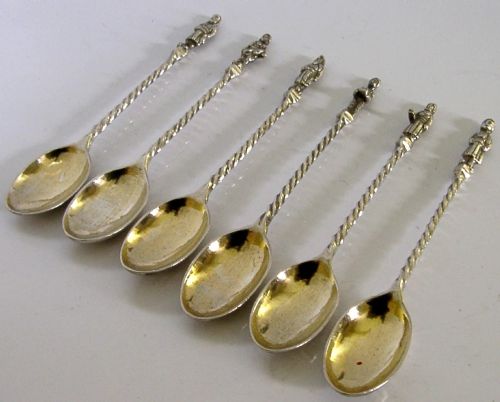
The distinction between ordinary utility items and superior examples often lies in the complexity of the decorative execution. Pieces featuring hand-applied enamel work, figural elements, or complex gilding represent a higher tier of craftsmanship.
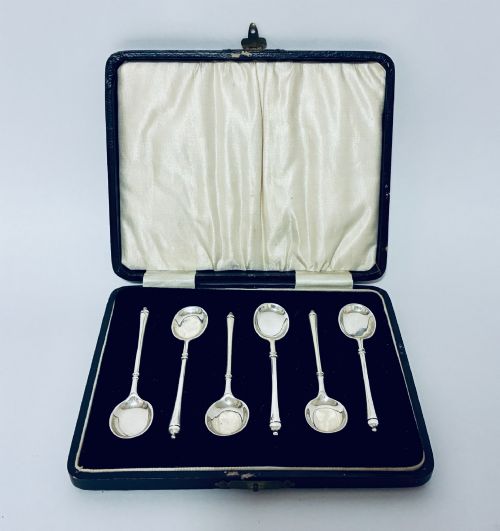
The presence of an original fitted presentation case lined in fabric adds significantly to the desirability of a set. Maker attribution also plays a role, with items bearing marks from established workshops or renowned retailers commanding greater interest.
Walker and Hall·David Andersen·Liberty and Co·Cooper Brothers and Sons
The Vintage Silver Demitasse Spoons Glossary
- Demitasse
- A small cup used for serving Turkish coffee or espresso. These spoons are scaled down specifically to fit these compact vessels.
- Silver gilt
- Silver that has been coated with a thin layer of gold on its surface. This technique provides a rich golden appearance while retaining a solid silver base.
- Hallmark
- An official stamp or marks struck on items made of precious metals. They indicate the maker, the assay office, and the year of testing.
- Enamel
- A glassy substance fused to the surface of metal through firing for ornamentation. It adds colourful patterns, particularly on Art Deco and Edwardian handles.
Vintage Silver Demitasse Spoons: Frequently Asked Questions
Are these spoons for everyday use?
These delicate pieces suit occasional dining and formal coffee service rather than heavy daily tasks. Their fine silver construction and fragile enamel demand careful handling.
Hand washing is essential to preserve any gilding or coloured enamel work. Storing them in their original fitted cases protects the bowls and stems from scratches.
How do I identify Art Deco spoons?
Art Deco examples feature geometric motifs, clean lines, and stylised patterns popular during the interwar decades. Enamel work from this era often uses bold contrasts.
Hallmarks dating from the nineteen-twenties and nineteen-thirties frequently confirm the period. Matching sets from this time often arrive in original presentation boxes.
Why are some sets cased?
Presentation boxing was common for cutlery sets intended as wedding gifts or special purchases. These fitted boxes kept the small pieces secure and orderly.
The interiors are usually lined with velvet, satin, or silk, shaped specifically to hold each spoon and sometimes matching tongs.
What is the difference between tea and coffee spoons?
Demitasse and coffee spoons possess notably smaller bowls and shorter handles than standard teaspoons. They match the smaller capacity of after-dinner coffee cups.
Larger teaspoons are proportioned for tea service and wider cups. Collectors often group them together under broader flatware categories.