



Vintage Shop Showcase
These vintage shop showcases turn commercial utility into home display, bringing glazed timber and metal counters directly into domestic rooms.
Vintage Shop Showcase
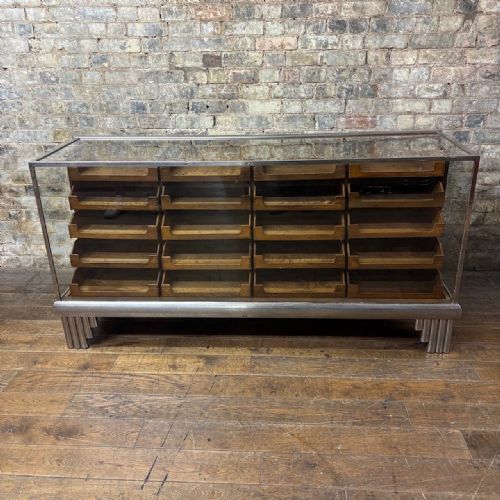
A vintage shop showcase encompasses glazed display cabinets, countertop cases, and haberdashery counters designed for commercial merchandise. These pieces originate from periods spanning the late nineteenth century through the Art Deco era of the 1930s.
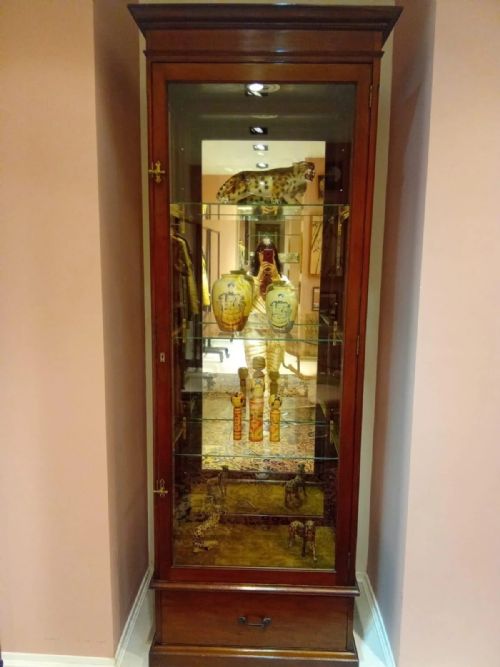
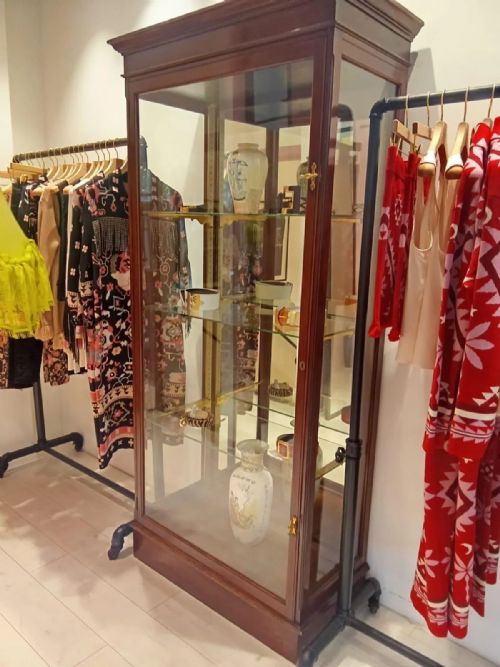
The forms adapt easily to domestic interiors, serving as bookcases, kitchen dressers, or collector cabinets. Their origins in Victorian and Edwardian retail spaces ensure robust construction intended to withstand heavy daily use.
Materials and construction methods
Makers utilised durable timbers such as mahogany, oak, and walnut for the primary framework, often pairing these with glass panels to maximise visibility. Metal components like brass, chrome, and aluminium appeared in later twentieth-century designs to support sliding doors and shelving.
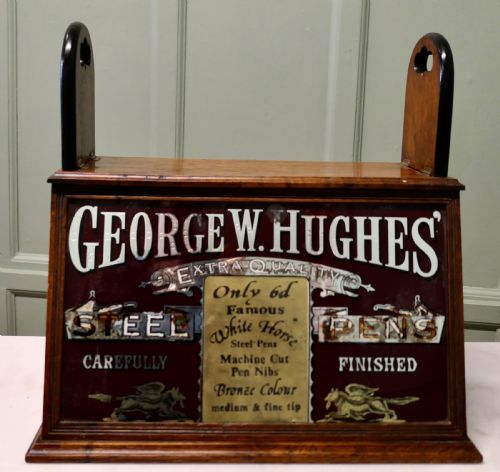
Mirrored interiors and adjustable glass shelves frequently supplemented the display space, while specialised elements included ebonised finishes and hand sign-written advertising panels for confectionery. Countertop models sometimes integrated drawers and velvet linings for smaller wares.
Vintage Shop Showcase Retail Price Guide 2026
Typical asking prices for vintage shop showcase among the pieces listed under this phrase on Sellingantiques today, from the lower quarter to the upper quarter. They describe what is for sale here now, not the wider market.
Sweet shop cabinets still whisper faintly of chocolate after a century of service.
Distinguishing quality in shop showcases
The distinction between standard commercial joinery and superior execution lies in the selection of solid timbers over veneered alternatives. Finer cabinets display meticulous corner joinery, robust brass hardware, and original bevelled or thick plate glass.
Original maker plaques, intact hand-painted signage from period brands, and specialised configurations like pentagonal shapes or revolving mechanisms elevate the standing of a piece. The survival of original mirrored backs and functional sliding mechanisms further separates utilitarian examples from exceptional ones.
F. Sage & Co·Dudley & Co·Cadbury·Rowntree·Fry
The Vintage Shop Showcase Glossary
- Haberdashery counter
- A long shop counter featuring multiple shallow drawers, often with glass fronts, originally used for ribbons and small garments.
- Bow end
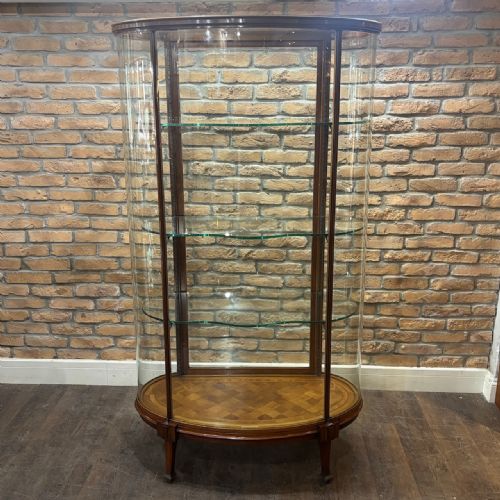
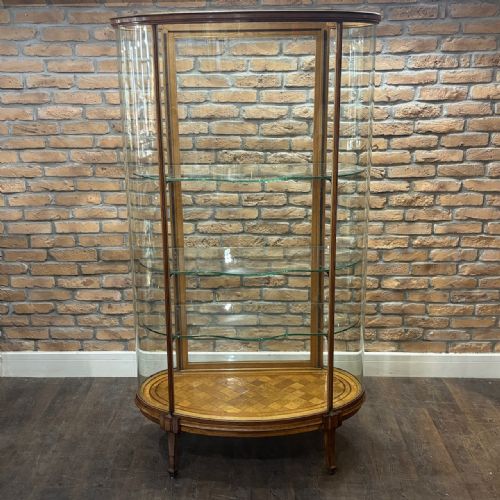
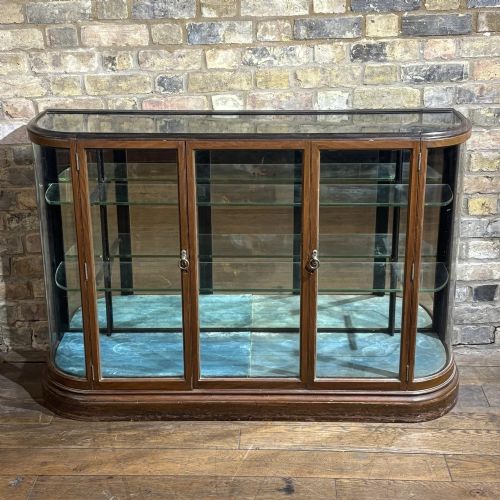
- A display counter or cabinet featuring a curved glass front, designed to soften room corners and improve visibility.
- Countertop display cabinet
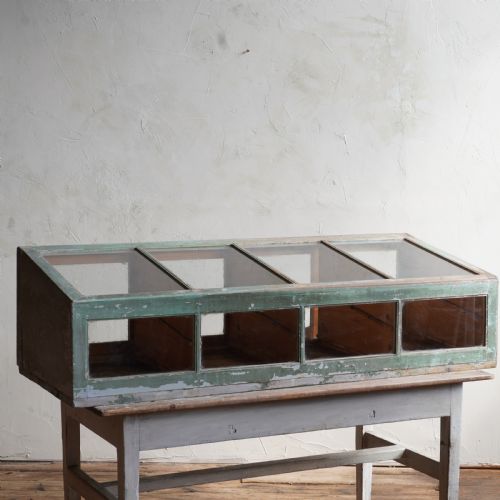
- A compact glazed case placed upon a shop counter to showcase high-value items directly to customers.
- Ebonised
- Wood treated with a chemical stain or paint finish to imitate expensive ebony.
- Museum display case
- A heavy glazed cabinet designed for secure exhibition, constructed with architectural precision.
Vintage Shop Showcase: Frequently Asked Questions
How do I date a shop showcase?
Dating relies on combining the stylistic markers of the period with material evidence. Edwardian and Victorian pieces typically showcase rich mahogany or oak with traditional joinery, whereas nineteen-thirties examples introduce chrome frames and Art Deco steel.
Maker plaques and original sign-writing also provide reliable chronological anchors. Structural transitions, such as the shift from heavy timber framing to lighter metal alloys, help place a piece within its correct decade.
Can I use these cabinets in a kitchen?
These cabinets suit kitchen environments well for storing tableware, glassware, or dry goods behind protective glass. The deep counters and tabletop cases offer practical working surfaces alongside enclosed storage.
Proper ventilation and placement away from direct moisture protect the antique timber frames and original mirrored interiors. The robust commercial origins ensure the furniture handles daily domestic demands comfortably.
What is the difference between a counter and a cabinet?
Display counters are low, wide units built with flat tops to serve customers across, often featuring glazed customer-facing sides. Freestanding or countertop cabinets rise vertically to present items at eye level.
Cabinets generally prioritize all-around visibility through multiple glass shelves, while counters emphasise surface utility combined with internal storage.
How are glass shelves adjusted?
Many period cabinets incorporate slotted wooden uprights or metal clips that allow internal glass shelves to move vertically. This mechanism accommodates objects of varying heights within the display area.
Care must be taken when repositioning original glass panes to avoid chipping the edges against older timber framing.