


Vintage Shop Scales
Vintage shop scales are heavy commercial working tools made of brass, iron and copper that bring industrial character to a modern kitchen.
Vintage Shop Scales
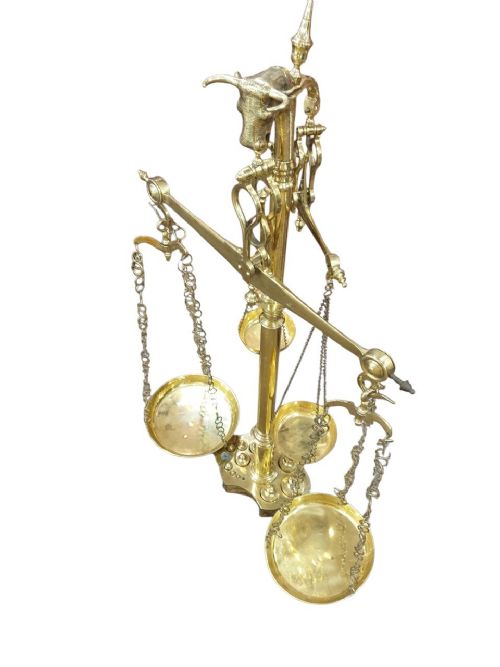
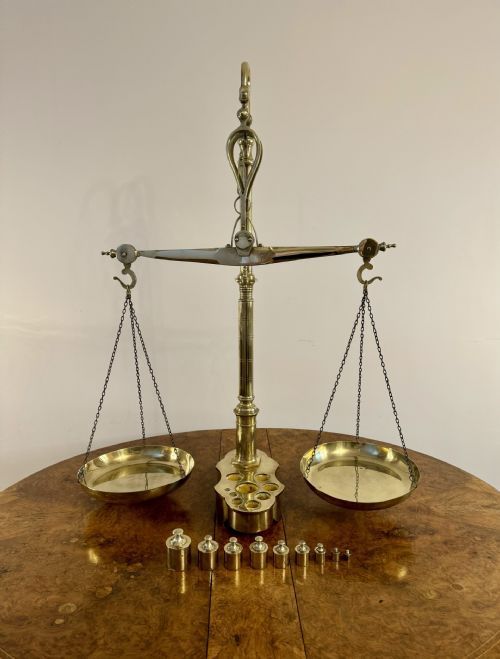
Vintage shop scales span late nineteenth century Victorian and Edwardian counter models through to early twentieth century butcher and grocer balances. These utilitarian pieces include large floor standing brass butcher scales, copper and iron balance scales, and associated scale plates or weights.
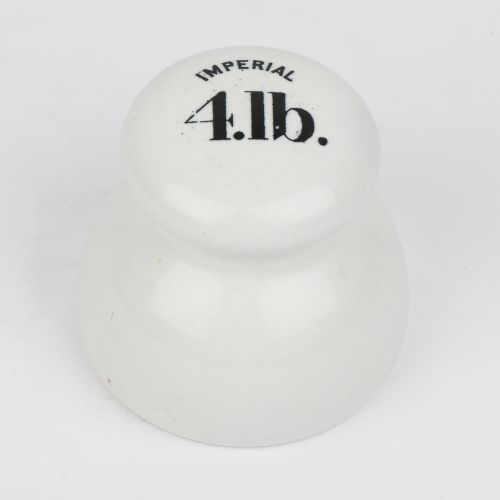
Buyers frequently encounter robust commercial setups designed for heavy daily trade in grocery shops, co-ops, and butcher counters. Domestic kitchen scales sit alongside monumental trade pieces, accompanied by ceramic scale pans and advertising pottery components.
Origins stretch across English workshops and nineteenth century French mercantile centres, capturing a distinct period of industrial shopkeeping. Each surviving setup reflects the heavy demands of commercial weighing before digital machinery took over.
How they were made
Makers utilised cast iron for structural bases and uprights, providing the immense weight and rigidity necessary for accurate commercial measurement. Brass featured heavily in polished beams, pans, and standard weights, offering resistance to corrosion in busy food shops.
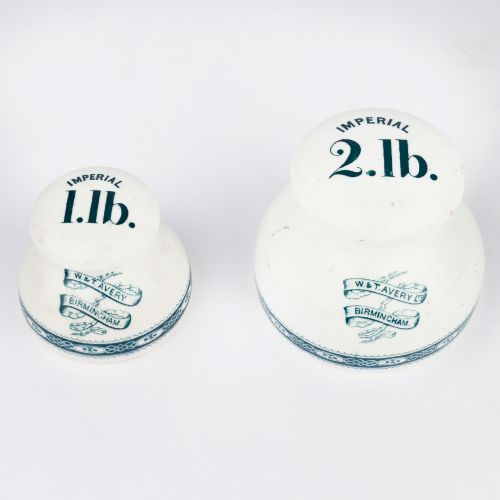
Copper and iron combined in balance scale arms and bracing, while ceramic and glazed earthenware formed smooth, hygienic scale pans and advertising plates. Makers inscribed firm details and capacity markings directly onto brass plates or moulded them into pottery surfaces.
Some scales proudly weighed butcher sausages before carrying them home in greaseproof paper.
What varies in quality
Scale construction ranges from standard utility models built for provincial co-ops to monumental floor standing apparatus finished with meticulous brass detailing. The presence of original matching iron weights and signed ceramic scale pans elevates the integrity of an assembly.
Maker signatures from notable firms such as W & T Avery or Parnall & Sons indicate higher workshop standards and superior metallurgical casting. Metal surfaces that retain their original unpolished patination demonstrate better preservation than over-restored examples.
W & T Avery·Day & Millward·Parnall & Sons
The Vintage Shop Scales Glossary
- Balance scales
- Weighing instruments utilising a central fulcrum and two suspended pans to compare an object against standard weights. They represent the traditional mechanical approach to trade measurement.
- Scale plate
- The flat platform or bowl mounted upon a scale to hold goods during the weighing process. These components often featured advertising text for food products.
- Beam scale
- A weighing device featuring a central horizontal metal bar from which two pans hang at equal distances. The beam pivots on a knife-edge pivot for precision.
- Standard weights
- Certified heavy metal objects used as a baseline for trade transactions to ensure accurate commercial measurement. Municipal authorities often stamped these pieces with regional details.
- Advertising pottery
- Ceramic plates and panels produced for commercial scales to promote specific food brands such as sausages. They combined functional shop equipment with point-of-sale marketing.
Vintage Shop Scales: Frequently Asked Questions
How do vintage shop scales work?
These mechanical balances operate through a central fulcrum where a pivoting metal beam suspends two pans from opposite ends. Placing goods on one side requires matching standard weights on the other until the pointer rests at the centre.
Commercial versions handled heavy daily loads in butcher shops and grocers, relying on precise gravity and counterweight principles rather than springs.
Can I use them for cooking?
Many surviving balances remain mechanically sound and capable of accurate weighing if paired with a complete set of matching weights. Ceramic pans and brass surfaces require gentle hand cleaning to preserve nineteenth-century glaze and metal patination.
Buyers often utilise smaller counter models in modern kitchens as both functional scales and sculptural focal points.
How do I date these scales?
Dating relies on stylistic markers, cast iron architectural forms, and stamped maker details or municipal verification marks. Victorian and Edwardian examples often feature ornate ironwork bases and maker plaques from firms active during the late nineteenth century.
French grocer scales and early twentieth-century co-op apparatus display distinct regional design shifts that help narrow their manufacturing period.
What maintenance do they need?
Iron and copper surfaces benefit from occasional light dusting and minimal intervention to protect the natural ageing acquired over decades of shop use. Brass components can be left with a dark historic patina or gently polished depending on personal preference.
Keeping the central knife-edge pivots clean ensures the beam moves freely without unnecessary friction.