







Vintage Shop Fitting
Vintage shop fitting brings heavy commercial utility into domestic interiors through banks of drawers, display cabinets, and counters built to last.
Vintage Shop Fitting
When people search for vintage shop fitting, they encounter heavy commercial utility designed for nineteenth and early twentieth-century trade. The pieces span utilitarian storage and display forms intended for public commerce, including extensive banks of drawers, glazed cabinets, and robust counters.
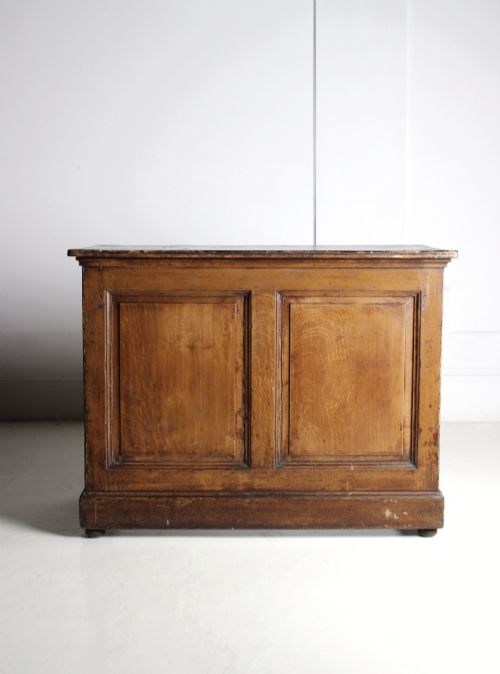
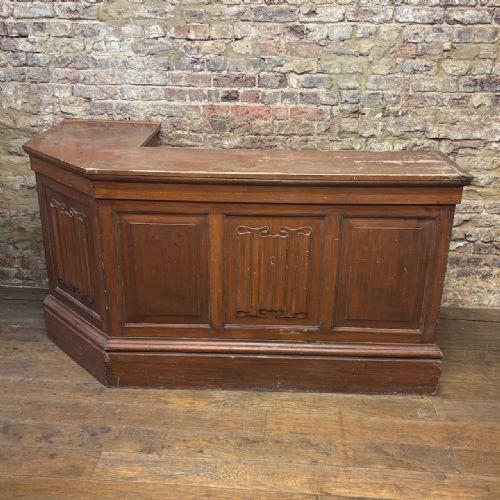
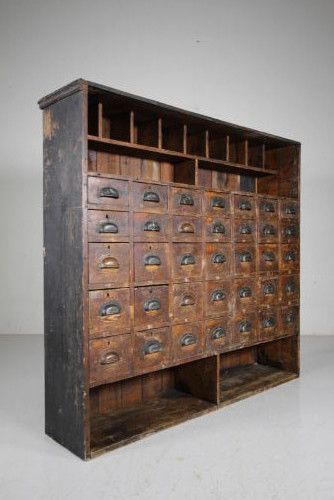
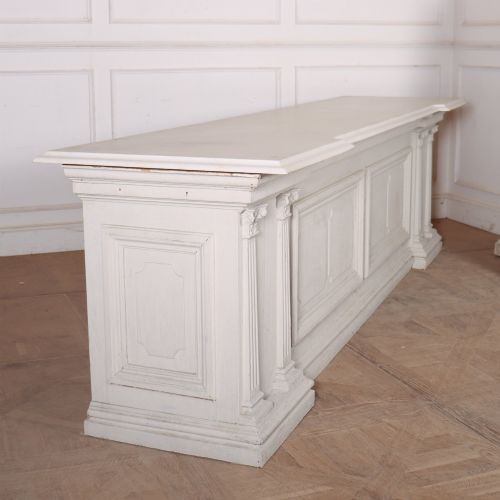
Banks of drawers dominate the category, often originating from chemists, drapers, or general merchants with multiple small compartments. These share space with glass-fronted display cabinets, shop counters in mahogany or pine, and specialised items like haberdashery units and advertising cases.
Origins stretch across English, French, and Italian workshops, alongside Hungarian pine examples that carry painted finishes. Pieces date from the Victorian and Edwardian eras through to the nineteen-thirties, reflecting the changing aesthetic of the high street from heavy timber to aluminium and chrome.
What varies in quality
Quality rests on the integrity of the original hardware, the survival of maker or merchant markings, and the preservation of factory paint or polished timber surfaces. Units retaining functioning glass doors, original brass pulls, and adjustable shelving sit higher in the hierarchy.
Scale and proportion separate standard utility pieces from exceptional retail items, particularly grand banks with dozens of drawers or large glazed display cabinets of generous proportions. Alterations to configuration or stripped finishes away from original factory schemes lower the commercial standing of a piece.
Vintage Shop Fitting Retail Price Guide 2026
Typical asking prices for vintage shop fitting among the pieces listed under this phrase on Sellingantiques today, from the lower quarter to the upper quarter. They describe what is for sale here now, not the wider market.
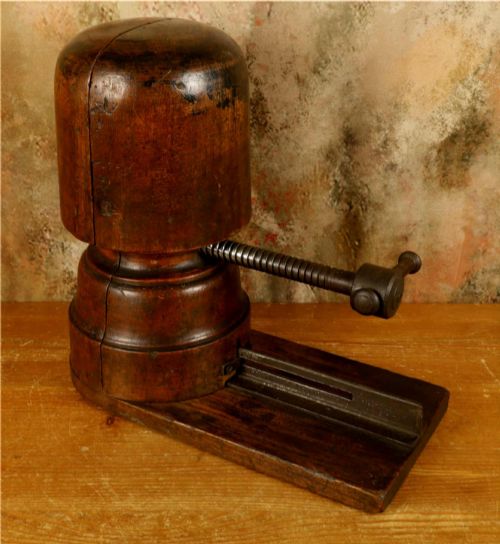
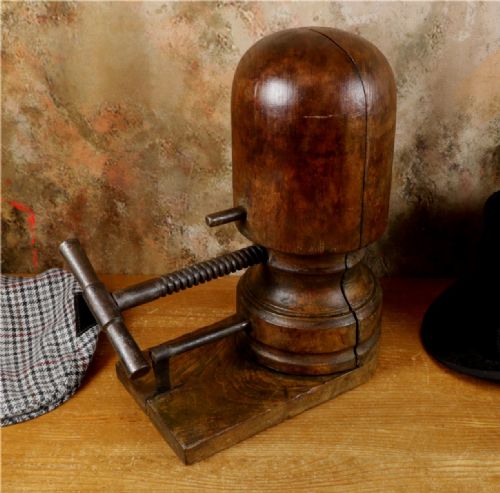
A sturdy wooden hat stretcher waits quietly for the millinery trade of yesteryear.
Dudley & Co·G H Gledhill Halifax
The Vintage Shop Fitting Glossary
- Haberdashery cabinet
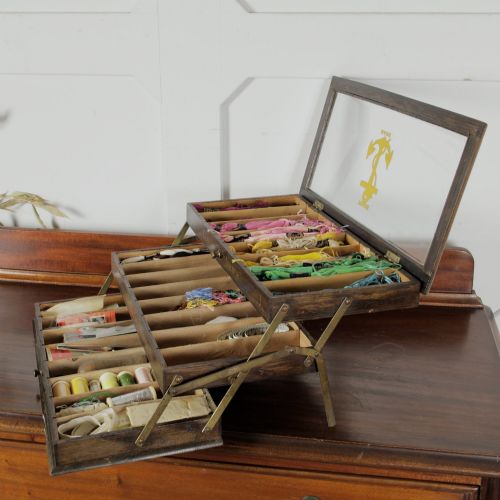
- A multi-drawer storage unit featuring glass fronts or pull-out trays designed for small sewing items and textiles. These units often utilise oak or mahogany construction.
- Bank of drawers
- A large assembly of numerous small compartments built for systematic merchant storage. Examples range from Victorian chemist fittings to extensive workshop sets.
- Shop counter
- A heavy timber or painted base structure positioned to serve customers in retail environments. They frequently incorporate panelled oak, mahogany, or pine.
- Display cabinet
- A glazed furniture piece created to showcase merchandise while protecting items from dust and handling. Many incorporate adjustable glass shelves and mirrored interiors.
- Sign-written
- Hand-painted lettering on timber or glass denoting the original merchant or trade. This commercial typography adds historical context to the physical object.
Vintage Shop Fitting: Frequently Asked Questions
What is a vintage shop fitting?
A vintage shop fitting is a piece of commercial furniture built for retail trade during the nineteenth and early twentieth centuries. These items include display cabinets, counters, and multi-drawer storage units.
Built to withstand heavy daily use by merchants, these items now serve as domestic storage and display furniture. Their robust construction and utilitarian design distinguish them from standard domestic antiques.
Where were these pieces used?
These fixtures originated in high street shops, draperies, chemists, and commercial merchant houses across Britain and Europe. They served to organise stock and present goods to customers.
Merchants utilised them behind counters or on sales floors for items ranging from textiles and hardware to confectionery. Their professional origins dictate their deep proportions and heavy materials.
How do I live with a shop counter?
A shop counter makes a substantial freestanding kitchen island, hallway console, or workspace surface. Their generous proportions provide expansive top space and lower storage.
Placement requires careful measurement of room clearances due to their commercial depth and heavy timber frames. Pairing them with contemporary seating or lighting grounds their industrial presence in a modern interior.
How do I date a haberdashery cabinet?
Dating relies on timber selection, handle styles, glass types, and construction methods used across the Victorian, Edwardian, and Art Deco periods. Earlier examples favour solid mahogany and brass, while later nineteen-thirties models introduce chrome and aluminium.
Merchant plaques, hand-written labels, and paint layers also help establish the chronological origin of the piece. Examining the interior drawer construction reveals hand-cut dovetails typical of nineteenth-century work.