

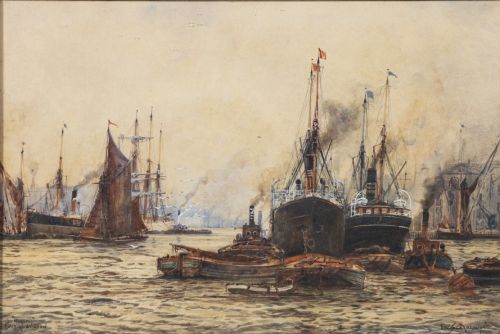
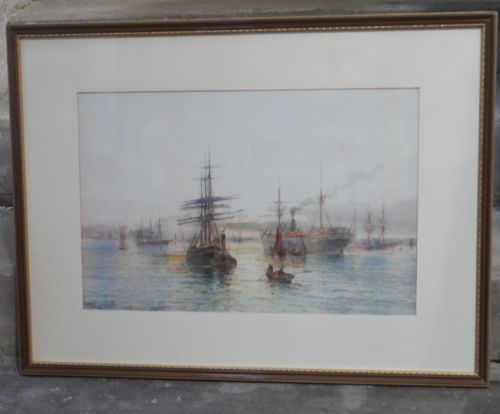


Vintage Ship Harbour Seascape
These vintage ship harbour seascape works capture maritime life through oil and watercolour, bringing historic coastal energy directly to your walls.
Vintage Ship Harbour Seascape
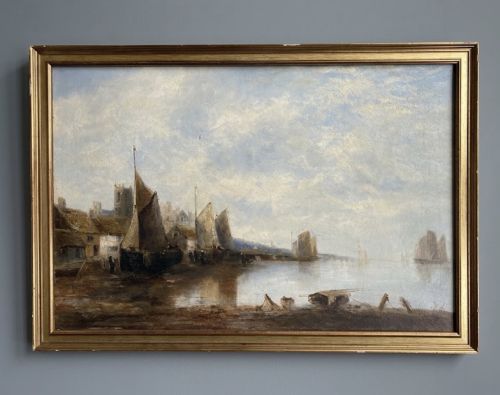
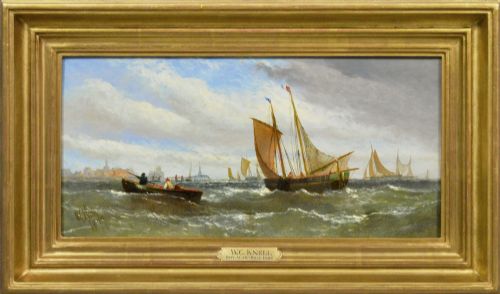
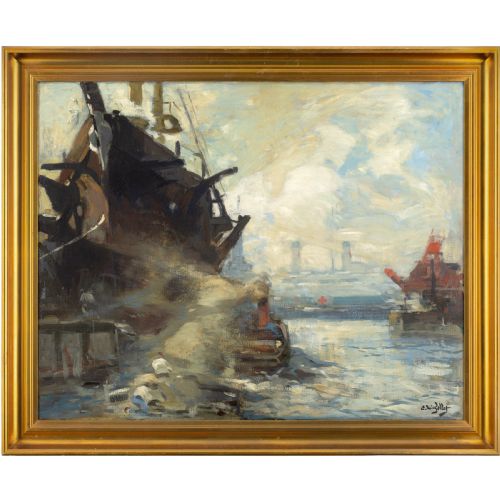
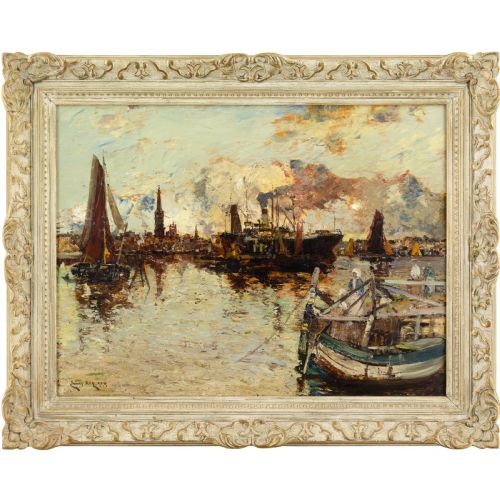
When you search for a vintage ship harbour seascape, you encounter historic depictions of ports, estuaries, and maritime activity spanning the late nineteenth century into the mid twentieth century. These works document bustling quays, quiet anchorages, and industrial shipbuilding across British and European waterways.
The selections on this page predominantly present oil paintings on canvas or board alongside detailed watercolours on paper. Subjects range from moonlight scenes on the Medway and London port traffic to specific vessels in Dublin Bay and Antwerp.
Most pieces date from the Edwardian era and the early decades of the twentieth century, reflecting traditional maritime interests and Impressionist tendencies. Buyers find everything from intimate framed watercolours to substantial oils depicting shipping on the Mersey and the Thames.
Materials and techniques
Artists relied primarily on oil on canvas or board to build up rich textures, capturing the shifting light on water and the heavy hulls of working ships. Watercolours on paper offered a lighter medium well suited to rapid plein air sketching of coastal towns and harbour walls.
Many works incorporate period framing, including gilt and gilt wood surrounds that complement the traditional subjects. Hand enamelled polychrome frames occasionally appear alongside simpler wooden mouldings, preserving the aesthetic context of the period.
Vintage Ship Harbour Seascape Retail Price Guide 2026
Typical asking prices for vintage ship harbour seascape among the pieces listed under this phrase on Sellingantiques today, from the lower quarter to the upper quarter. They describe what is for sale here now, not the wider market.
The listings span from the late nineteenth century through to nineteen sixty, showing a strong concentration of works from nineteen ten.
What varies in quality
Quality in these maritime works rests upon the artist's command of light, atmosphere, and nautical architecture. Superior pieces demonstrate precise observation of rigging, water movement, and smoke from steamships, whereas lesser examples rely on formulaic compositions.
The handling of the medium dictates distinction, with accomplished brushwork in oils or confident washes in watercolours creating a compelling sense of place. Provenance, signature clarity, and the retention of original framing further elevate the standing of individual pieces.
Eugène-Louis Gillot·James Kay RSW·Frank William Scarbrough·Hubert Thornley·Edward Fletcher·Bertram Priestman·James Scrimgeour Mann
The Vintage Ship Harbour Seascape Glossary
- Oil on Canvas
- Pigments bound in drying oil applied to a woven fabric support. This combination allows for deep colour saturation and expressive texture.
- Watercolour
- A paint consisting of colour suspended in a water soluble vehicle, traditionally applied to paper. It yields transparent washes that capture coastal light effectively.
- Impressionism
- A nineteenth century art movement characterised by relatively small, thin yet visible brush strokes and an emphasis on accurate depiction of light. Artists applied these principles to harbour and marine scenes.
- Gilt Wood
- Wood that has been covered with a thin layer of gold leaf or gold paint. Frames utilising this finish are frequently contemporary to the paintings they enclose.
Vintage Ship Harbour Seascape: Frequently Asked Questions
How do I care for a vintage watercolour?
Keep watercolours away from direct sunlight to prevent fading of the pigments and the paper support. Ensure they hang in stable humidity conditions behind appropriate conservation glass.
Check the backing periodically to ensure moisture does not accumulate inside the frame. Proper placement preserves both the paper and the delicate washes.
Where were these harbour scenes typically painted?
Artists worked across British and European ports, recording locations from London and the Medway to Antwerp, Ostend, and Copenhagen. Many subjects focus on active commercial hubs and shipbuilding yards.
These depictions reflect both major trading centres and smaller coastal towns like Looe and Rye. The choice of location often mirrors the maritime trade and naval power of the era.
How can I date a marine oil painting?
Examine the style of the vessels depicted, as steamships, sailing barges, and iron hulls correspond to specific decades. Signatures, artist exhibition records, and framing materials also offer reliable chronological clues.
Paintings from the late nineteenth century often feature Victorian maritime conventions, while works from the nineteen tens and twenties lean towards impressionistic treatments. Comparing the canvas stamp or board manufacturer can further narrow the timeframe.
What is the difference between an oil and a watercolour?
Oils use pigment suspended in oil on canvas or board, offering heavy texture, rich colour depth, and durability. Watercolours use water soluble pigments on paper, producing luminous, transparent effects.
Oils usually require heavier frames without glass protection, whereas watercolours need glazing to shield the paper from environmental damage. Both mediums offer distinct approaches to capturing the movement of water and light.