

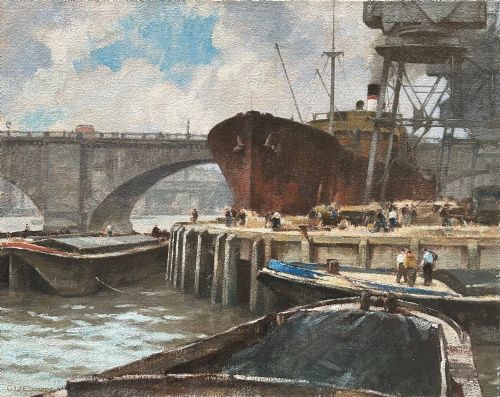
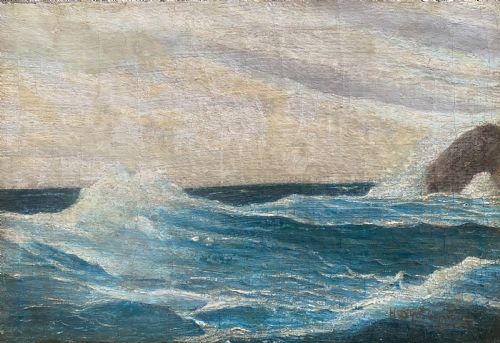

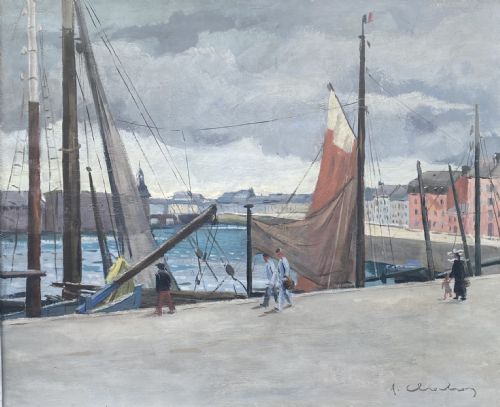


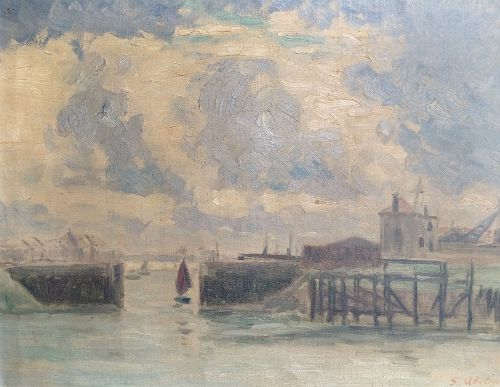

Grey Sky Nautical Landscape
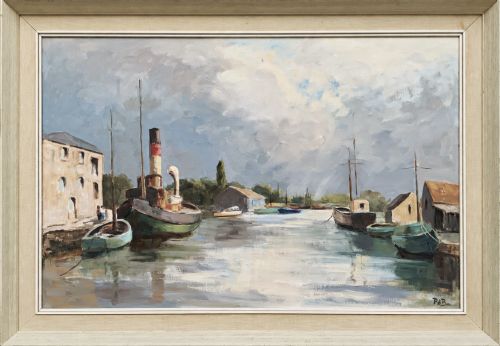
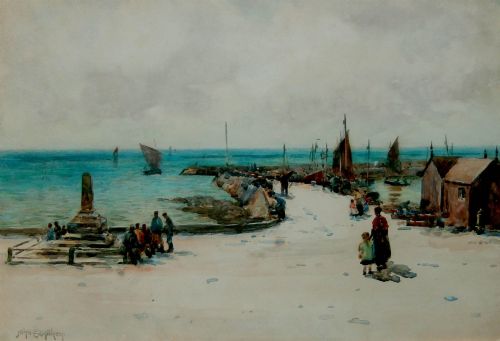
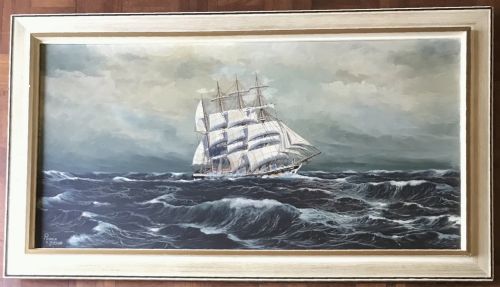
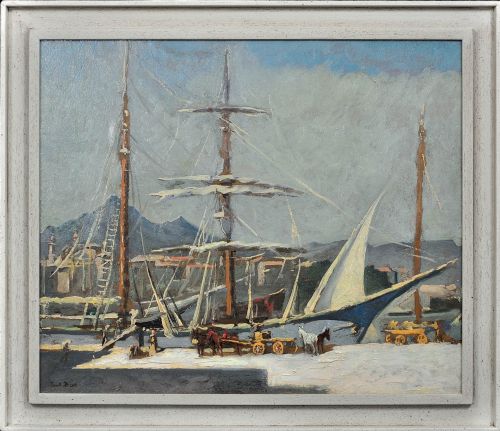
These grey sky nautical landscape works capture maritime scenes under heavy atmospheric clouds, offering collectors evocative glimpses of historic ports, shores and coastal life.
Grey Sky Nautical Landscape
When you search for a grey sky nautical landscape, you encounter fine art paintings capturing marine views beneath overcast or stormy atmospheres. These works record coastal scenes, bustling harbours, and open waters across the nineteenth and twentieth centuries.
The pieces on this page span several decades, featuring works from the Victorian era through to the 1940s. You will find British Impressionism, 20th Century Realism, and marine art styles represented among the selections.
Most examples present ports, beaches, and coastal architecture rendered in oil paint or watercolour. Artists utilise these muted atmospheric conditions to create moody, contemplative compositions of maritime life.
How these artworks were made
The primary mediums recorded in these listings are oil paint and watercolour applied to canvas and paper supports. Artists built up layers of pigment to capture the heavy, luminous quality of overcast skies and restless water.
Many of these paintings retain their period wood frames, which complement the maritime subject matter. The physical construction combines traditional canvas stretching and framing techniques suited to landscape and marine subjects.
Grey Sky Nautical Landscape Retail Price Guide 2026
Typical asking prices for grey sky nautical landscape among the pieces listed under this phrase on Sellingantiques today, from the lower quarter to the upper quarter. They describe what is for sale here now, not the wider market.
Listings feature works created between the mid-nineteenth century and 1940, executed in oil and watercolour on canvas and paper.
What distinguishes finer examples
Quality in a grey sky nautical landscape rests upon the artist's handling of light and atmospheric depth within a restricted palette. Superior works capture the palpable humidity and movement of the sea through confident brushwork rather than mere technical precision.
The harmony between the primary subject, such as shipping activity or coastal architecture, and the dominant overcast sky dictates the visual success of the piece. Strong compositions integrate the weather conditions as a central emotional element of the scene.
John E. Aitken·Paul Bret·Cyril Walduck Edwards·Paul Jean Clays·Bertram Priestman·THOMAS BUSH HARDY
The Grey Sky Nautical Landscape Glossary
- Watercolour
- A painting method where fine pigment is suspended in a water-based solution, typically applied to paper. This medium allows for luminous, transparent washes ideal for depicting soft grey skies.
- Marine Art
- Artistic work that depicts or draws inspiration from the sea, ships, and coastal environments. This genre encompasses historical naval battles, coastal landscapes, and harbour scenes.
- Canvas
- Heavy woven fabric used as a surface for oil painting, stretched across a wooden frame. It provides a durable and textured base for layered pigment.
- Impressionism
- A style of painting that emphasises accurate depiction of light in its changing qualities, often using small, visible brush strokes. Artists working in this manner focus on capturing the immediate visual impression of a scene.
Grey Sky Nautical Landscape: Frequently Asked Questions
What periods do these grey sky nautical landscape works cover?
The listings encompass works from the Victorian era, the nineteenth century, and several decades of the twentieth century up to the 1940s. Painters working during these periods interpreted maritime subjects through various lenses including realism and impressionism.
This broad chronological spread allows collectors to trace the evolution of marine art from traditional nineteenth-century views to twentieth-century modernist interpretations of coastal environments.
What materials were used to create these marine paintings?
Artists utilised oil paint and watercolour applied to canvas or paper supports. Many surviving pieces retain their original wood frames, which were selected to house and protect the artwork.
The choice of medium heavily influences the texture and mood of the piece, with oil on canvas offering rich, layered surfaces while watercolour provides delicate atmospheric transparency.
How do I care for an antique oil painting?
Keep your artwork away from direct sunlight, extreme temperature fluctuations, and high humidity to protect the canvas and paint layers. Gentle dusting with a soft, dry brush is generally sufficient for surface maintenance.
Avoid using liquid cleaners or attempting restoration work yourself, as professional conservators are best equipped to handle delicate surfaces and historic frames.
What subjects typically appear in these coastal artworks?
Common subjects include bustling harbours, fishing boats, coastal promenades, and specific maritime locations such as Palermo Harbour or the Mersey. These scenes document working ports and coastal life from past eras.
The inclusion of grey skies and moody weather adds a dramatic narrative element, focusing attention on the atmospheric conditions shaping daily maritime activity.