



Vintage Secretaire Drawer Desk
These vintage secretaire drawer desk pieces combine cabinetry and writing spaces, offering hidden drawers and fitted interiors designed for correspondence.
Vintage Secretaire Drawer Desk
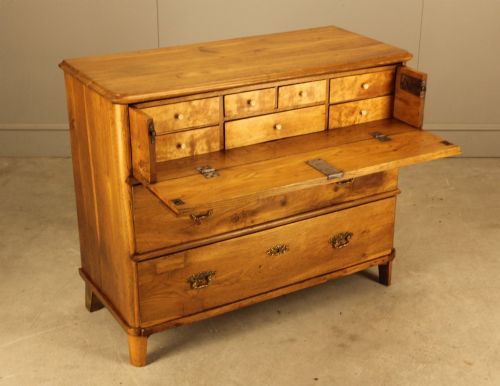
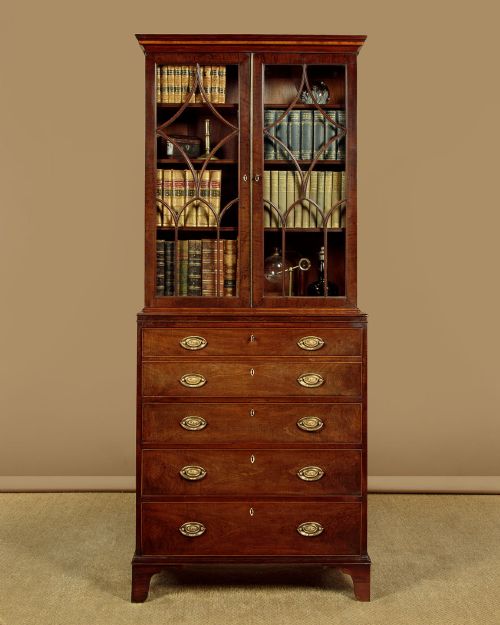
When you search for a vintage secretaire drawer desk, you encounter case furniture that conceals a drop-front writing surface or fitted desk drawer within a chest or bookcase. These items span periods from the eighteenth century through the nineteenth and twentieth centuries, originating from English, French, Swedish, and Chinese workshops.
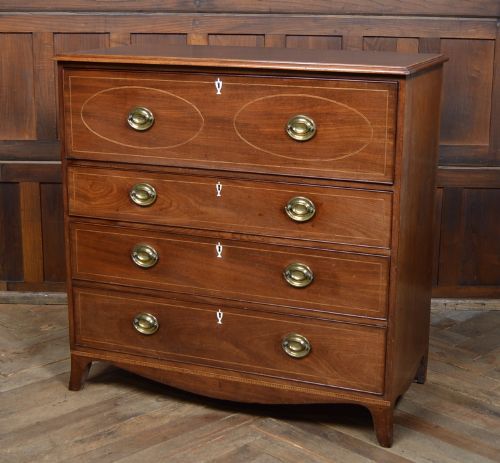
The most common formats on this page include mahogany chests of drawers with integrated writing compartments, taller secretaire bookcases featuring glazed upper doors, and campaign cabinets fitted with brass hardware. Woods such as oak, walnut, pine, and satinwood appear alongside structural elements like marble tops and glass doors.
Materials and construction
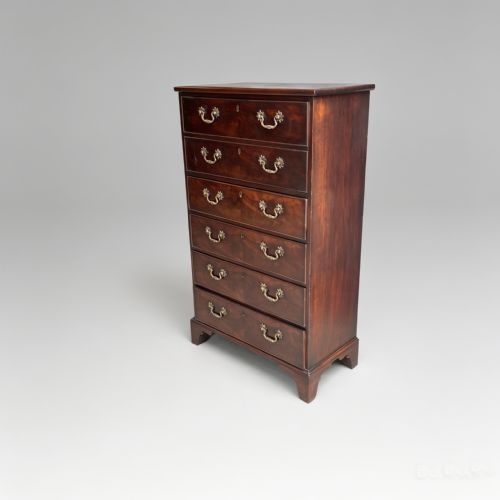
Cabinetmakers built these pieces using solid timbers and veneers of mahogany, walnut, satinwood, oak, and pine, often incorporating secondary woods for interior drawer linings. Structural stability relied on traditional joinery, while decorative surfaces featured figured wood grains and inlaid details.
Writing compartments incorporate specialised mechanisms, including fall-front panels, writing slopes lined with leather or baize, and secret drawers concealed behind dummy pigeonholes. Hardware typically consists of brass handles, escutcheons, and campaign mounts designed for functional security and transport.
Listings feature woods including mahogany, walnut, satinwood, oak, pine, teak, and camphor wood.
Distinctions in quality
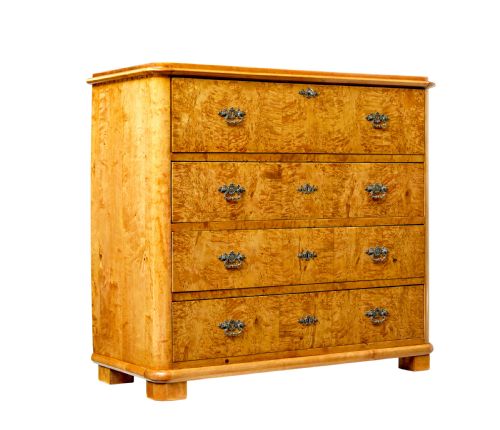
The standard of timber selection largely defines the rank of a piece, with highly figured mahogany, burr birch, and satinwood veneers marking out finer examples. The crispness of inlay work and the harmonious proportions of bookcases or chests indicate the skill of the original workshop.
Internal complexity also separates standard items from superior ones, visible in the intricacy of the fitted writing drawer, the clever concealment of secret compartments, and the survival of original glass, brasses, and leather or baize writing surfaces.
The Vintage Secretaire Drawer Desk Glossary
- Secretaire
- A desk or cabinet featuring a concealed writing drawer or a drop-front writing surface. This mechanism allows a standard chest of drawers or bookcase to function as a writing desk.
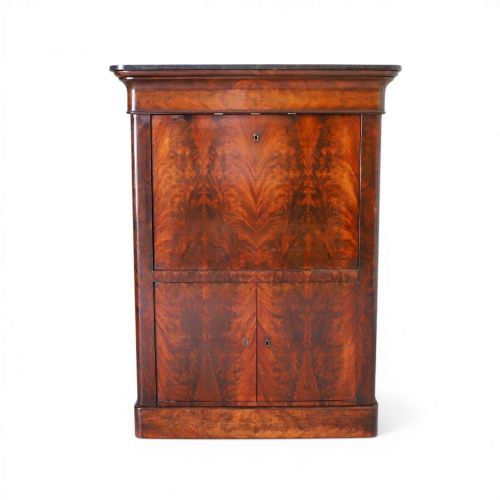
- Secrétaire à abattant
- A tall upright cabinet with a hinged fall-front writing flap that conceals fitted pigeonholes and small drawers. This French form frequently incorporates a marble top.
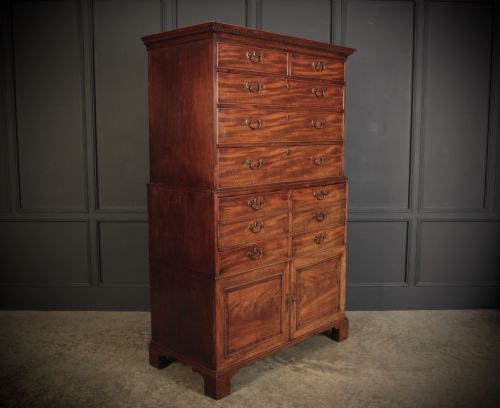
- Tallboy
- A tall chest of drawers made in two sections, often featuring a secretaire drawer integrated into the upper portion. The proportions remain high and relatively shallow.
- Campaign chest
- A piece of furniture built in sections with brass corners and recessed handles designed for military transport. Some examples include a dedicated secretaire drawer for correspondence.
- Escritoire
- An alternative term for a writing cabinet or desk. The form typically centres on a fall-front writing surface.
- Baize
- A coarse woolen material resembling felt used to line writing surfaces and slopes. It provides a soft texture for writing.
Vintage Secretaire Drawer Desk: Frequently Asked Questions
What is a secretaire drawer desk?
A secretaire drawer desk is a piece of case furniture that looks like a standard chest of drawers or bookcase from the outside but contains a pull-out or drop-front writing compartment.
Inside, you find small drawers, pigeonholes, and a writing surface lined with leather or baize for correspondence.
What is a campaign secretaire?
Campaign secretaires were built in sections with brass corners, flush recessed carrying handles, and sturdy timber frames designed for easy dismantling and transport by military officers.
Woods like teak, camphor wood, and mahogany appear frequently in these pieces, alongside integrated writing drawers.
How do I use a secretaire in a modern room?
These pieces function as compact home workstations because the drop-front or pull-out writing surface closes up to hide laptop computers, papers, and stationery when not in use.
The remaining drawers and upper bookcases provide concealed storage for household items or display space for books and objects.