

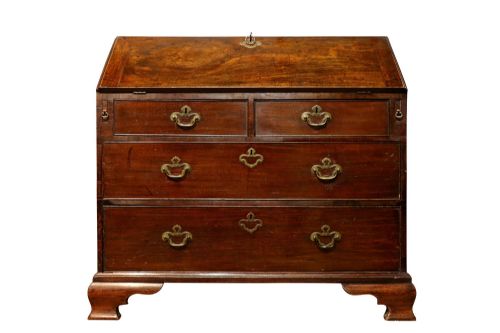


Figured Mahogany Writing Desk
A figured mahogany writing desk brings the lively, rippling grain of premium timber straight into a study.

Figured Mahogany Writing Desk
A figured mahogany writing desk encompasses a broad family of workspace furniture, from compact writing tables and slope-front bureaux to grand partners desks and towering secretaire bookcases. When you browse this selection, you encounter pieces spanning the Georgian, Regency, and Victorian eras, alongside Edwardian examples.
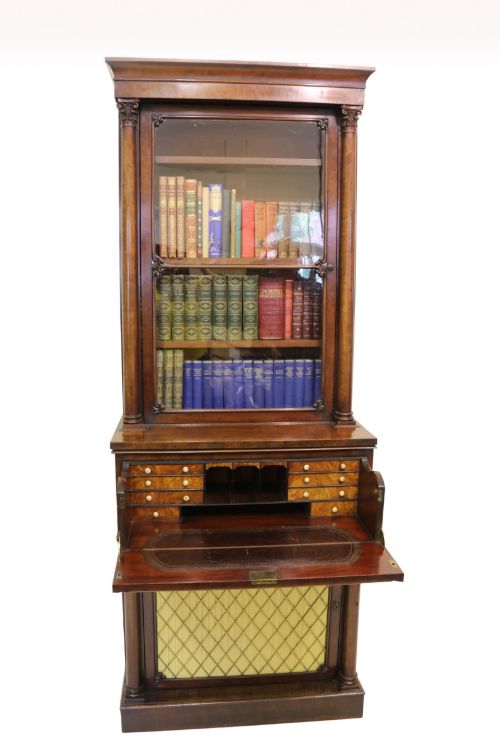
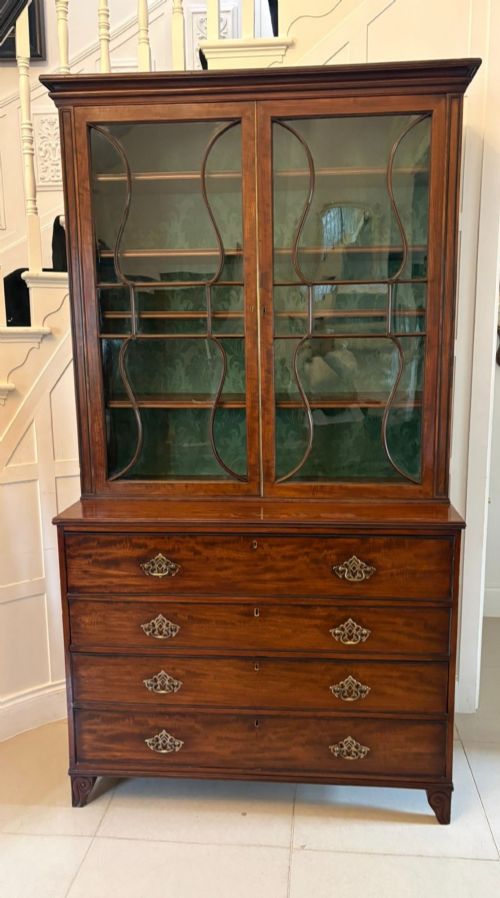
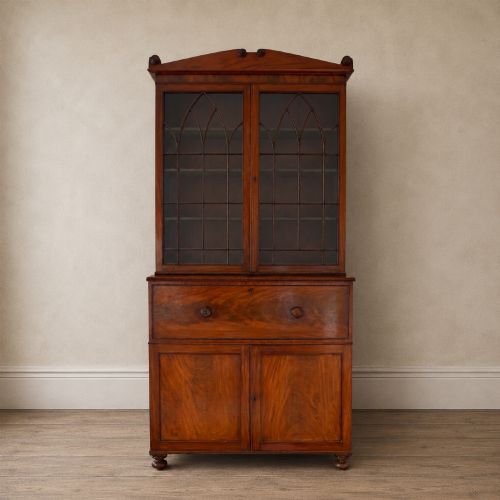
The most frequent form you meet on this page is the secretaire bookcase, where a drop-front drawer conceals a fitted interior of small drawers and pigeonholes beneath glazed upper doors. Alongside these, freestanding sofa tables, kneehole architects desks, and pedestal writing tables appear regularly across multiple periods.
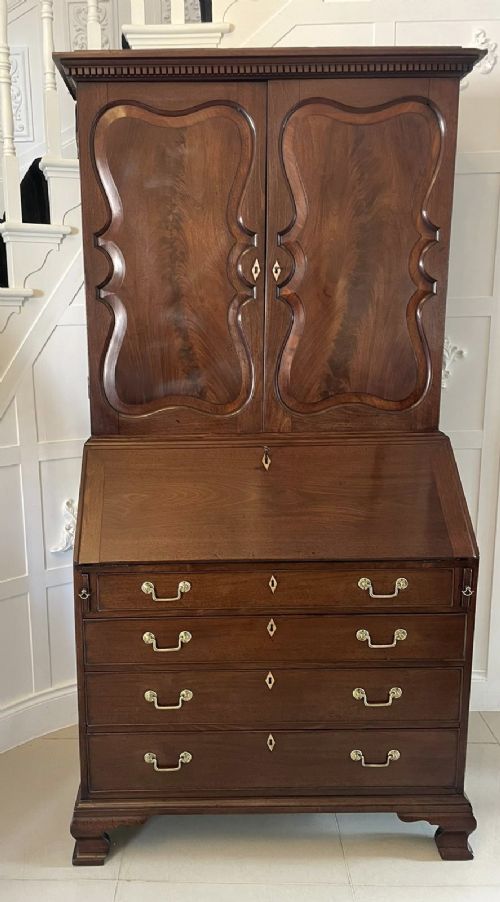
Makers utilised rich timber veneers with intense figuring to catch the light, applying them across writing surfaces, frieze drawers, and fall-fronts. These forms developed from straightforward 18th-century bureau bookcases into specialised library and office furniture by the late 19th and early 20th centuries.
What varies in quality
The intensity and selection of the timber figure set the visual hierarchy, with book-matched veneers and lively grain patterns elevating a piece far above plain stock. Cabinetmaking finesse shows in the execution of secondary details, such as finely cut boxwood stringing, smooth drawer action, and the retention of original brass hardware.
Structural ambition also divides the range, distinguishing simple occasional writing tables from complex secretaire bookcases with fitted interiors, secret compartments, and architectural glazed doors. Originality of fitted writing surfaces, whether leather or baize, preserves the integrity of the piece.
Some secretaire drawers hide secret spring-loaded compartments behind dummy pigeonholes, designed for keeping private letters safe from prying eyes.
Gillows of Lancaster
The Figured Mahogany Writing Desk Glossary
- Figured mahogany
- Timber veneer selected for its unusual, rippled, or mottled grain pattern that creates a dramatic visual effect under light. This timber defines the aesthetic appeal of high-status 18th and 19th-century case furniture.
- Secretaire bookcase
- A tall cabinet combining a pull-down writing drawer with fitted interior compartments and upper shelving enclosed by glass doors. It served as a combined desk and library unit in Georgian and Regency homes.
- Partners desk
- A large double-sided pedestal desk designed for two people to work opposite one another, featuring drawers and cupboards on both faces. These pieces were standard fixtures in grand libraries and professional offices.
- Sofa table
- A narrow freestanding table designed to stand in front of a sofa, often featuring drop leaves at either end and two frieze drawers. Regency and Georgian examples frequently include cross-banded veneers and trestle supports.
- Boxwood stringing
- Thin inlaid lines of pale boxwood set into darker mahogany surfaces to create geometric borders and panels. This subtle inlay technique highlights the edges of drawer fronts and tabletops.
Figured Mahogany Writing Desk: Frequently Asked Questions
What is a secretaire bookcase?
A secretaire bookcase is a hybrid furniture form featuring an upper section with glazed doors for book storage and a lower section containing a pull-down writing drawer. Inside this drop-front drawer lies a fitted interior of pigeonholes and small drawers for correspondence.
These pieces emerged during the Georgian period and remained popular through the Regency era. They provided a compact workspace that could be concealed quickly behind a finished drawer front when not in use.
How do I care for figured mahogany?
Protect figured mahogany surfaces from direct sunlight and extreme humidity fluctuations to prevent veneer lifting or timber drying out. Regular dusting with a soft, dry cloth maintains the finish without needing heavy chemical polishes.
Apply a microcrystalline wax sparingly once or twice a year if the timber appears dry. Avoid placing hot mugs or damp items directly on the polished wood or the leather writing inserts.
How do I tell Regency from Victorian desks?
Regency pieces, dating from the early 19th century, typically show restrained classical proportions, brass inlay, and elegant sabre or turned legs. The timber selection emphasises bold grain patterns and clean architectural lines inspired by antiquity.
Victorian desks, produced from the mid-19th century onward, often feature heavier proportions, richer carved details, and robust pedestal or kneehole configurations. They reflect industrial-era innovations in office furniture design and heavier domestic requirements.
What is a partners desk?
A partners desk is a substantial double-sided writing table designed with drawer and cupboard storage accessible from both operational faces. This configuration allowed two people, such as business associates or banking partners, to work opposite each other at the same desk.
These large pieces usually feature inset leather writing surfaces and heavy pedestal bases. They represent the upper tier of institutional and domestic study furniture from the Georgian and Victorian periods.