
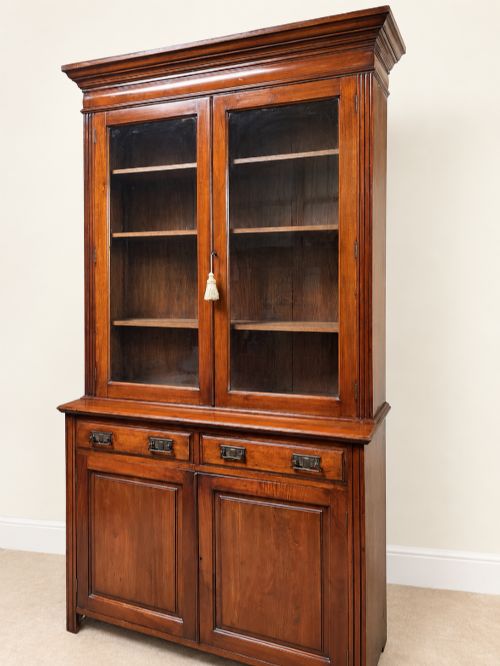
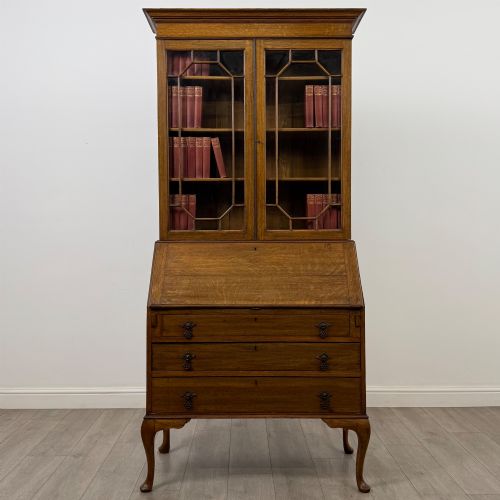
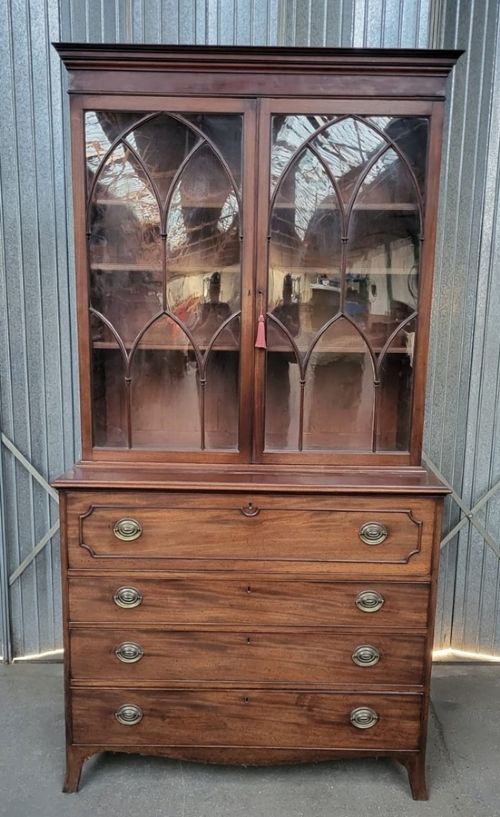


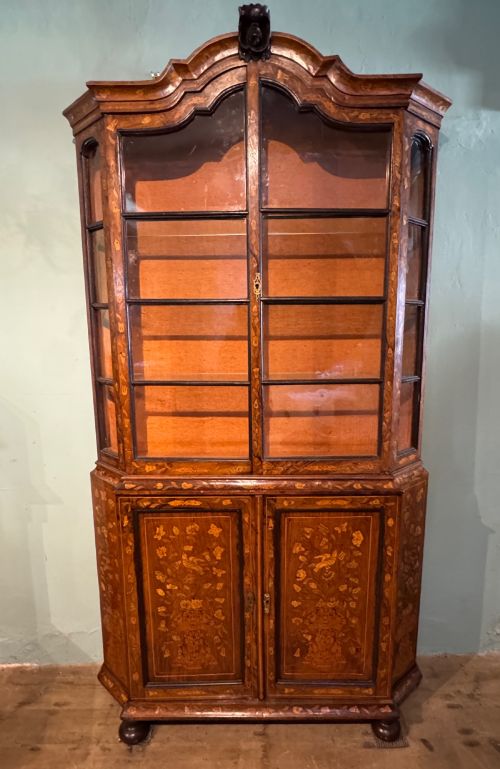
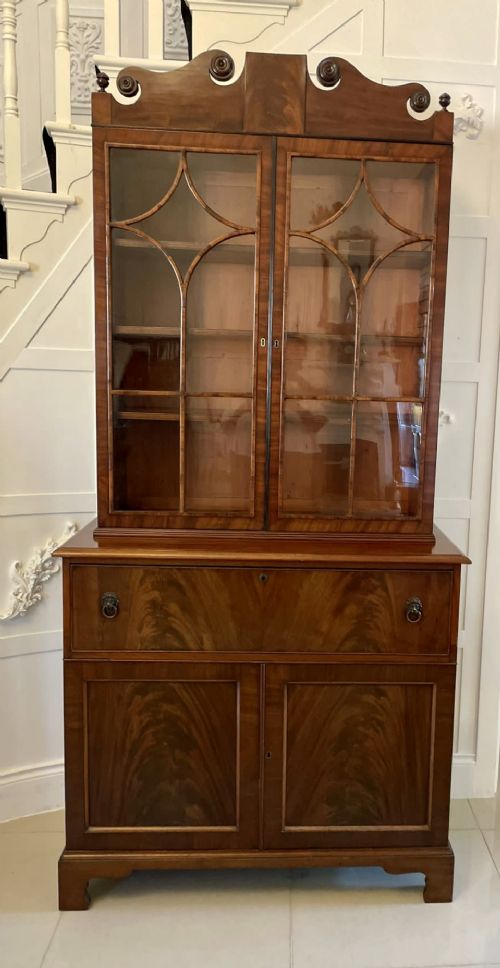
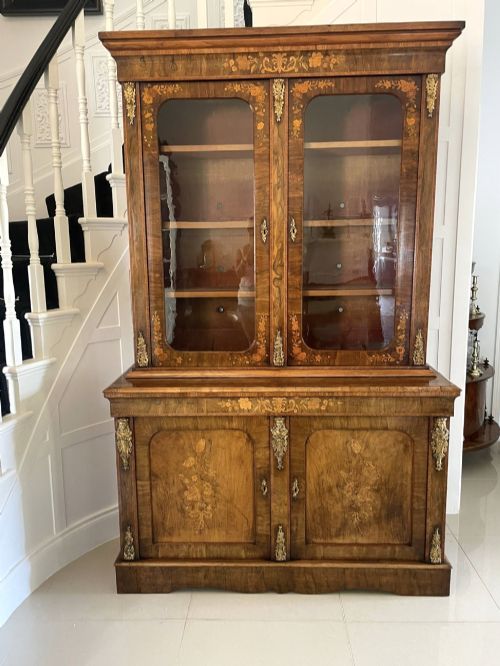
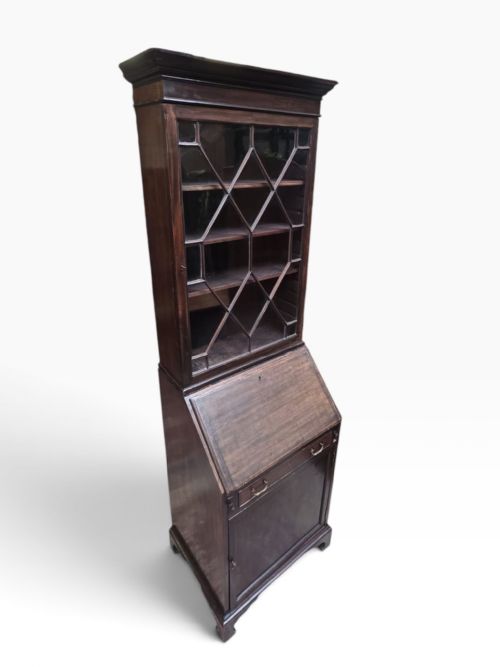
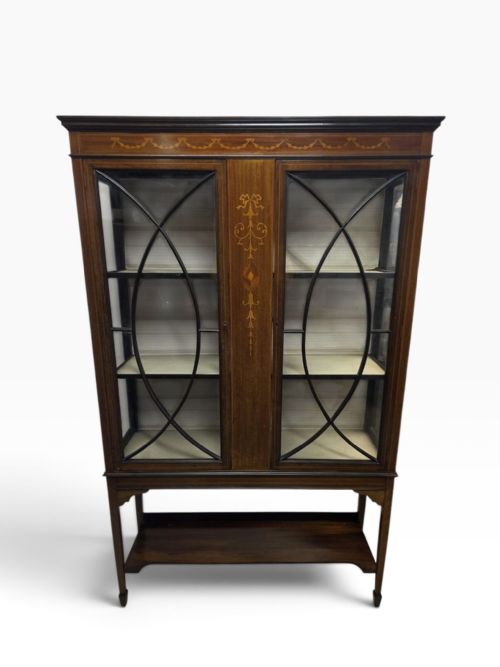
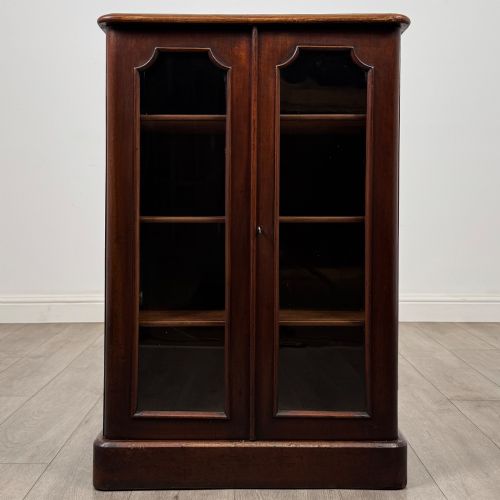
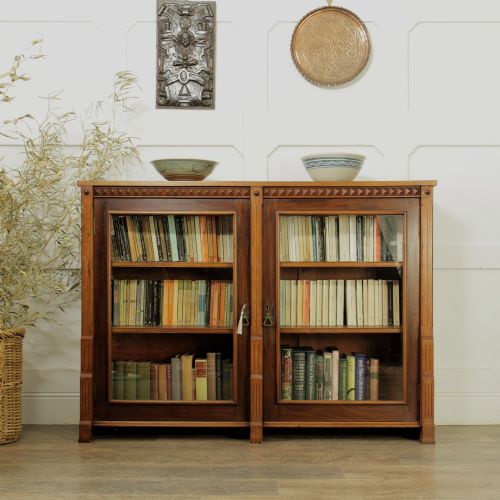
Glazed Front Bookcase Cabinet
A glazed front bookcase cabinet provides a protected home for books and objects, bringing period craftsmanship into daily rooms.
Glazed Front Bookcase Cabinet
A glazed front bookcase cabinet combines shelving behind glass doors with lower storage, bureau desks or display space. These pieces serve as functional libraries and display furniture for domestic interiors.
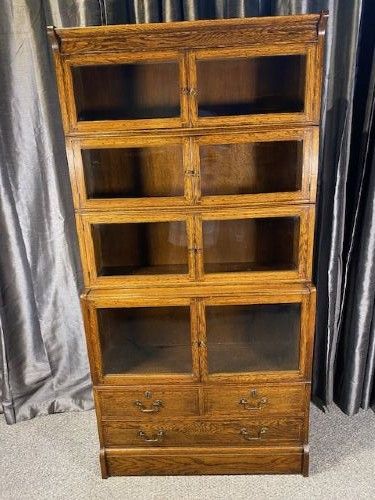
The versions met most often on this page date from the Georgian, Victorian and Edwardian eras, alongside pieces from the nineteen-twenties. Forms range from tall bureau bookcases with fitted writing interiors to low pier cabinets and double library bookcases.
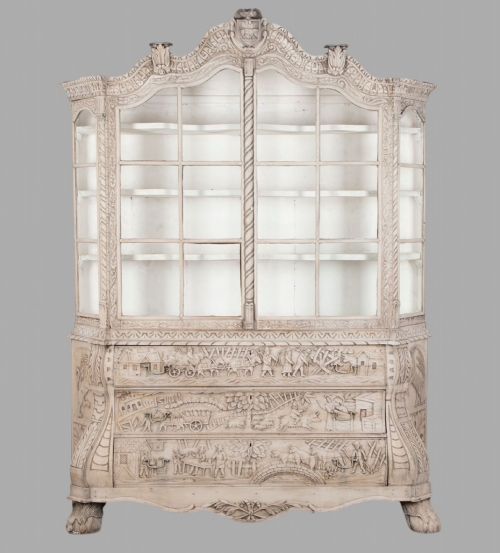
Makers span diverse regional and stylistic traditions, including Dutch marquetry models, English mahogany pieces and Jacobean revival oak furniture.
How they were made
Construction relies on solid timbers and fine veneers like mahogany, oak, walnut and satinwood, supported by structural glass and brass hardware. Cabinetmakers utilised burr walnut and ormolu mounts to ornament high-status pieces.
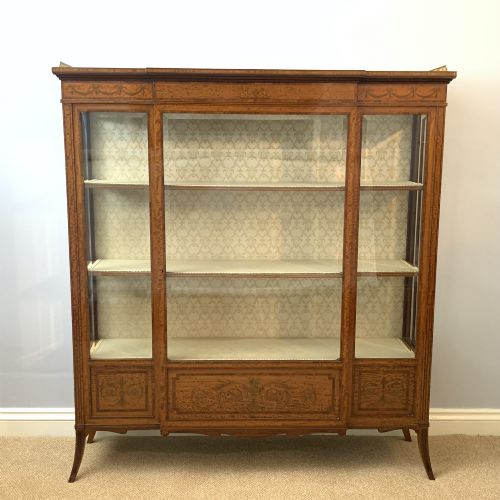
Surface decoration involves marquetry inlay, Dutch carving and polished grain finishing, reflecting the prevailing styles of George III, Regency, Victorian and Edwardian periods.
Some early eighteenth-century models include dedicated candle slides to illuminate the writing surface before the arrival of safe indoor lighting.
What varies in quality
Quality depends on the selection of timber figures, such as figured walnut and flame mahogany, and the precision of the marquetry inlay. Superior cabinets demonstrate meticulous joinery in the fitted desk interiors and drawer construction.
The refinement of brass mounts, ormolu detailing and glass clarity distinguishes exceptional pieces from standard utility furniture of the same period.
Edwards & Roberts·George Oakley
The Glazed Front Bookcase Cabinet Glossary
- Secretaire bookcase
- A cabinet featuring a pull-down writing drawer that conceals small pigeonholes and drawers. This fitted desk section sits below the glazed upper bookcase.
- Bureau bookcase
- A writing cabinet with a sloping fall-front desk combined with an upper shelving section enclosed by glass doors. These dual-purpose items were common in Georgian and Edwardian homes.
- Marquetry
- Decorative veneer work forming pictures or geometric patterns using various coloured woods. Craftsmen applied this technique to walnut and satinwood cabinet surfaces.
- Ormolu
- Gilded bronze used for decorative mounts and furniture ornamentation. This material frequently appears on nineteenth-century burr walnut cabinets.
- Pier cabinet
- A low cabinet designed to fit the wall space between windows. These pieces often feature glass doors for displaying porcelain and small objects.
Glazed Front Bookcase Cabinet: Frequently Asked Questions
What is a bureau bookcase?
A bureau bookcase is a dual-purpose item featuring a writing desk compartment combined with an upper section of shelves enclosed behind glass doors.
The writing area typically uses a sloping fall-front or a pull-down secretaire drawer that conceals small pigeonholes and internal compartments for correspondence.
How do I identify a Georgian cabinet?
Georgian cabinets display architectural proportions, classical cornices and solid timber construction using dense mahogany or walnut. Details often include finely figured wood grains and understated brass hardware.
Interior fittings in these pieces usually comprise adjustable wooden shelving and hand-dovetailed drawer boxes constructed with secondary timbers.
Where were these cabinets used?
These cabinets served primarily in libraries, studies, morning rooms and formal reception spaces to house valued book collections and display decorative porcelain.
Glass doors protected fragile volumes and objects from dust while allowing visibility for guests and household members.
How do I care for walnut furniture?
Walnut furniture requires placement away from direct sunlight and heat sources to prevent timber shrinkage and veneer lifting. Regular dusting with a dry, soft cloth maintains the polished finish.
Avoid applying silicone-based polishes, as these products can damage historic wood surfaces over time.
What distinguishes Edwardian pieces?
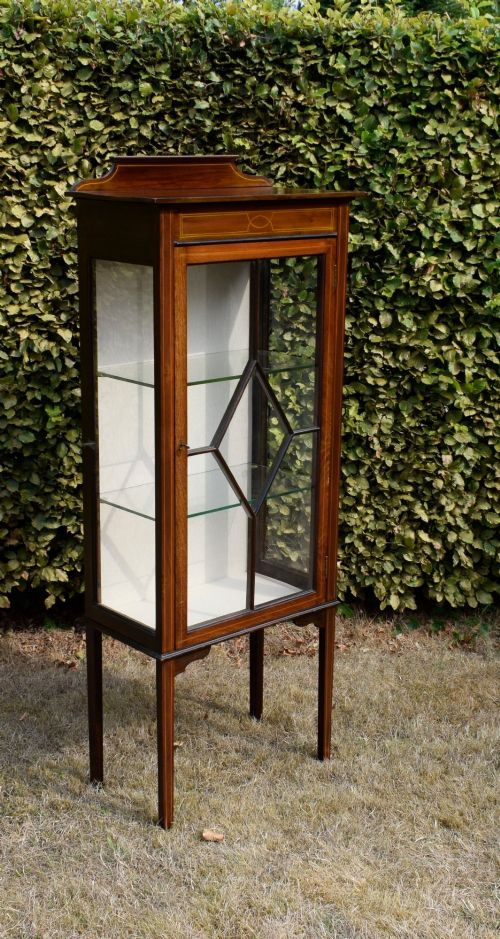
Edwardian glazed cabinets often incorporate satinwood inlay, lighter mahogany frames and revival styles influenced by eighteenth-century designs. Construction methods reflect early twentieth-century workshop standards.
These items frequently exhibit refined proportions suitable for domestic drawing rooms of the period.